Aug 21, 2020 | Sonoma, Sonoma Farming, Wine
What would wine be without a label? (We do have a word for naked wine bottles…they’re called “shiners.”) Join me on a quick road trip as I travel to our wine label printer’s factory, MPI Label in Stockton Ca. After the wine team completes the brand identity, trademark, label design, and the required label approval from the federal government, the final artwork is sent to the label printer’s pre-press team. Then it’s time for the wine label press check:

Long before the wine label press check, the decision of which paper to use is critical – every option from bright white felt to creamy eggshell is available to the wine label designers.
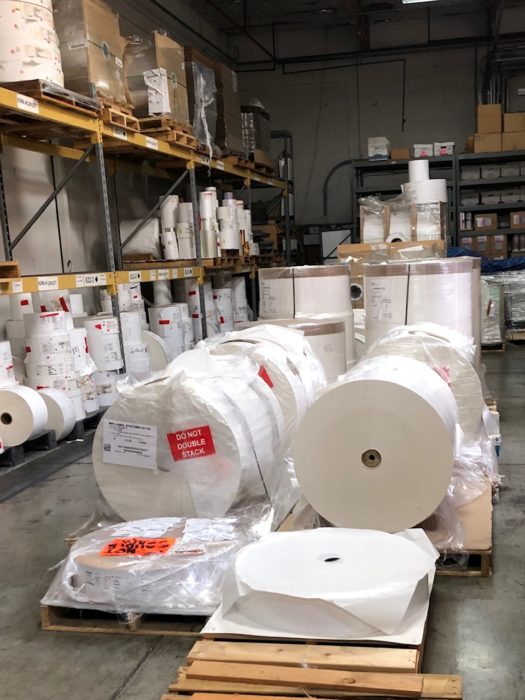
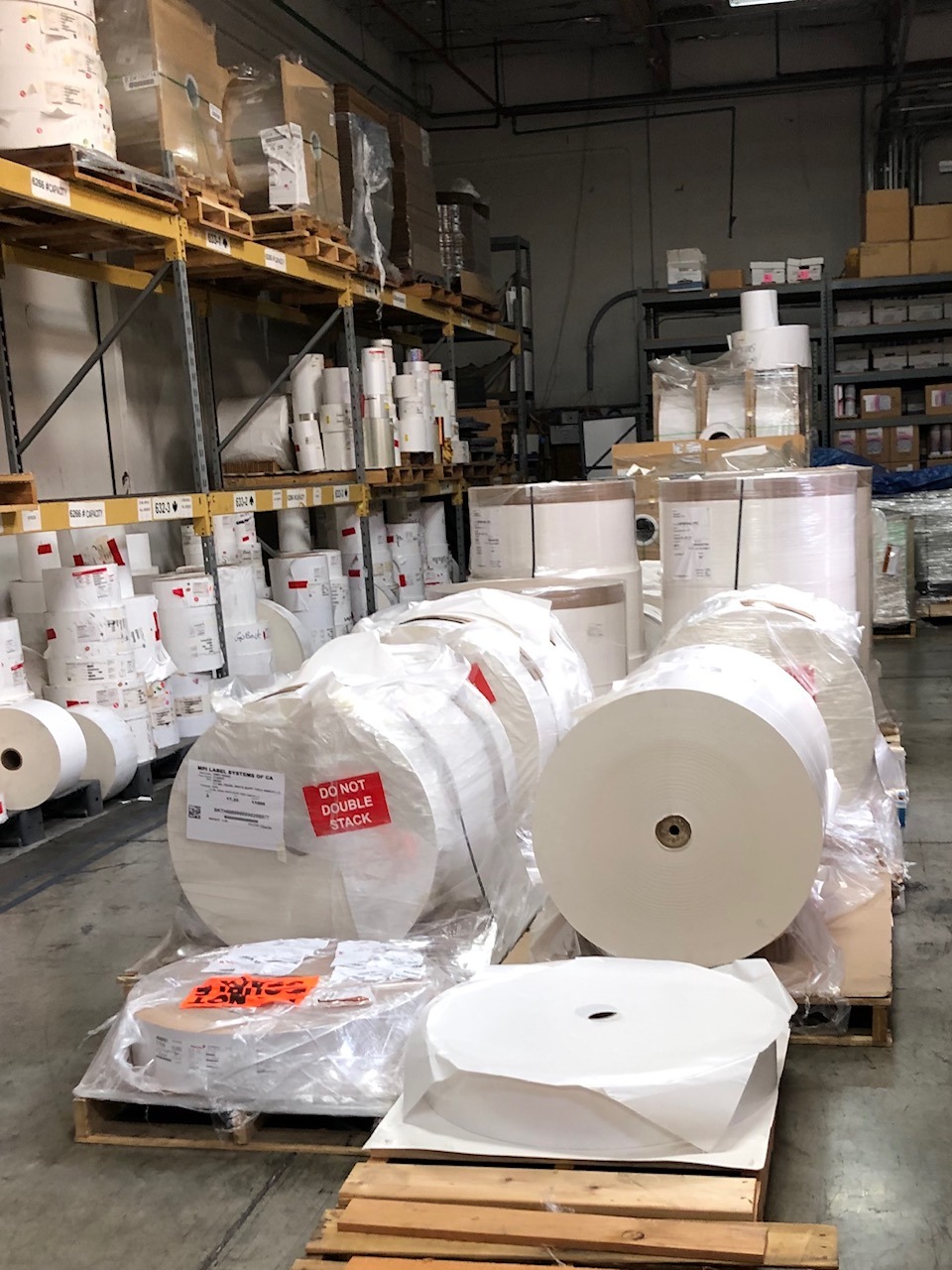
Those are huge! After the paper type is selected, the process starts with palleted spools of 1-ton raw paper sitting on the press factory floor.
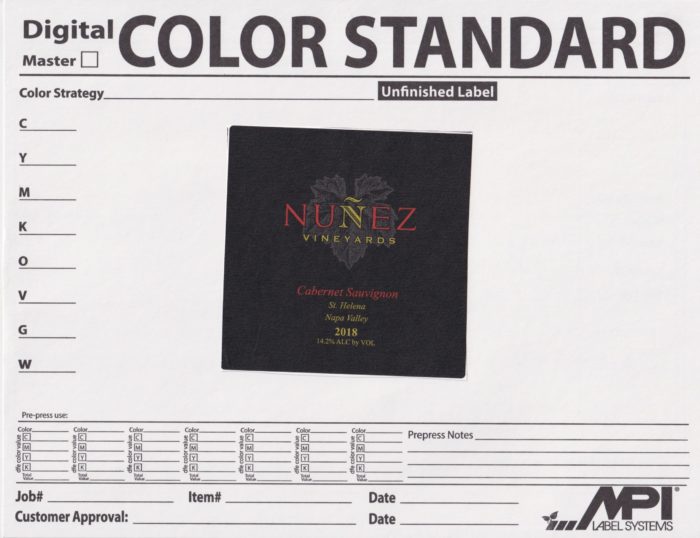
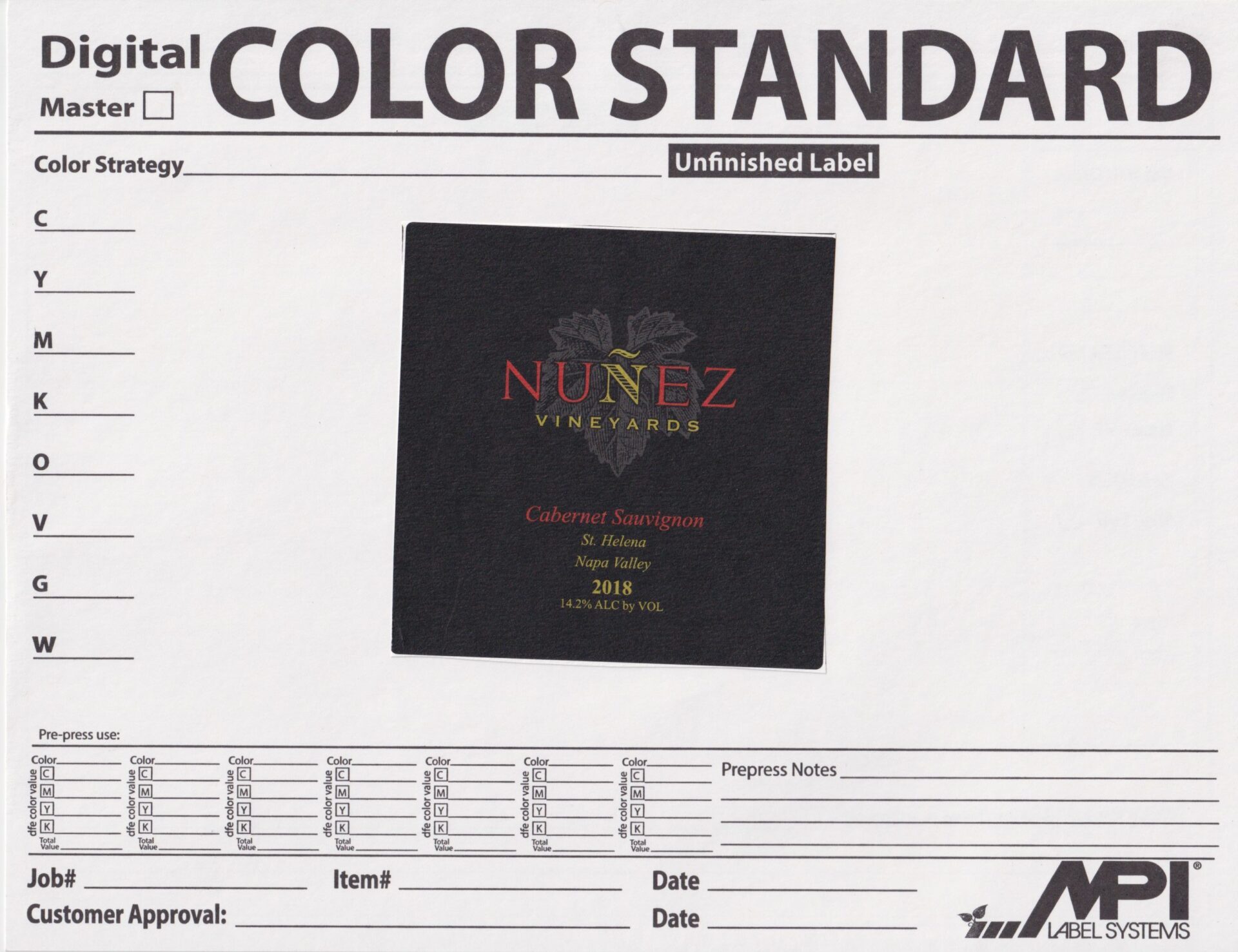
The press team will run a sample of our client’s label for the client’s rep (me) to approve, thus the term press check. Here, our client’s artwork, the Nunez Vineyards Napa Cabernet, is the approved ‘control’ label given to the press operator who must precisely match this artwork throughout the entire press run.
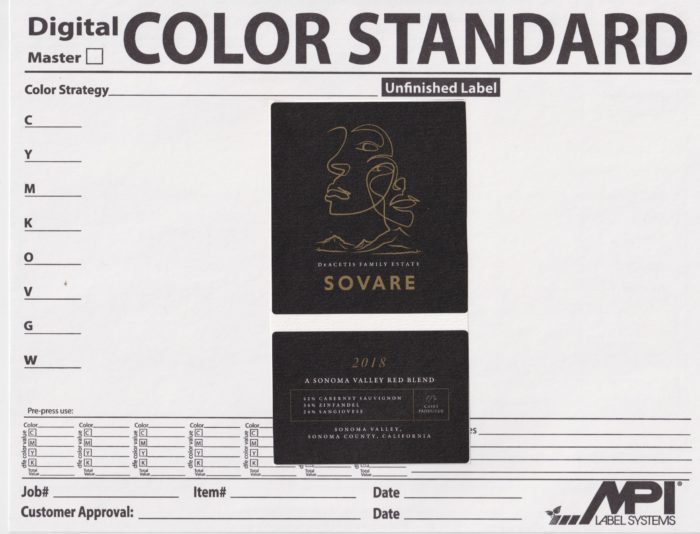
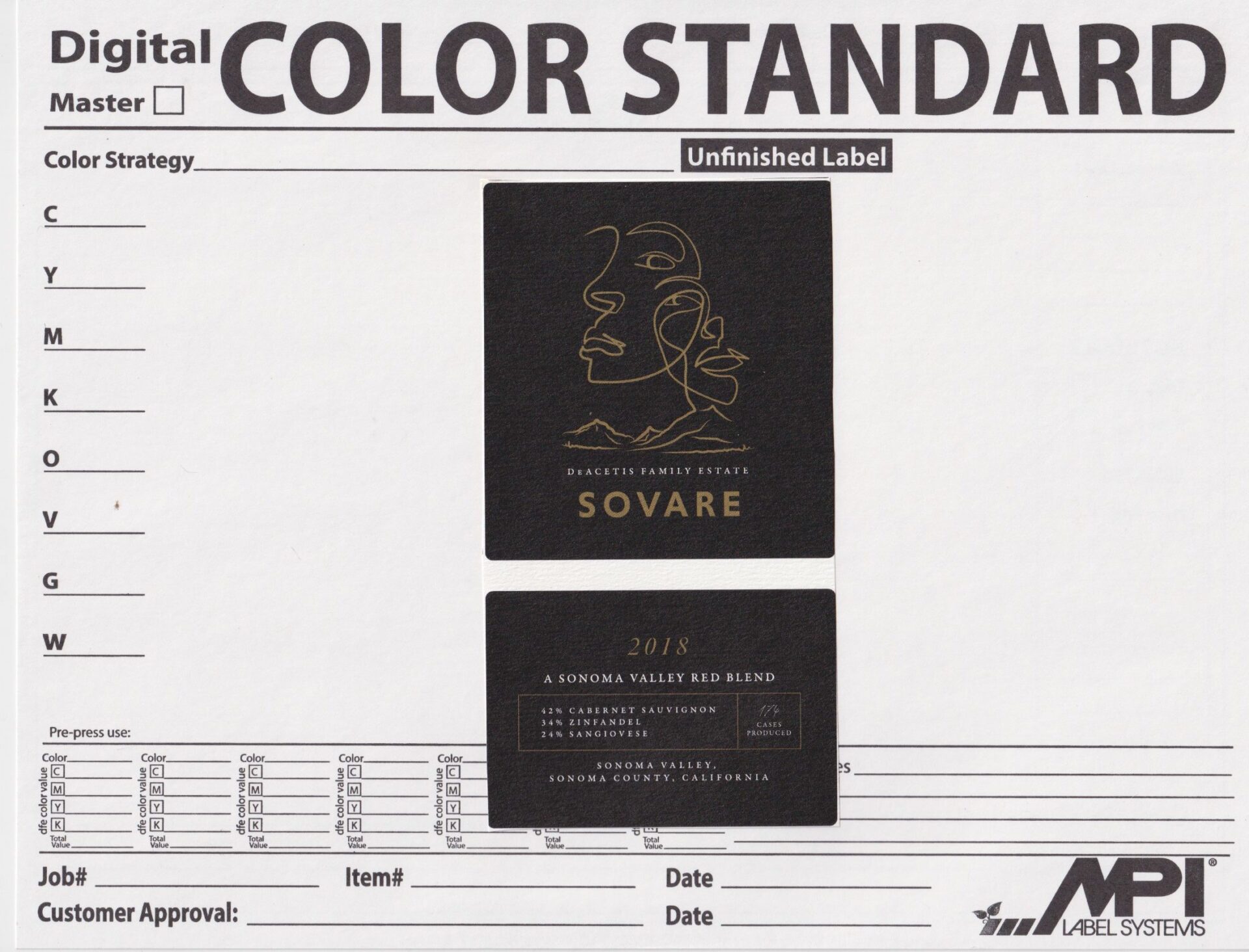
And this press check proof is for another of our clients, the DeAcetis Family “Sovare,” a field blend of Sonoma Mountain Cabernet, Sangiovese, and Zin wine.
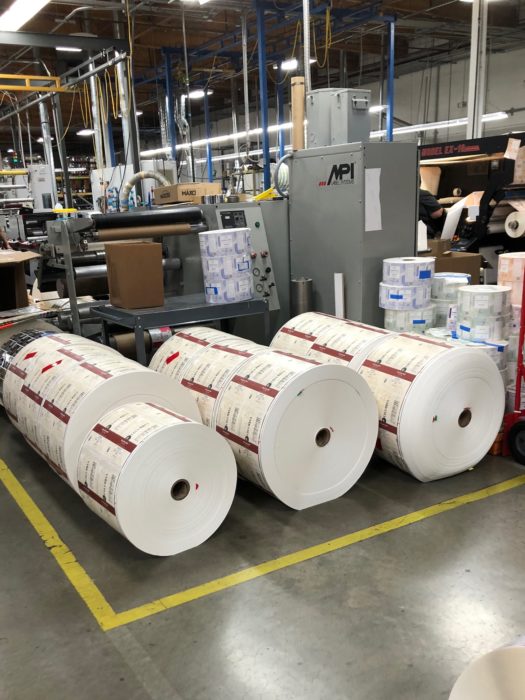
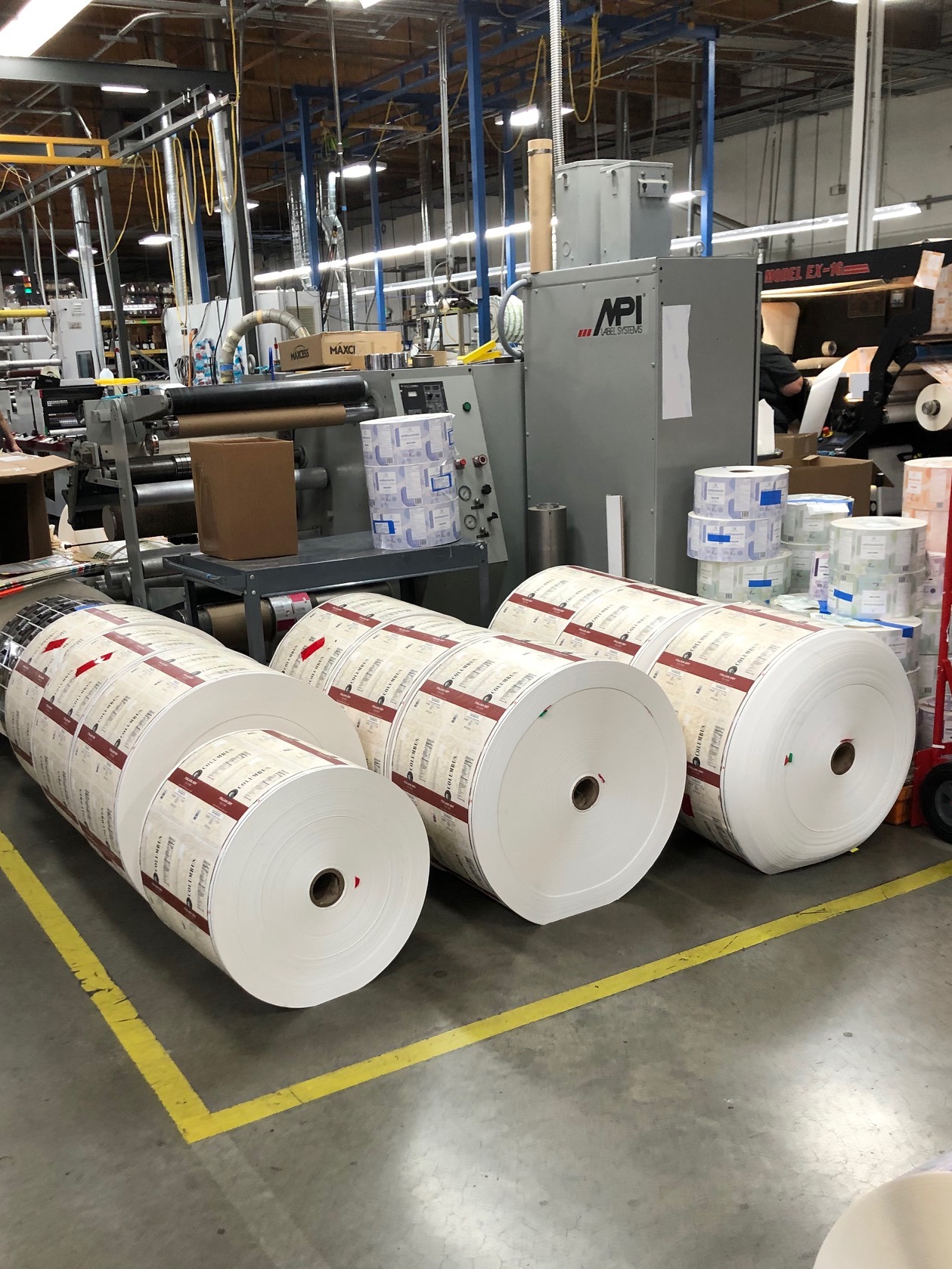
After running through the 1/4 mile long press, the label paper emerges as a continuous roll of almost-finished printed labels.
Video – watch the label printing on the press
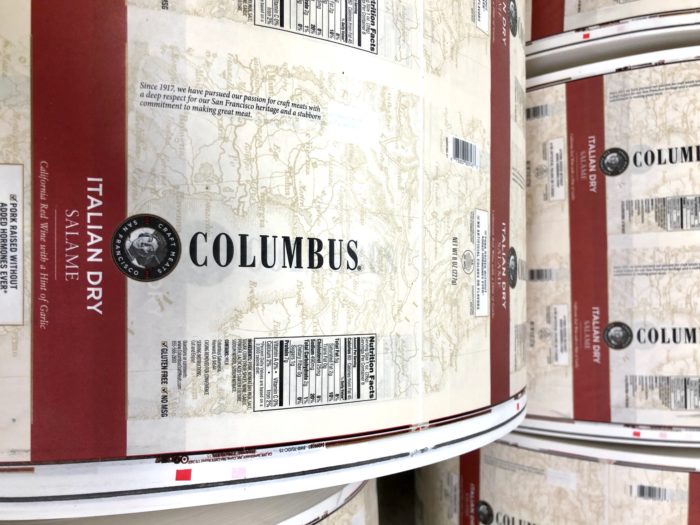
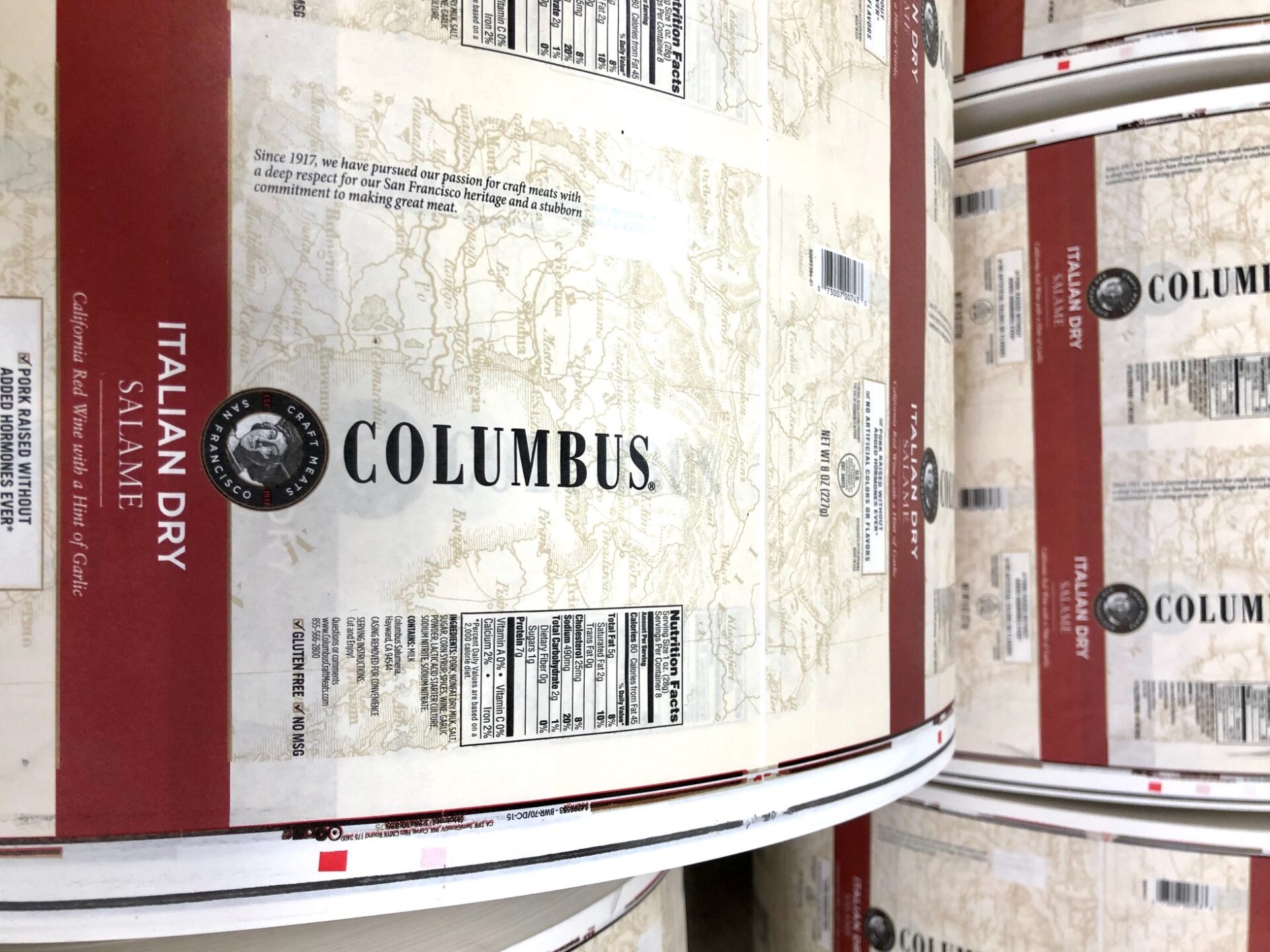
Whether it’s Safeway, Whole Foods, or Sonoma Market, food labels start with artwork that moves onto large rolls of paper and ends up here, as labels ready to apply to the package, in this case, Columbus Dry Salame.
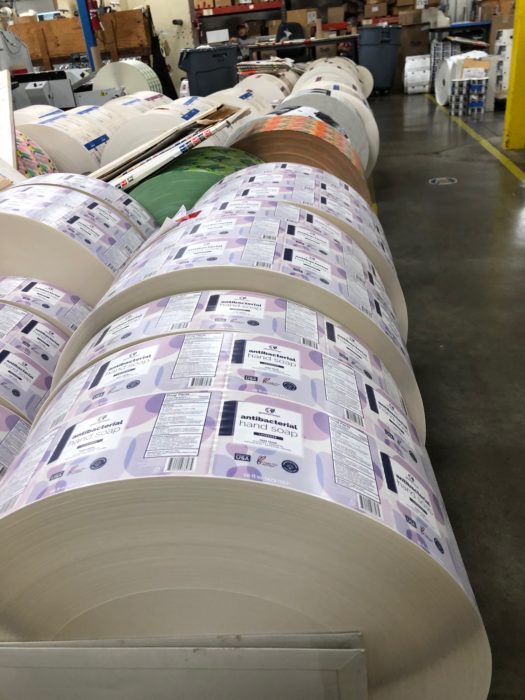
Here’s another example, in this case, many thousands of labels of a familiar brand of hand soap headed to Costco.

And a close-up of the hand soap label.
Bottling: after printing and processing, the labels make their way to the bottling line…
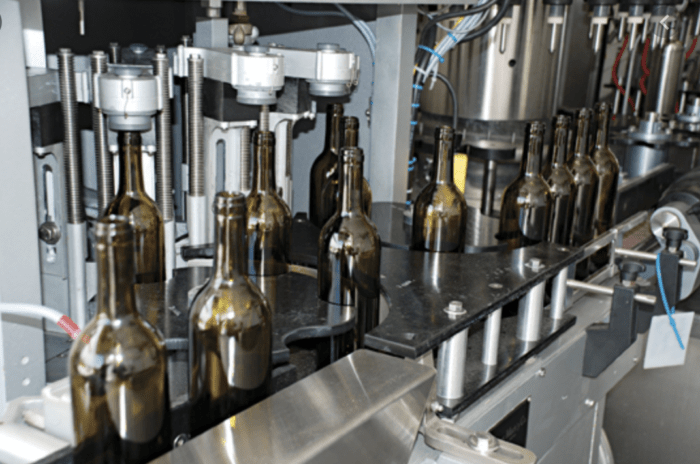
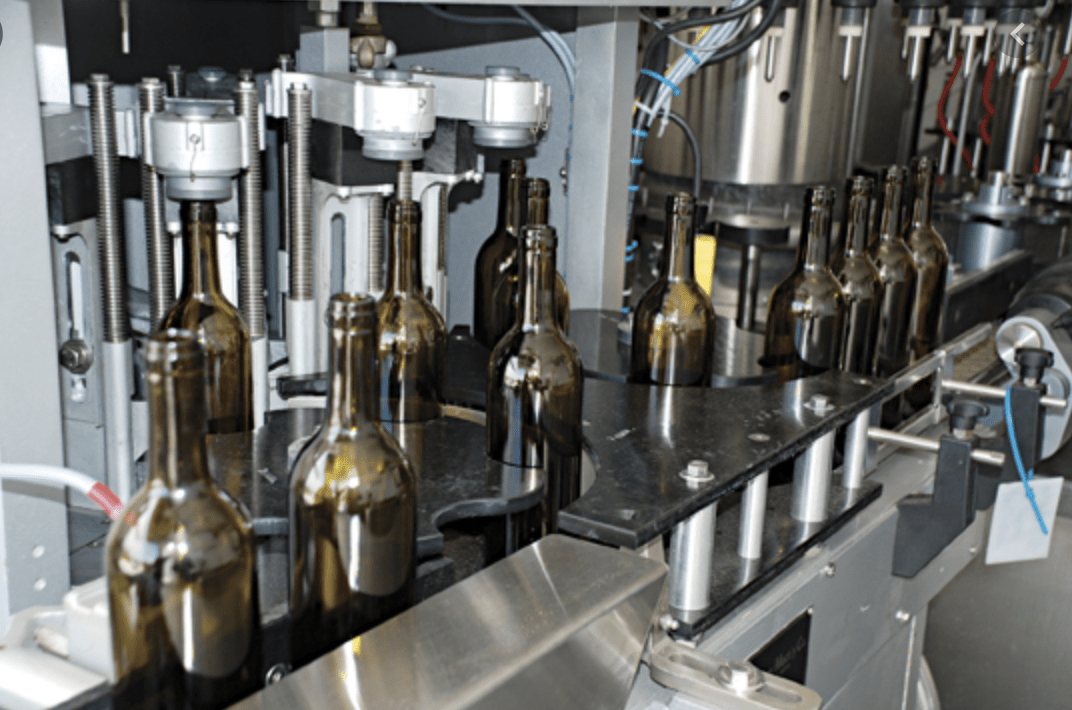
At the bottling line, new empty wine bottles are cleaned, ‘sparged’ with an inert food-grade gas which remove all oxygen, and then filled with wine.
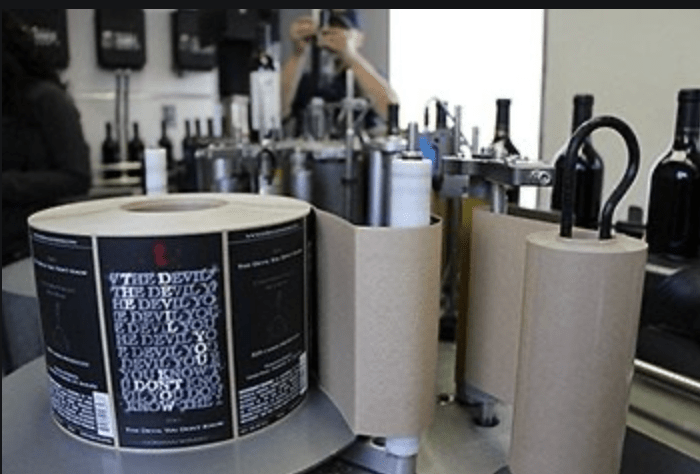
After wine, cork, and capsule, the cut and spooled labels are applied to the wine bottles.
Video – of finished cases exit the bottling line
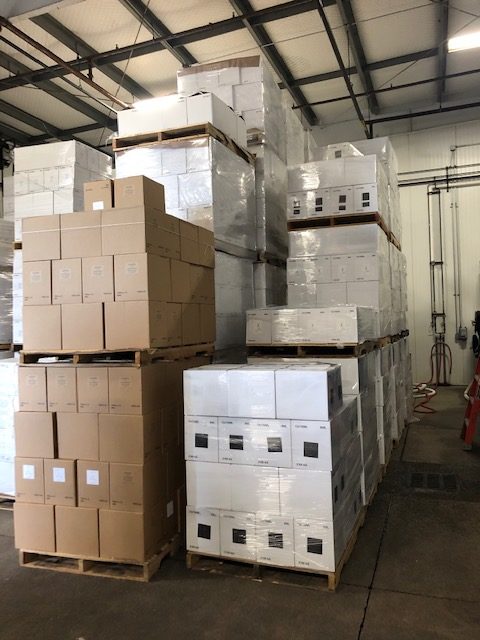
Palletized and stretch-wrapped pallets of wine head to the chilled fulfillment warehouse, and eventually to your home! In 20 short months, from harvest to finished product, your deep dark inky red wine is ready for delivery.
In other news around Sonoma – chickens, frittata, tacos, fresh produce, recipes, sourdough, art, walnut trees, and more:
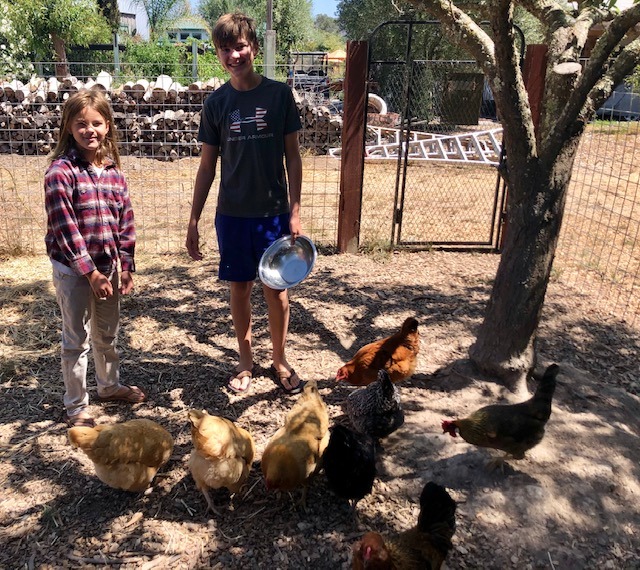
Neighborhood kids visit Hydeout Sonoma and the Dysfunctional Family chicken coop during a home-schooling exercise.
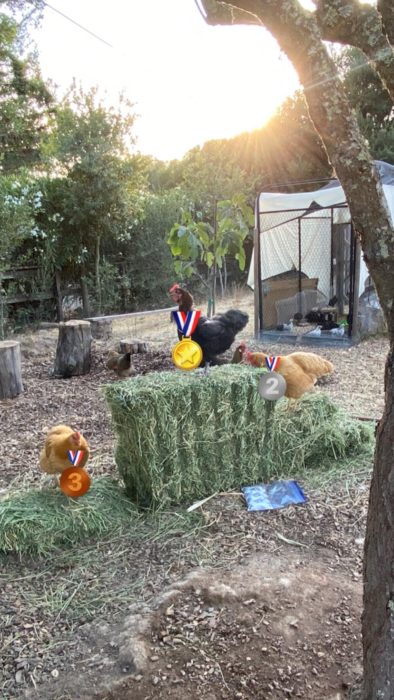
On top of an alfalfa bale, Buff wins bronze, Orpington wins silver, and Henny Penny wins gold.
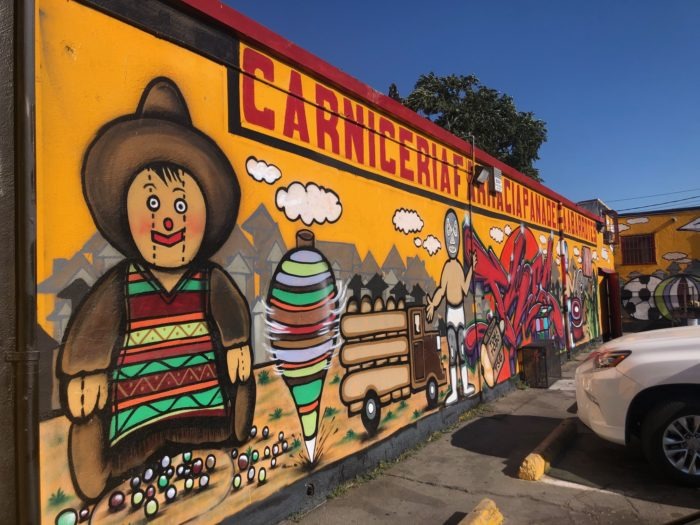
My personal favorite place to buy fresh-made corn “Azteca style” tortillas. Use navigation to find it!
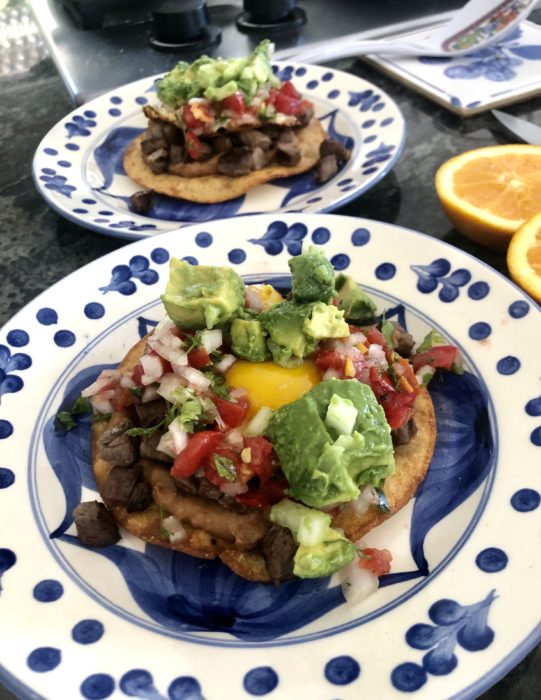
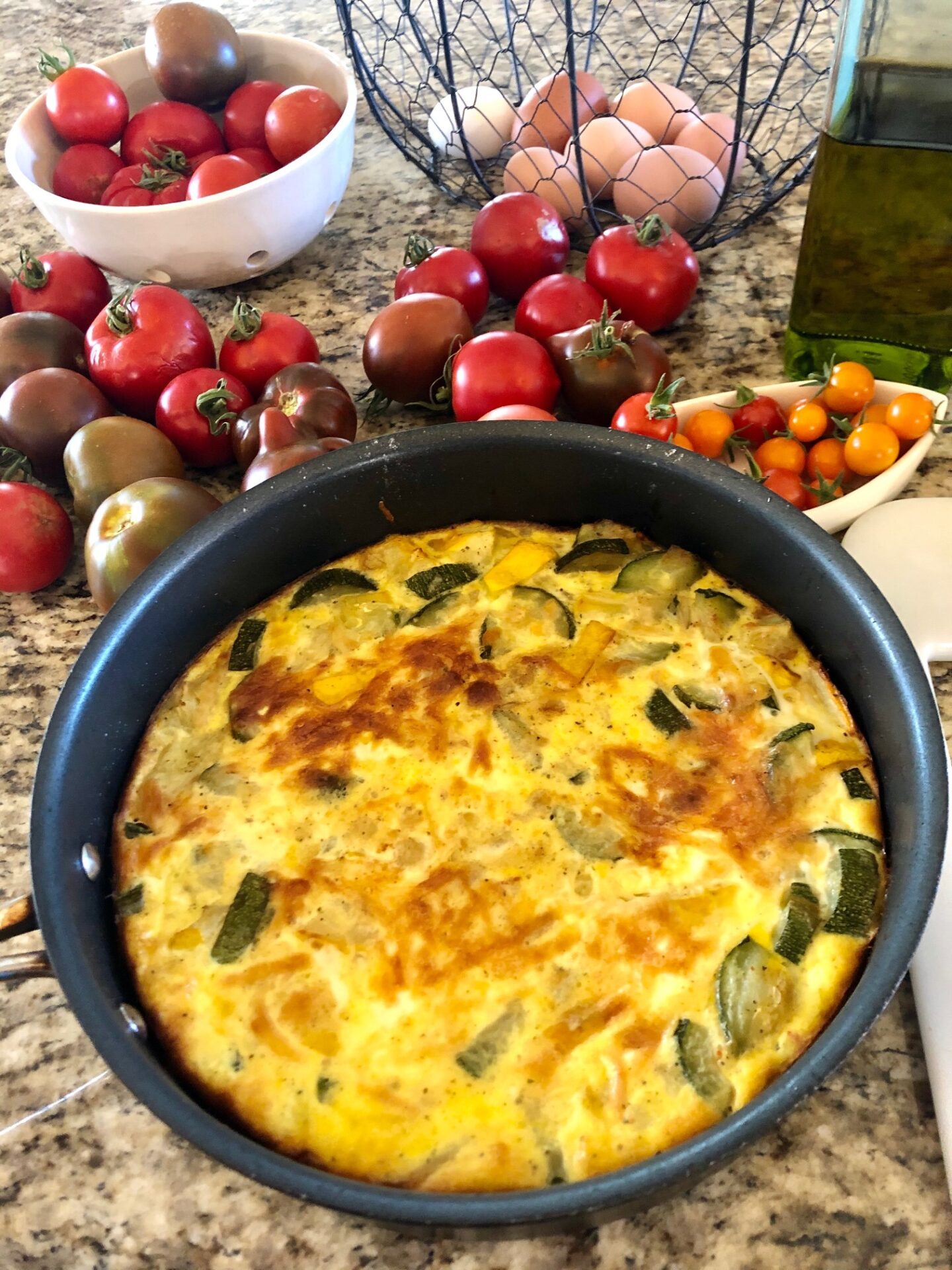
Enjoying our homemade farm fresh tacos – brings a brief pause to the endless fires and virus isolation – here’s a good taco recipe
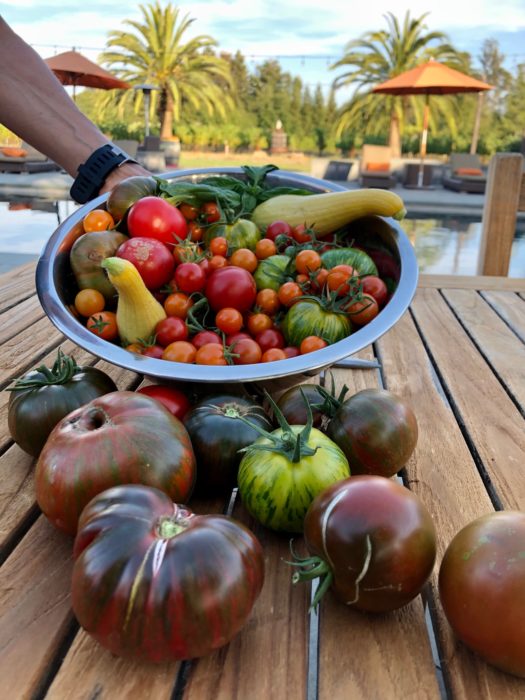
More mid-August produce from Hydeout Sonoma – this year’s various Zebra tomatoes are the clear winners – the green zebra is one this year’s favorites – learn more about heirloom green zebras
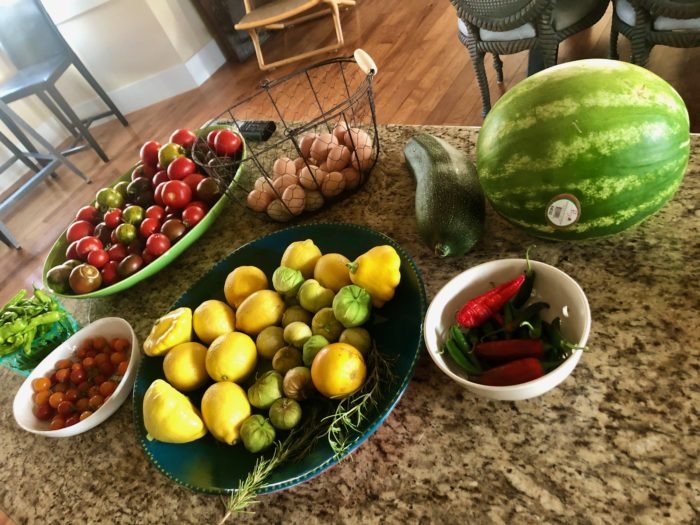
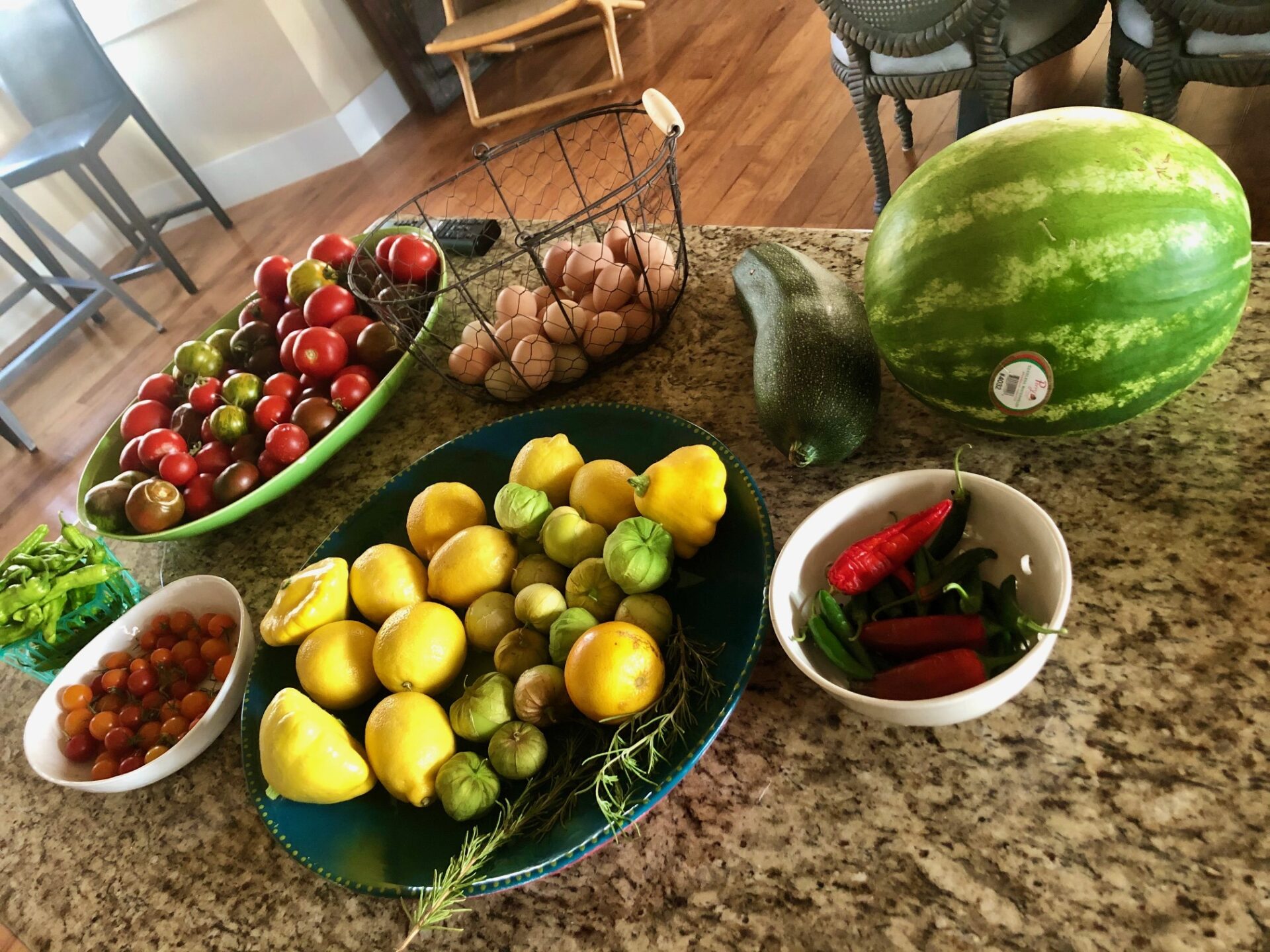
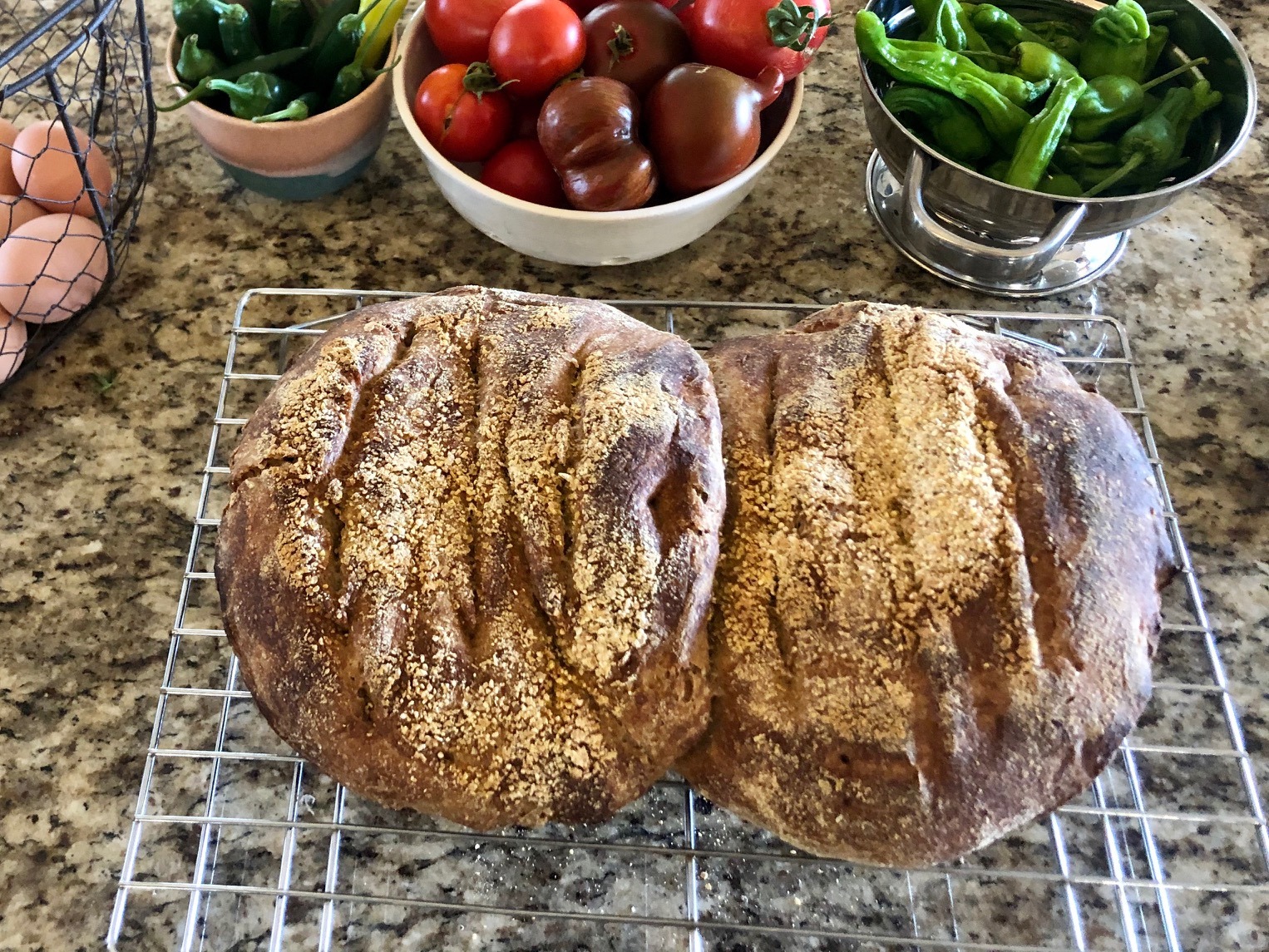
Hydeout Sonoma grew all the food in this photo…except one item. Can you guess? Where’s Waldo? (Yeh, it’s the watermelon). My favorite squash is the Pattypan. Small, sweet, few seeds, entirely edible with little waste – try growing some of your own Pattypans.
But wait, there’s more…
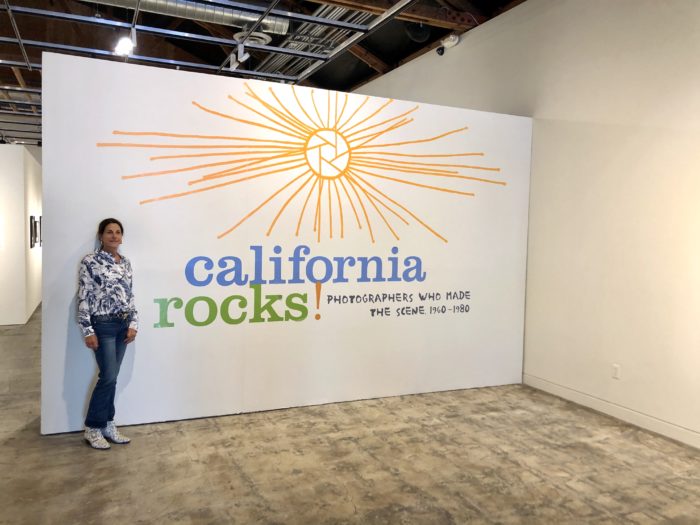
The Sonoma Valley Museum of Art launched a terrific new show, “california rocks’ just as the virus shut down Sonoma. This is a fantastic collection of photographs from many of the best rock shows in the Bay Area during the 70’s, from the Cow Palace, Winterland, Day-on-the-Green, and many more – see it online here: Sonoma Valley Museum of Art – ‘California Rocks”
Fires, again!
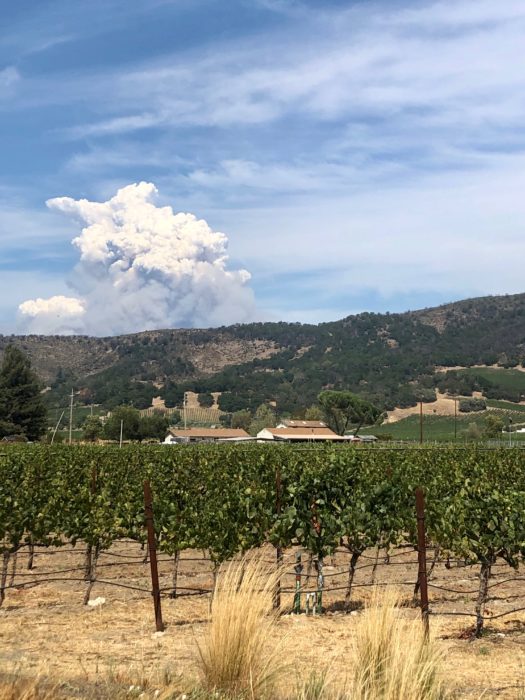
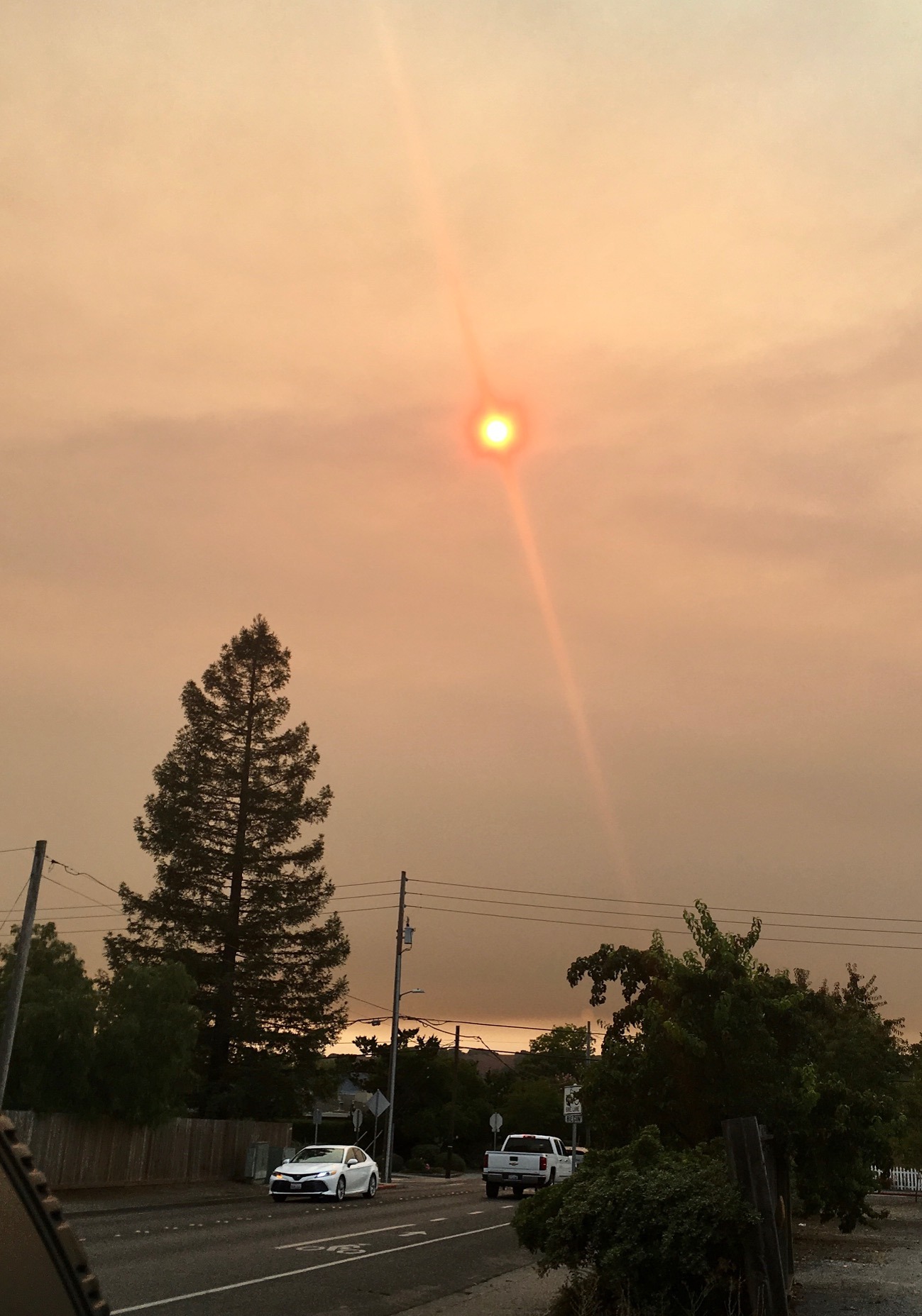
Oh no, here we go again. Last time it was the wind and downed power lines, this time it was ferocious lighting strikes, a rarity in NorCal. This was the start of it, as viewed from Hydeout looking east over Arrowhead Mountain toward Napa Valley over the hill.
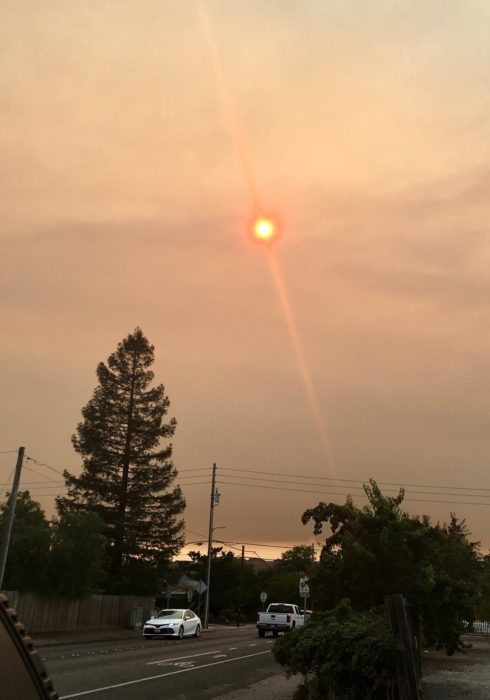
And a few days later…this is a view of the Hennessey / Soda Canyon LNU complex fire in Napa, as viewed around noon from the Hydeout in Sonoma.
80-year old Walnut trees harvested for fine furniture:
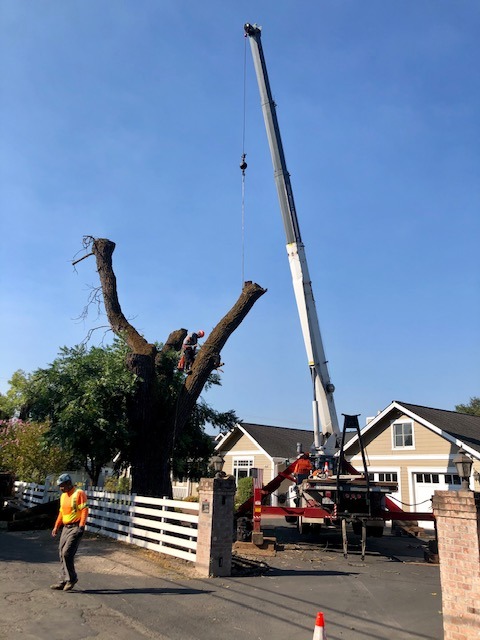
A friend and neighbor down the street prepares to take down two huge and dying 80-year old Walnut trees…
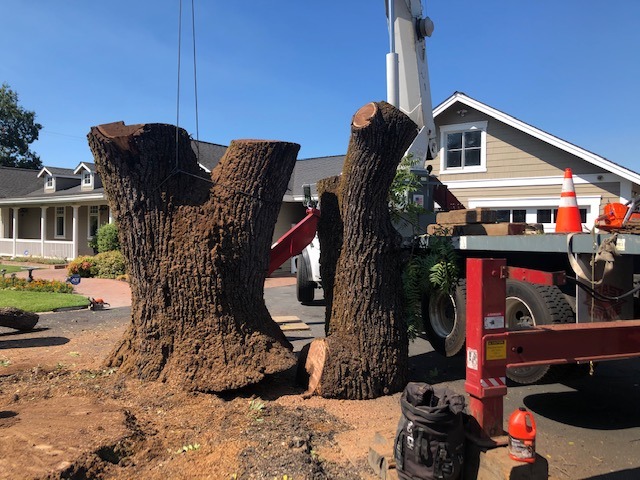
In a few short hours, the crew has the bulk of the tree on the ground. This piece was estimated to weigh in excess of 3 tons.
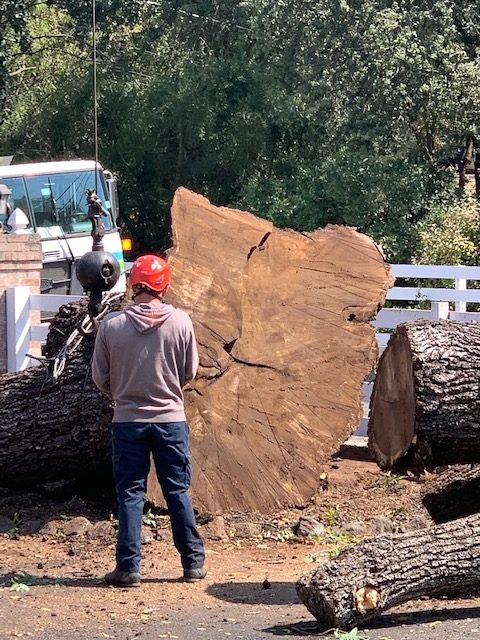
Large pieces of exotic Walnut will easily make in excess of $100,000 of furniture. These particular raw chunks will be slabbed on a huge band saw and dried for 3-5 years at my friend Evan Shively’s mill in Marshall – go to this website and watch this incredible drone video – Evan Shively’s famous wood mill in Marshall, called “Arborica”
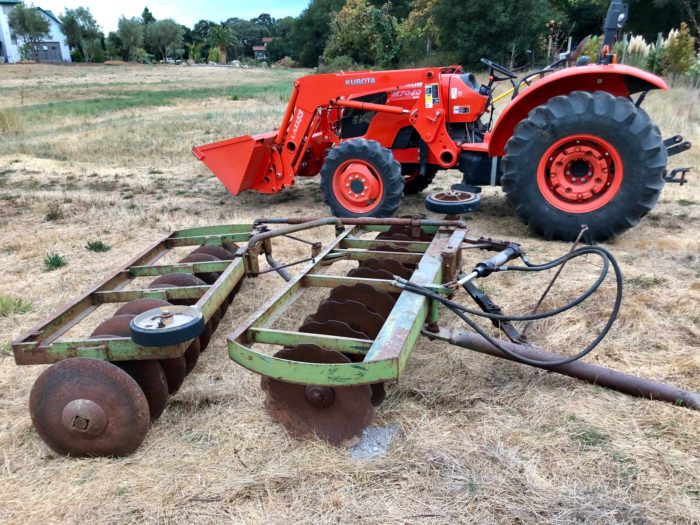
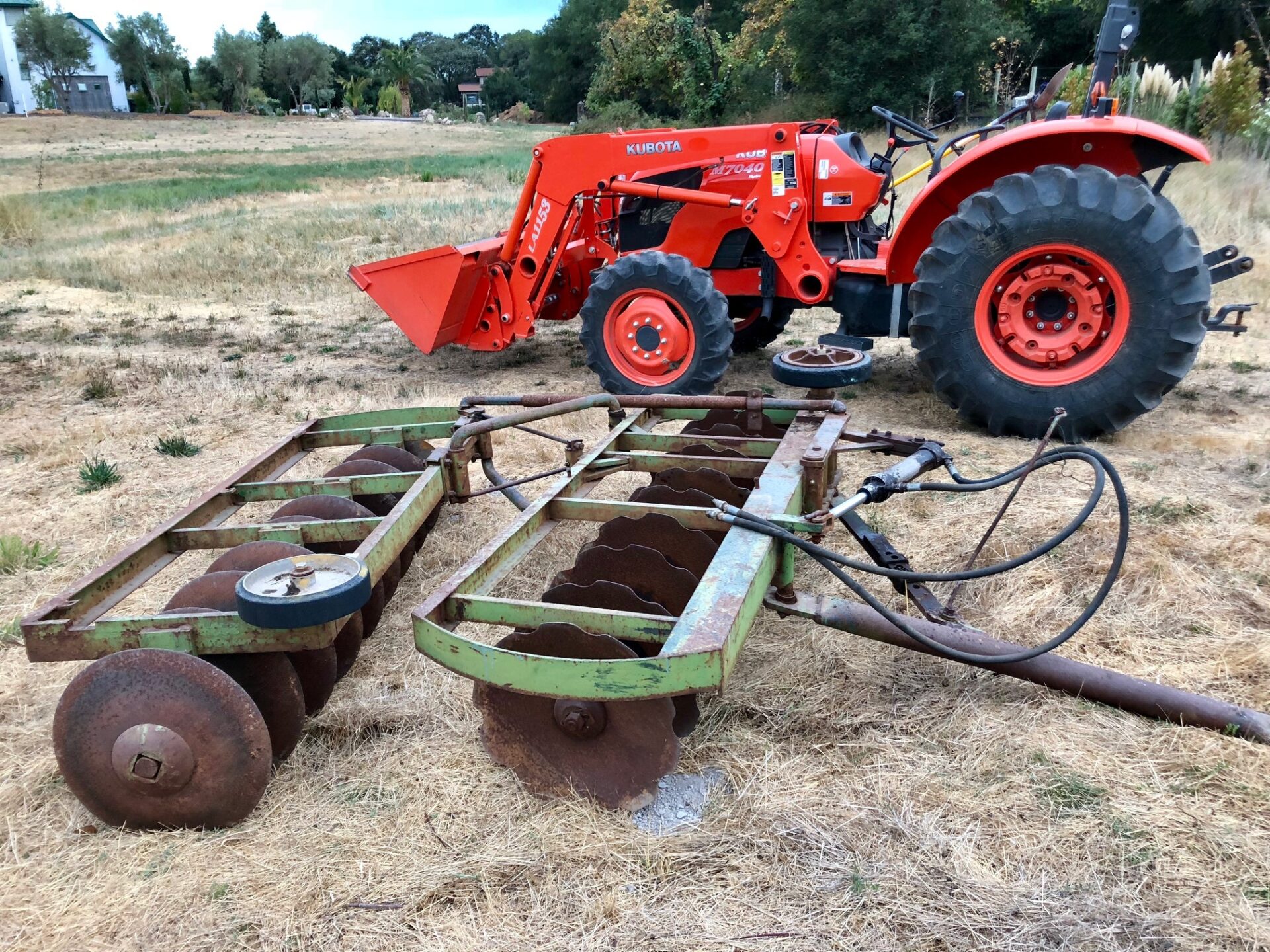
This very heavy 20-disc hydraulic-ram implement is for sale. Reply with best offer, let’s make a deal!

Some weird naked cowboy in a wine barrel snuck into this blog post. Thank you artist, renaissance man, and good friend Jock McDonald – see his website here – https://www.jockmcdonald.com
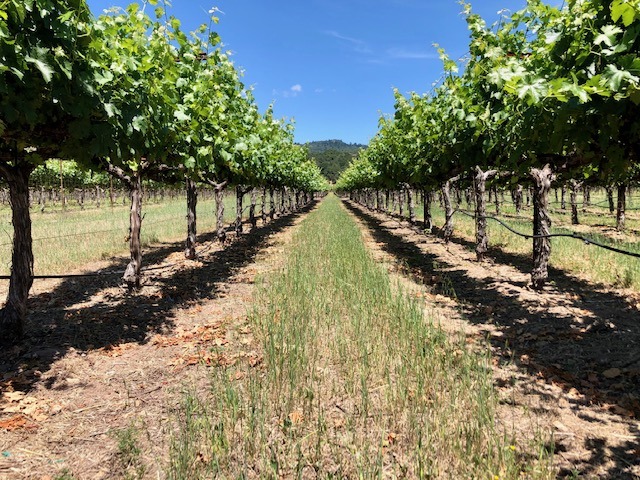
Jun 3, 2020 | Sonoma, Sonoma Farming, Vineyard, Wine
Hydeout Sonoma was selected by one of the arms of the historic Sebastiani wine family to return two iconic vineyards to their former glory. But it almost takes a secret Sonoma decoder ring to explain the vaunted family history, players, vineyards, and wines. More on that later. Let’s start with the work in process…
“Los Liones” vineyard block: Hydeout Sonoma was tasked with the complete renovation of this famous vineyard. Here is an abbreviated one-year pictorial essay following the reborn “Los Liones” vineyard, from raw land to completed vineyard:
“Stone Fruit Square” block: We then cast our eyes on the equally iconic “Stone Fruit Square” vineyard just east of downtown Sonoma at the intersection of Lovall Valley Road and Gehricke Road. This 25-year old quadrilateral-trained Cabernet vineyard was once a part of the renowned ‘Cherryblock’ vineyard. Now, a piece of the famed ‘block’ has been segregated away and re-named “Stone Fruit Square” (this is August’s terrific play on words!). This fruit is also destined for the “Gehricke” ‘Upper Eastside’ label.
Now, the rest of the story…
Don and Nancy Sebastiani are the 3rd generation owners of the “Los Liones” vineyard. Their children, Donny, August, and Mia all have their hands in interesting wine country ventures. Fruit from the “Los Liones” vineyard once went into a small production red wine called Subterra. Mia’s husband, Kendrick Coakley, along with his local friends, made a beautiful red wine from the “Los Liones” block. When 3Badge CFO Keith Casale handed me a bottle of Subterra, I opened it with some noteworthy Silicon Valley execs who have impeccable wine cred. They joined me in becoming immediate customers of Subterra.
But old age took down the original 1960’s era “Los Liones” vineyard and a replanting plan was set in motion last year (as you read about above). In parallel, we shifted the farming of the “Stone Fruit Square” vineyard from commercial mechanized farming to hand-cultivated farming. We intend to deliver deeper darker fruit as a result. August is the founder of 3Badge Beverage Corp. which is located in the former ‘firehouse’ at the corner of Broadway and Patten and the company “3Badge” is named in honor of family members who once held positions in the police and fire departments. Fruit from the “Los Liones” and “Stone Fruit Square” vineyard blocks will be combined under the Gehricke label as a ‘vineyard designate’ called “Upper East Side” (as both vineyards are located in the swanky upper eastside neighborhood of Sonoma town).
Hydeout Sonoma will continue to develop and farm these iconic vineyard blocks. And we’ll do our best to bring forth fruit that will assure that the “Gehricke” ‘Upper East Side’ vineyard designates continue their iconic reputation.
Additional vineyard notes (for those who just can’t get enough technical info):
“Los Liones” vineyard:
- Plant type – Ubervine from Novavine
- Variety – Cabernet Sauvignon
- Clone: VCR 198.1 (proprietary selection from Vivai Cooperativo Raucedo via Foundation Plant Material Services at UC Davis)
- Rootstock: 110R (berlandieri x rupestris, medium vigor, loves hillside gravelly soils)
- Vine architecture: bi-lateral cordon (moving toward cane-and-spur in year +/- 5)
- Farming: 100% organic, irrigated during youth, moving toward deficit irrigation
“Stone Fruit Square” vineyard:
- Planting – old school 1960’s plant canopy and spacing
- Variety – Cabernet Sauvignon
- Clones: Various
- Rootstock: St George (‘terra rosa’ volcanic soil)
- Vine architecture: quadrilateral cordon
- Farming: 100% organic, deficit irrigated and/or dry farmed depending on the year
@gehrickewines
#gehricke
#gehrickewines
A final thought: We are in a time of terrible upset in our great country. It seems as if everything is politicized and polarized. We at Hydeout Sonoma takes very seriously the issues we are all confronting. But our blog post is not the forum for otherwise welcome debate. Still, we hope for health, peace, and liberty for all.
May 8, 2020 | Wine
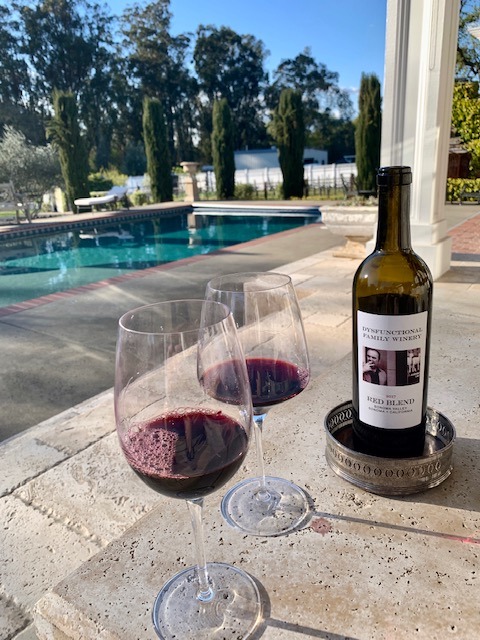
What can a winemaker do to ease the shelter in place burden? Hand deliver wine, of course. Members of our growing ‘Dysfunctional Family’ wine community receive their bottles of wine, sometimes in a direct handoff, sometimes over the fence. This was in early April 2020 before masks and gloves! And it’s also a photo travelogue of sorts from around Sonoma. Enjoy:
In other ranch and grape news around Sonoma Valley…
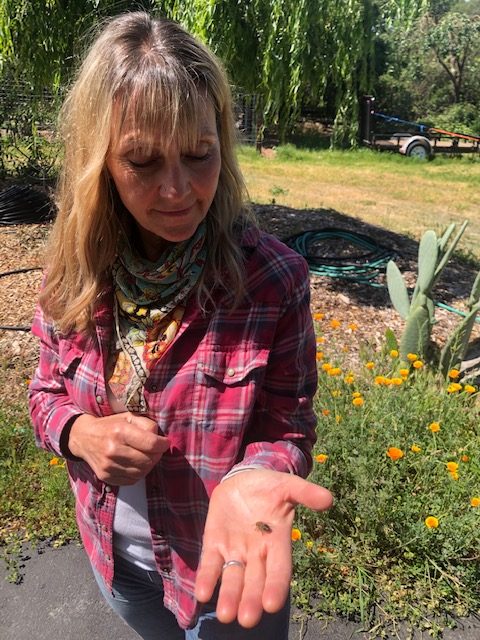
Renowned beekeeper and Hydeout Sonoma neighbor Chere Pafford finds a large drone honey bee napping on our driveway. A drone is a male bee that is the product of an unfertilized egg. Drones have bigger eyes and lack stingers. They cannot help defend the hive and they do not have the body parts to collect pollen or nectar, so they cannot contribute to feeding the community. The drone’s only job is to mate with the queen. Link: Sonoma Honey Bees
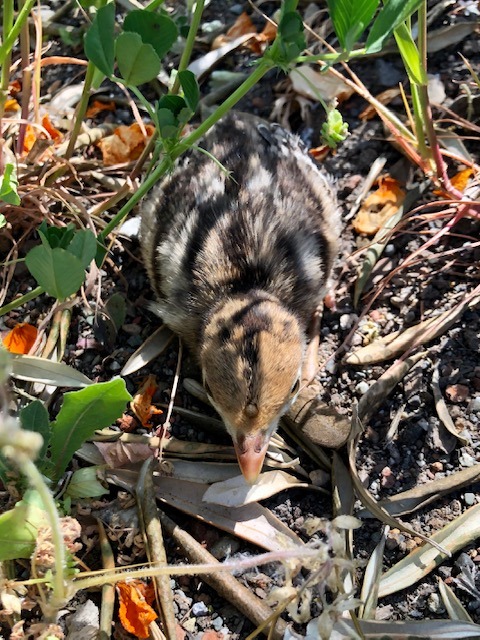
From the first clutch of wild turkey babies this season, we saw this one (and its 8 siblings) hiding in the brush under an olive tree waiting for its mother to return to collect them all. It’s not safe for them to wander around in the open while the Red Tail hawks are around. Link: all about wild turkeys

Bud break at the Dysfunctional Family estate vineyard, just after mowing the yellow mustard which had gone to seed. We’ll be launching our ubiquitous Dysfunctional Family wines – a Sagrantino-based ‘Estate Reserve’ and the Sonoma Valley ‘Red Blend’ – just as soon as the County lets us convert the old white barn into a functional winery. That story will be told in it’s entirety some day…
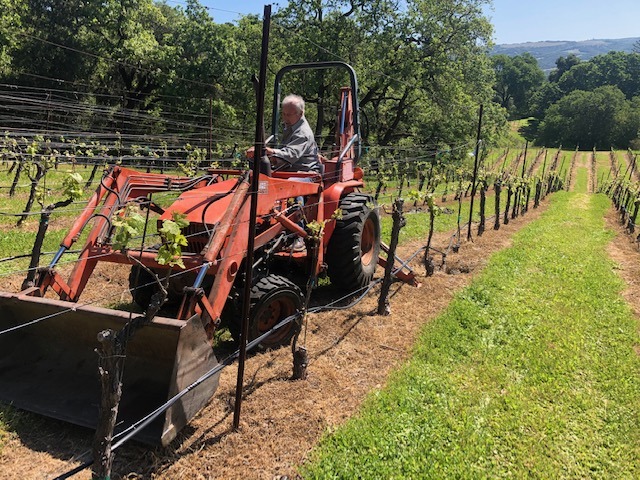
Client and friend Steve R. brings out the big gun (his old but very well maintained Kubota with the rear excavator attachment) to help us locate an irrigation supply line in his vineyard. He’s growing Cab Franc and Merlot here on Sonoma Mountain. Steve’s “Octagon” Morning Mountainside label is only available directly from the estate.

Famed photographer and Sonoma friend Jock McDonald makes an appearance dressed as if there was end-of-the-virus party. But no, we were just social distancing. Thankfully, it didn’t end up like the pre-virus visit with Jock naked in the pool and the rest of us trying not to look! Hah. https://www.jockmcdonald.com
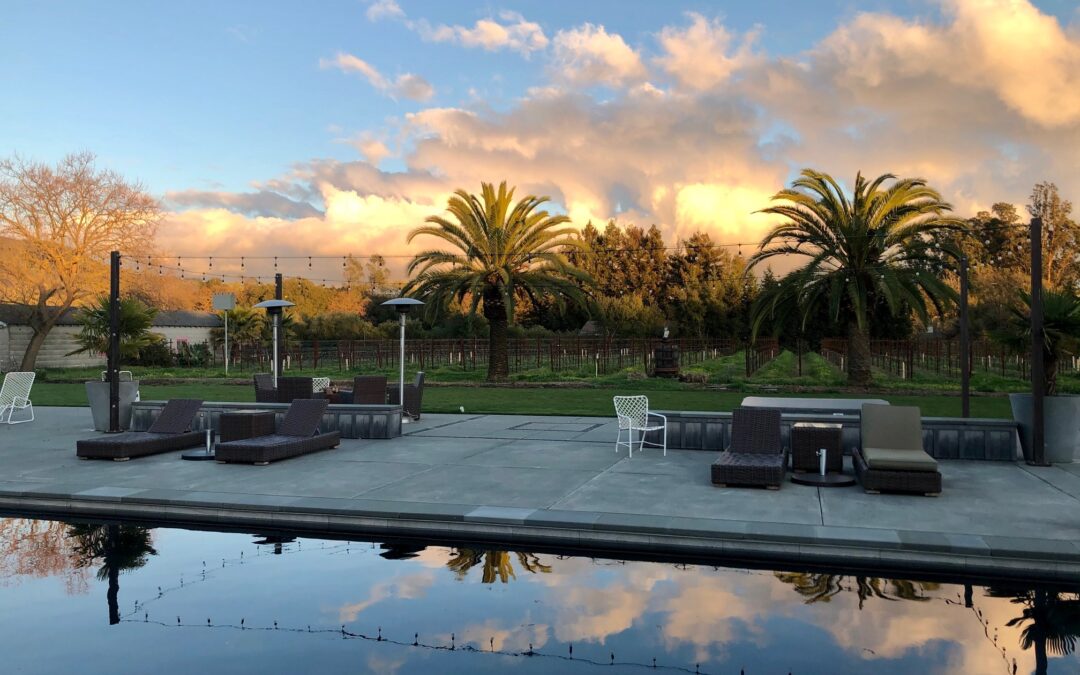
Mar 11, 2020 | Sonoma, Sonoma Farming, Wine
Sonoma farm life is explored, scroll through to be entertained, learn, and laugh…or just waste 10 minutes before your next ‘bored & working from home’ Corona virus zoom video conference.
Vineyard pruning in March
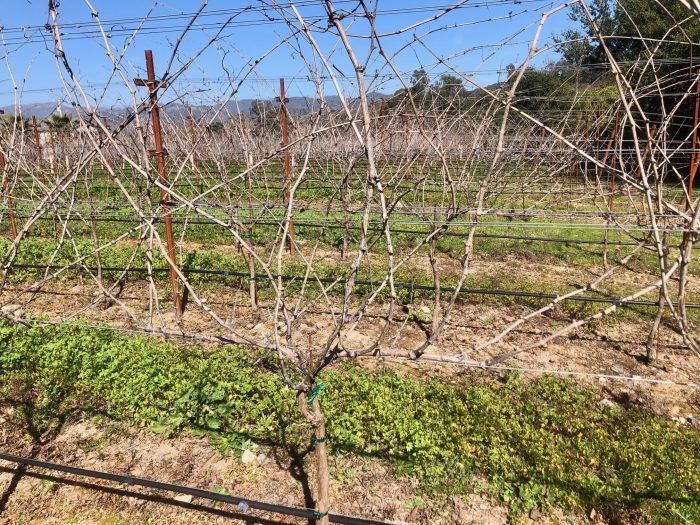
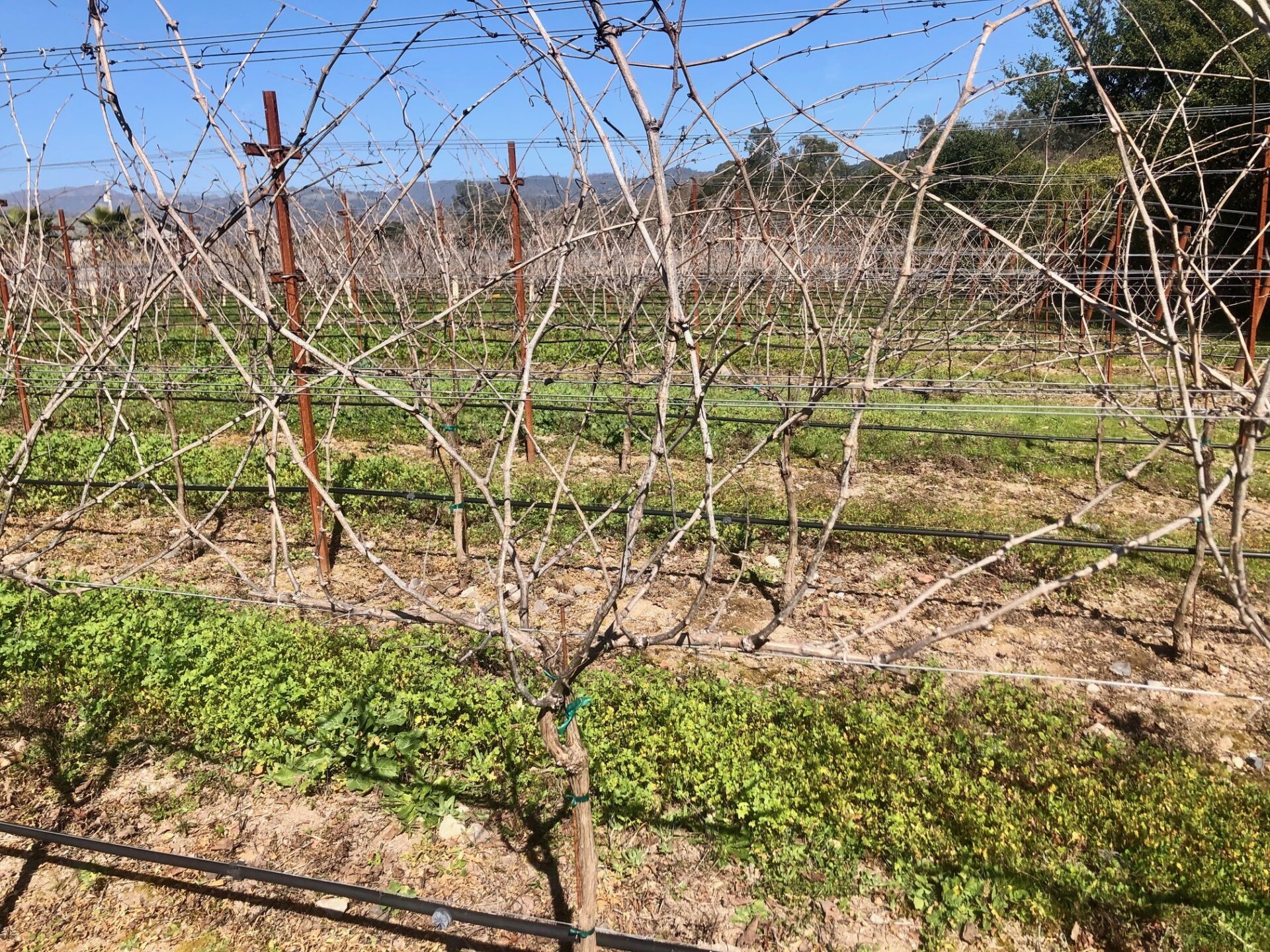
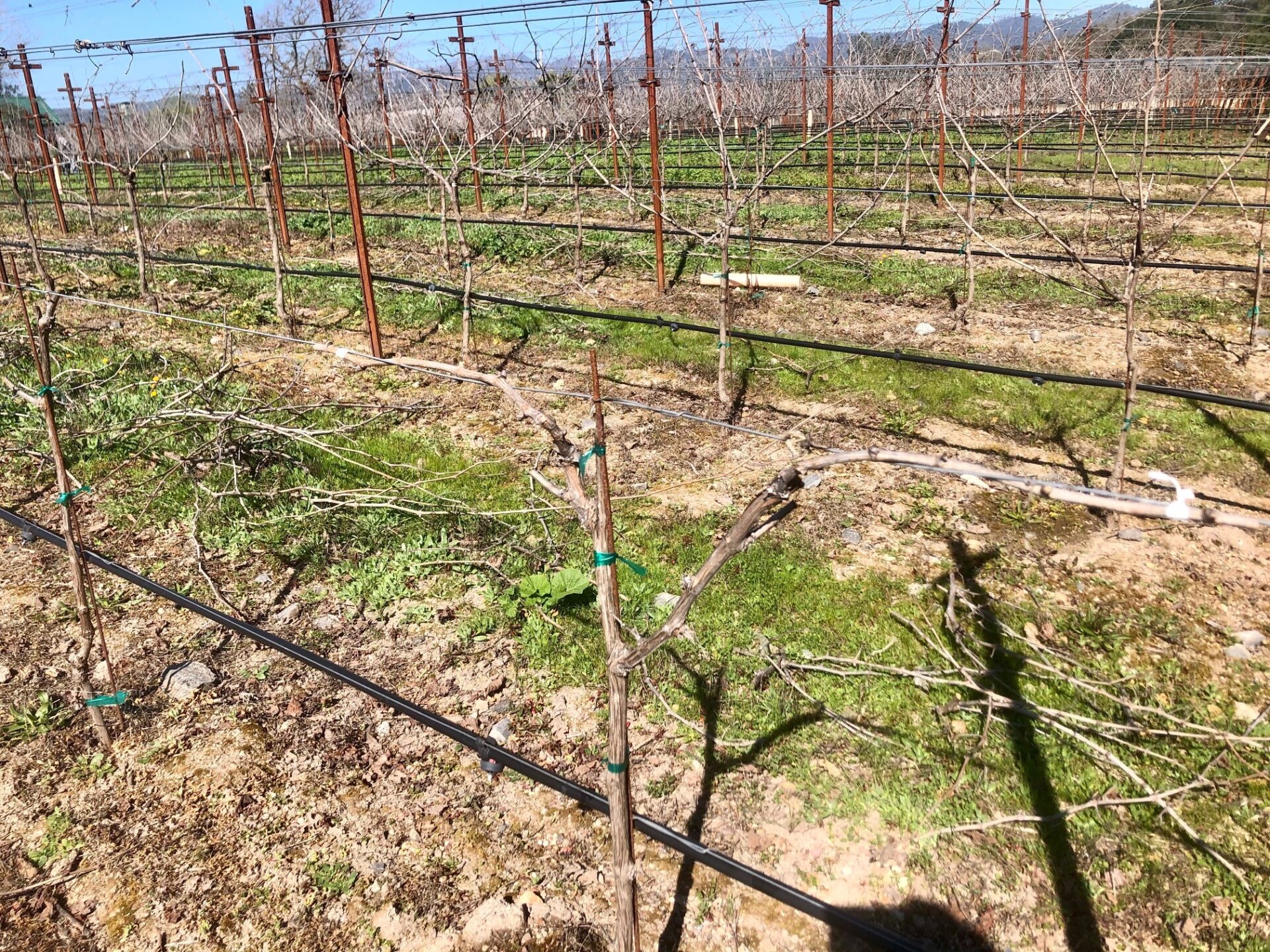
Here is an example of a grapevine waiting to be pruned. As a deciduous plant, it drops all of it’s leaves in winter and translocates carbs and nutrients from the woody shoots back into the roots. In spring, those nutrients push back into the new shoots supporting growth.
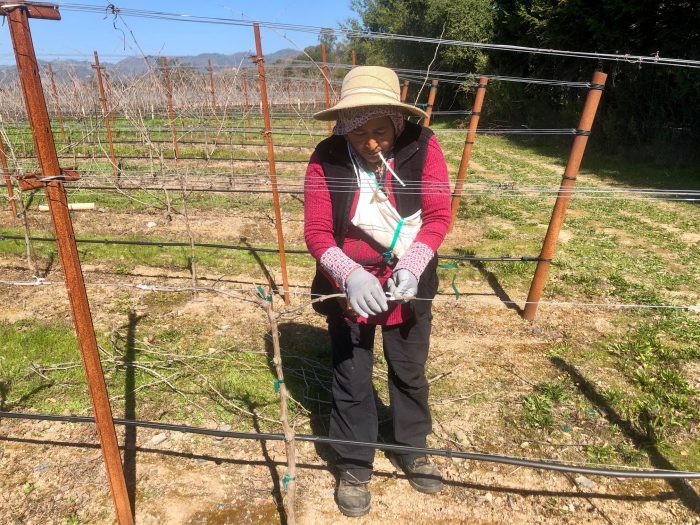
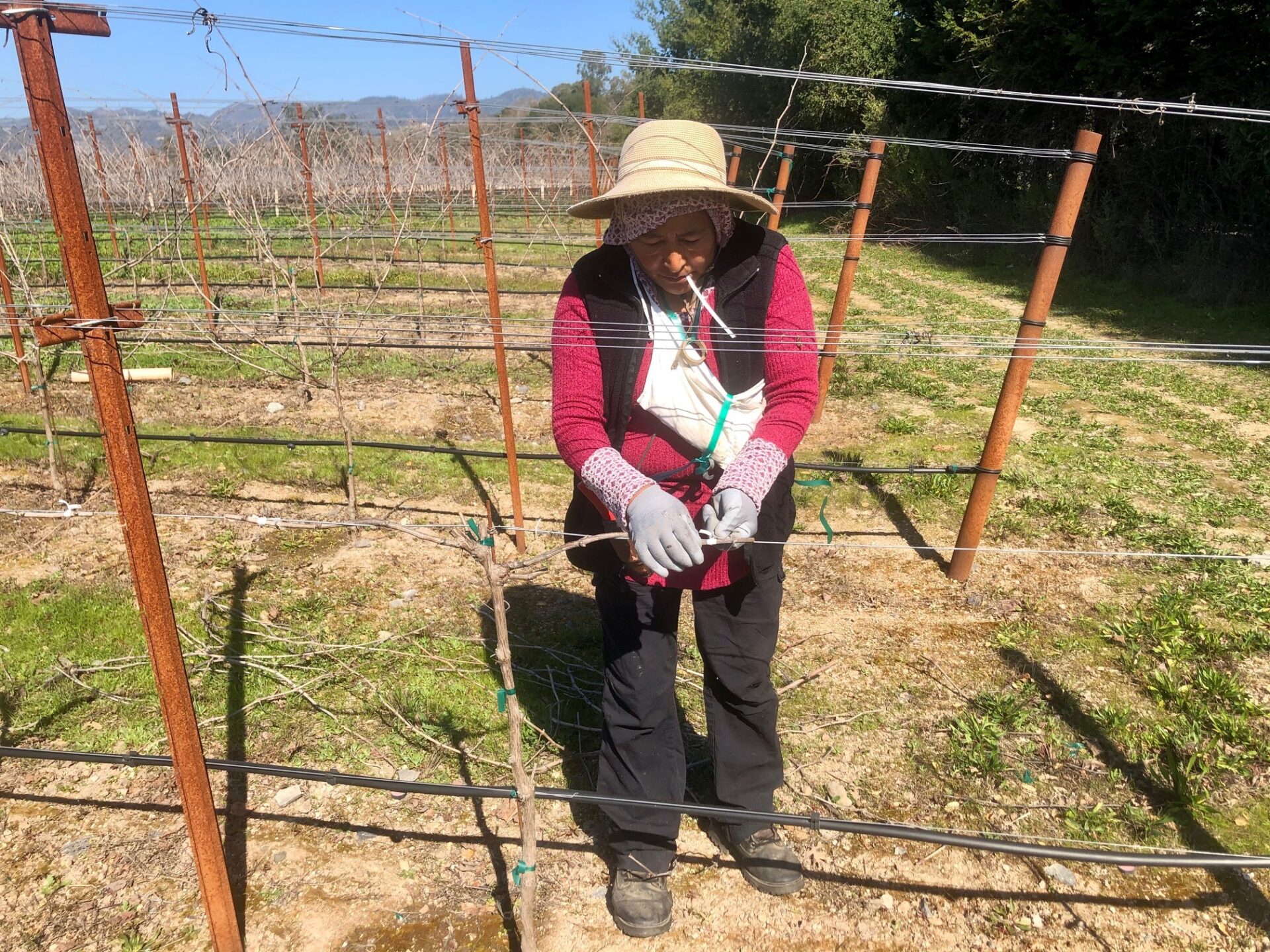
Our beloved Emma, a world class grapevine pruner at work.
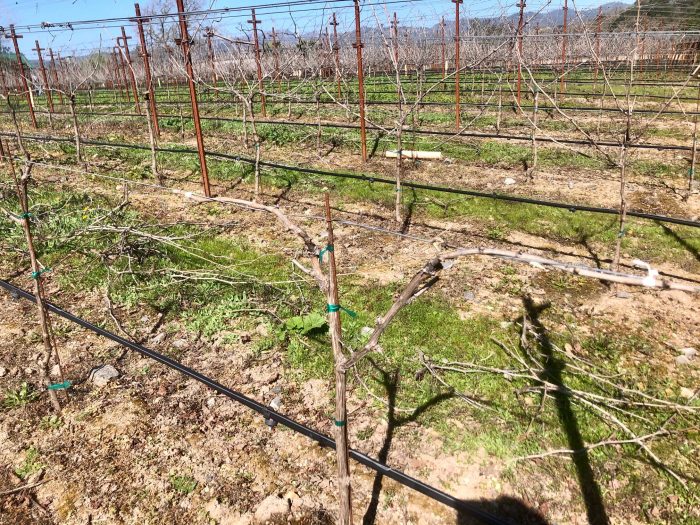
The pruned and tied vine. Note all the previous year’s wood has been removed (on the ground waiting for mowing into in-place compost), and only the ‘new wood’ has been tied horizontally to the training wire (the wire above the black drip hose). Picture this being done thousands of times per acre and you have some sense of the labor and expense of vineyard farming. Sonoma farm life
Gardening
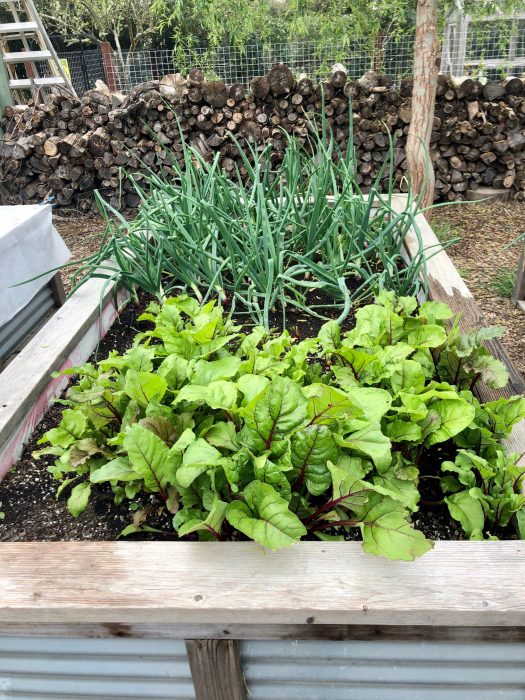
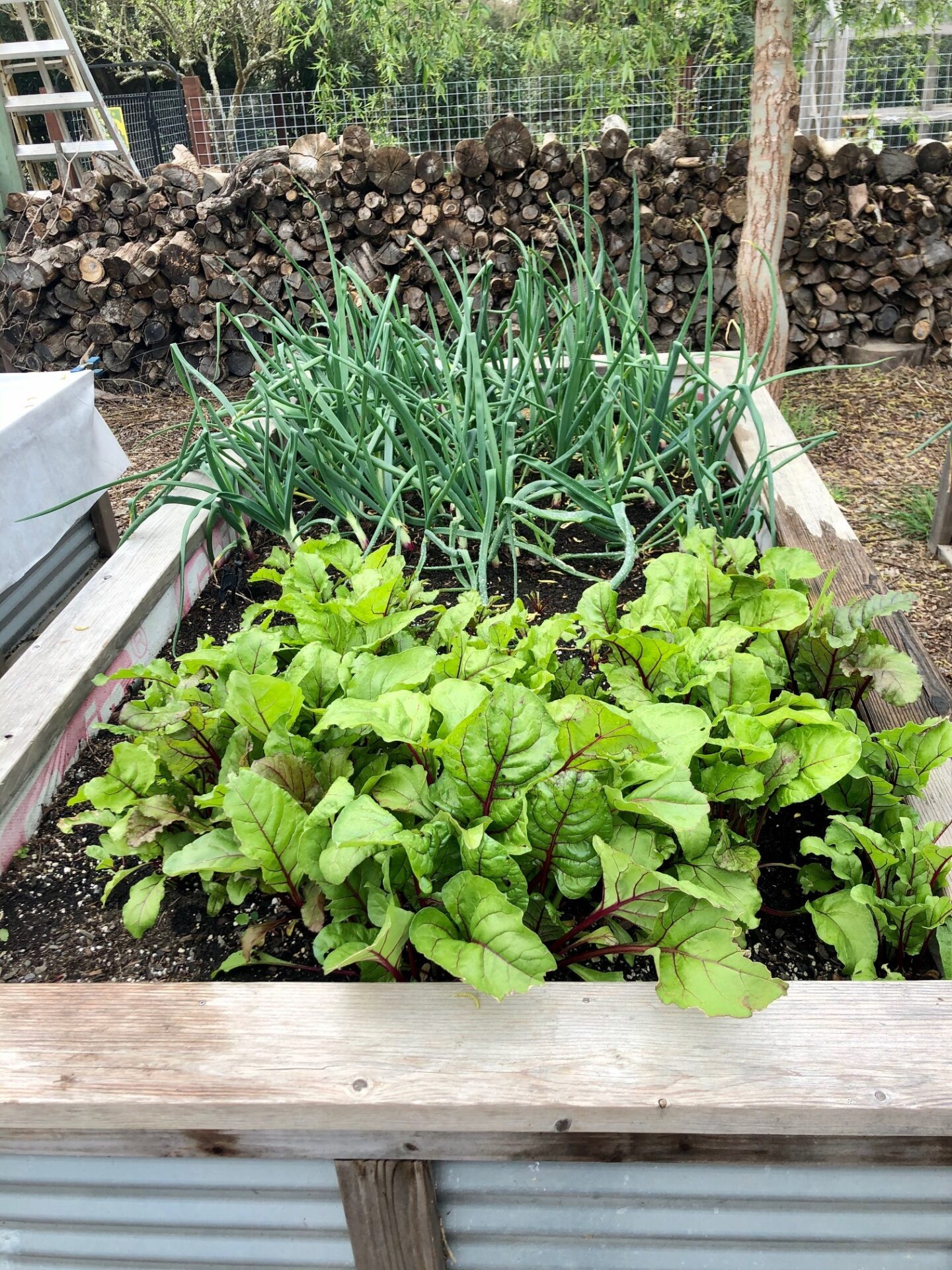
One of our raised beds – Beets in the foreground, red onion sets in the background, about 4 weeks from harvest, around April 10th.
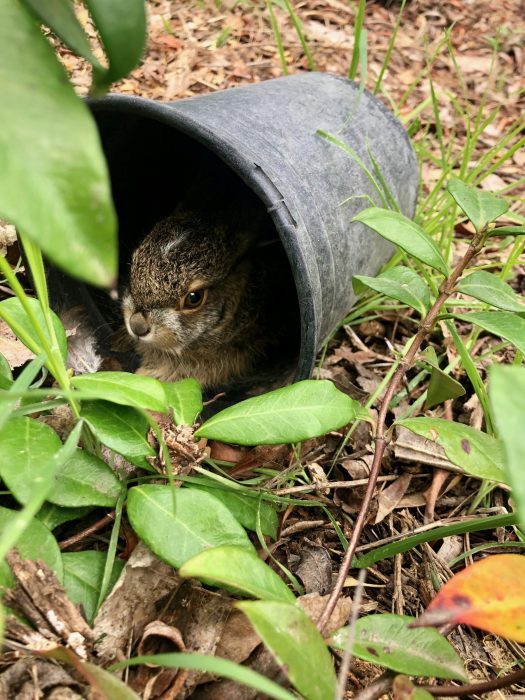
The bunnies have been reproducing especially rapidly this year. This baby here has possibly lost its mother and is temporarily hiding in this empty plant container till dark. Always interesting to follow which animal populations expand or shrink depending upon conditions. We’ve always had the usual gophers, deer, rabbit, and fox, and recently a family of weasels under the rock pile. Sonoma farm life
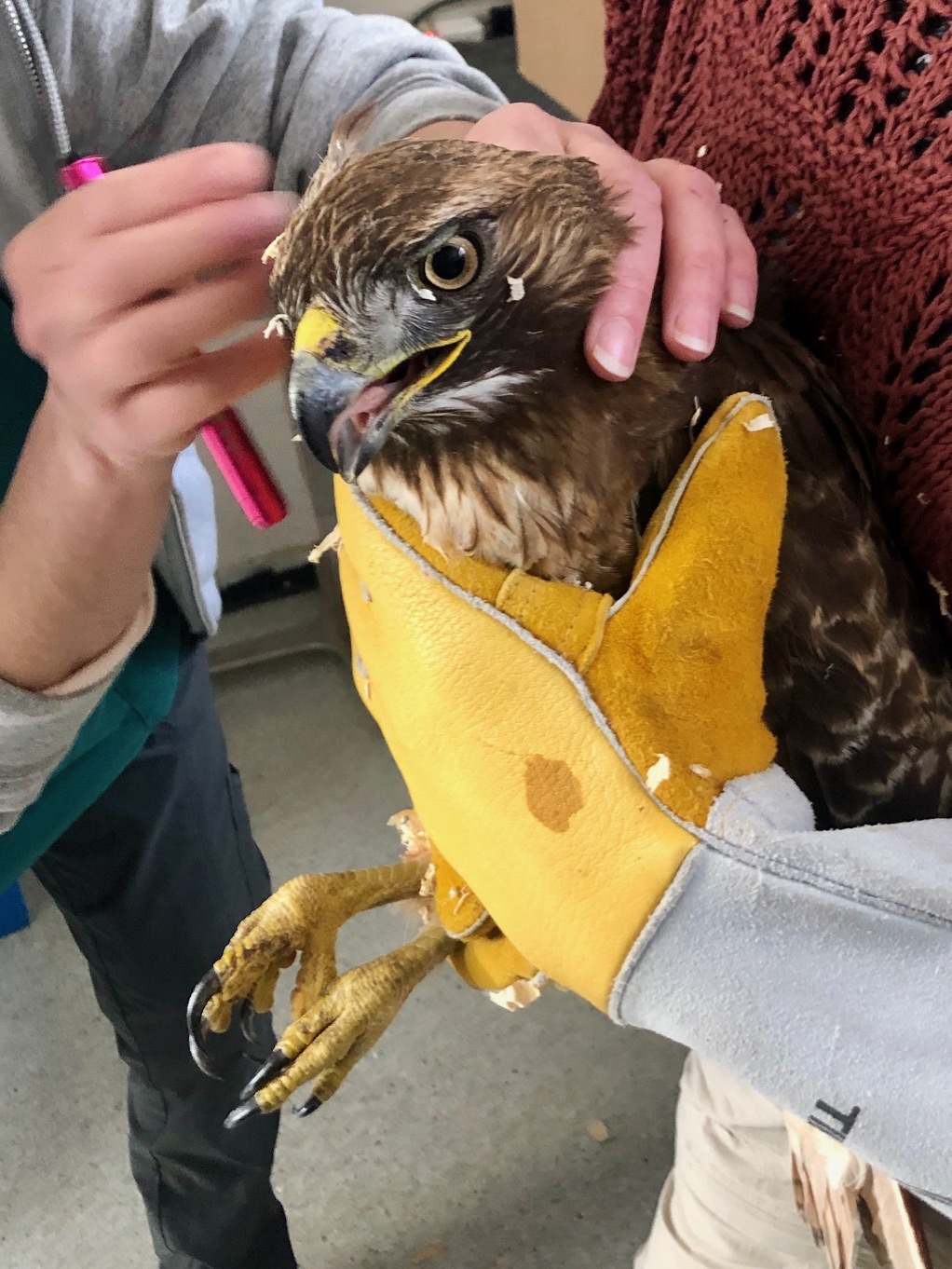
Rescuing a downed Red Tail Hawk, sadly this story doesn’t end well…
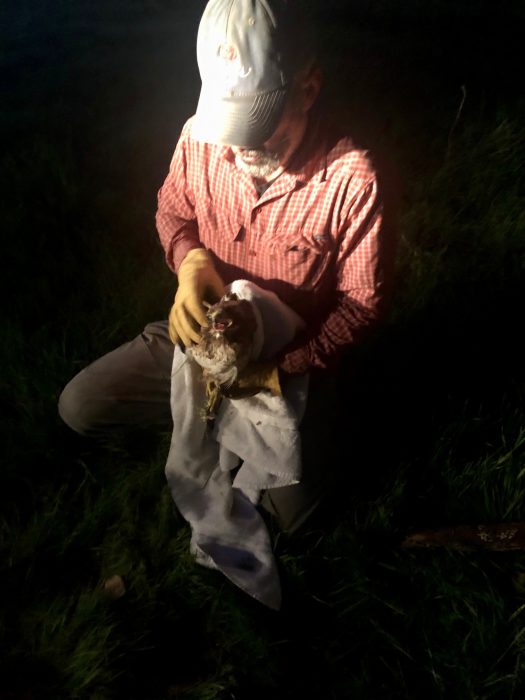
I was on a walk at dusk down by the Arroyo Seco creek and came upon an injured and very confused Red Tail Hawk. Called my friend Chris Melanćon, a trained falconer, and later that evening we captured and boxed the bird to keep it safe and warm overnight.
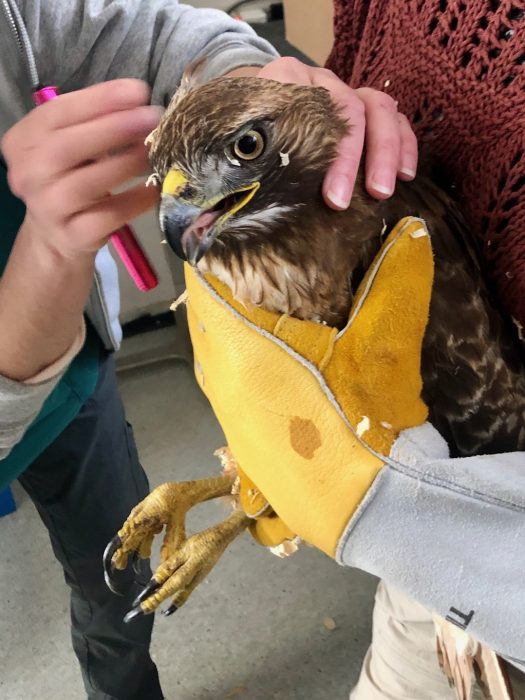
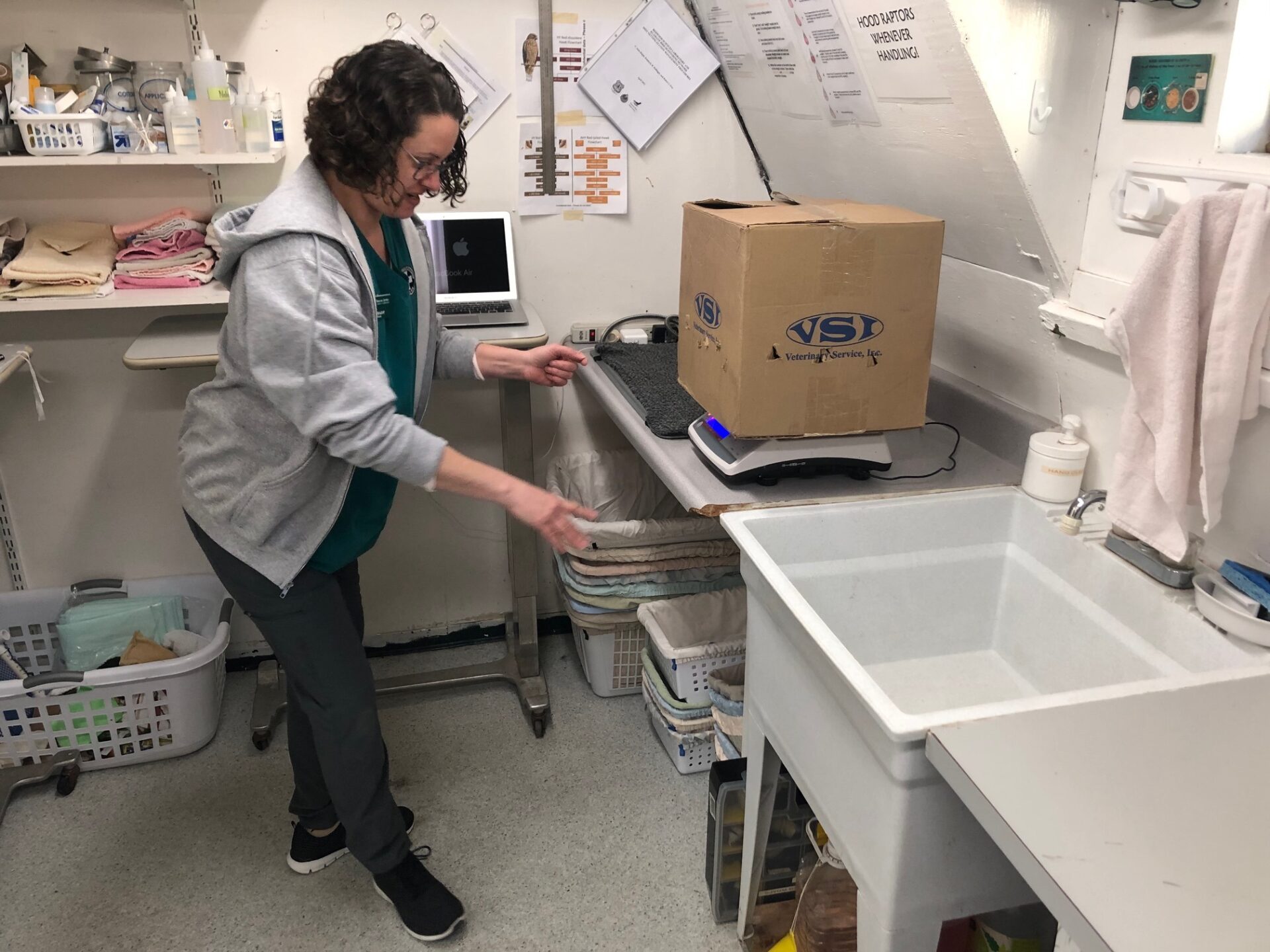
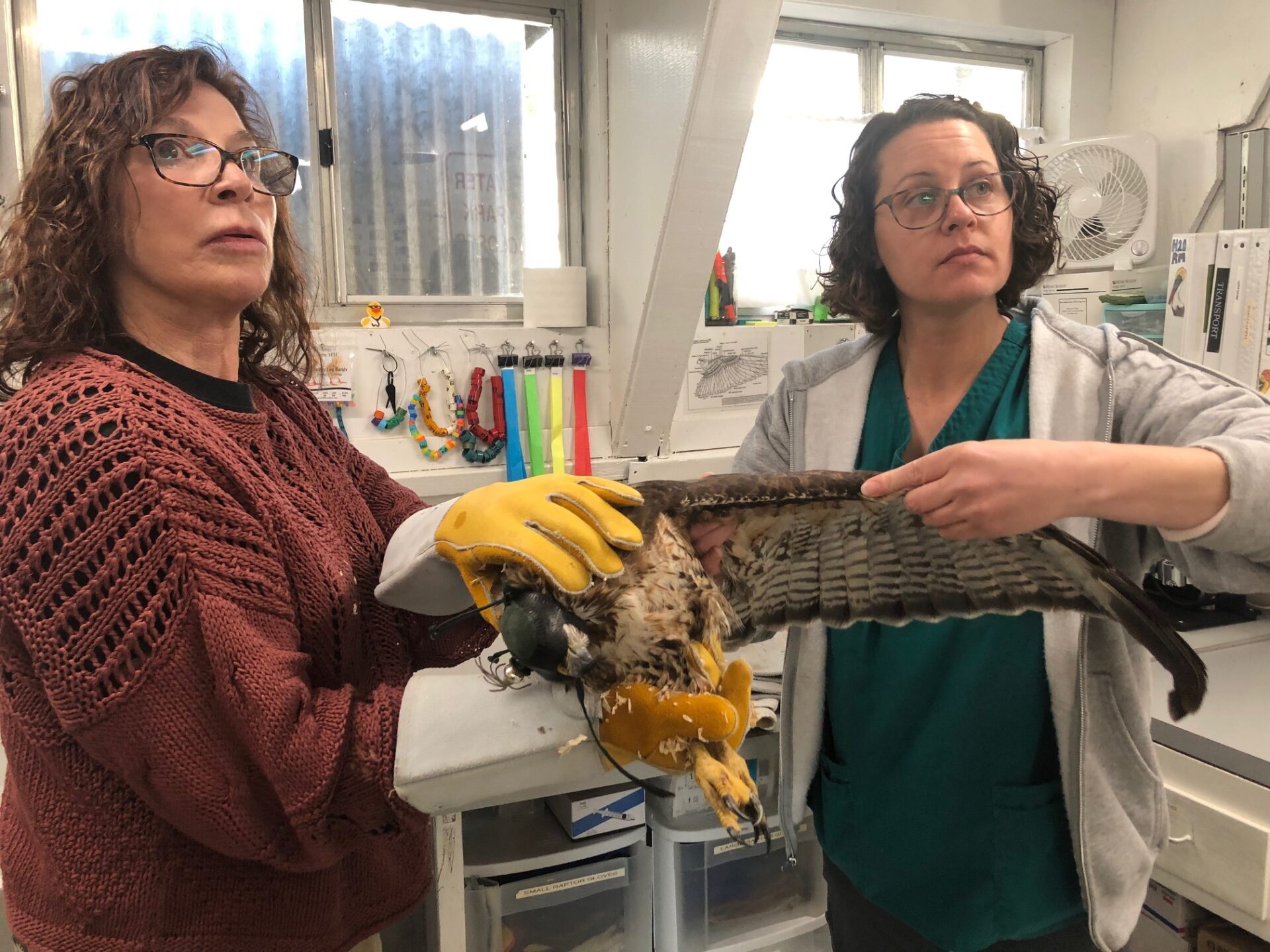
Skilled nurses carefully checked the health and condition.
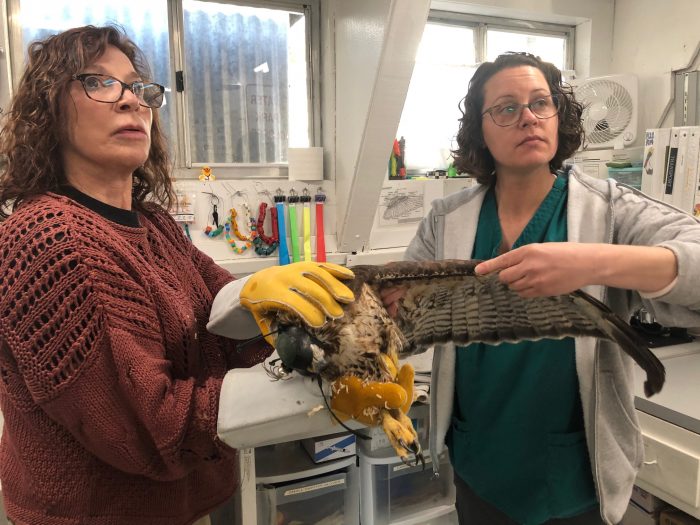
And checked all it’s vitals, including wings of course.
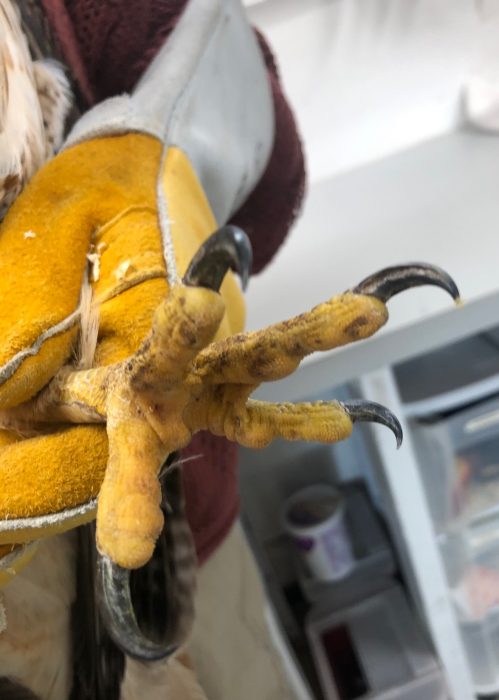
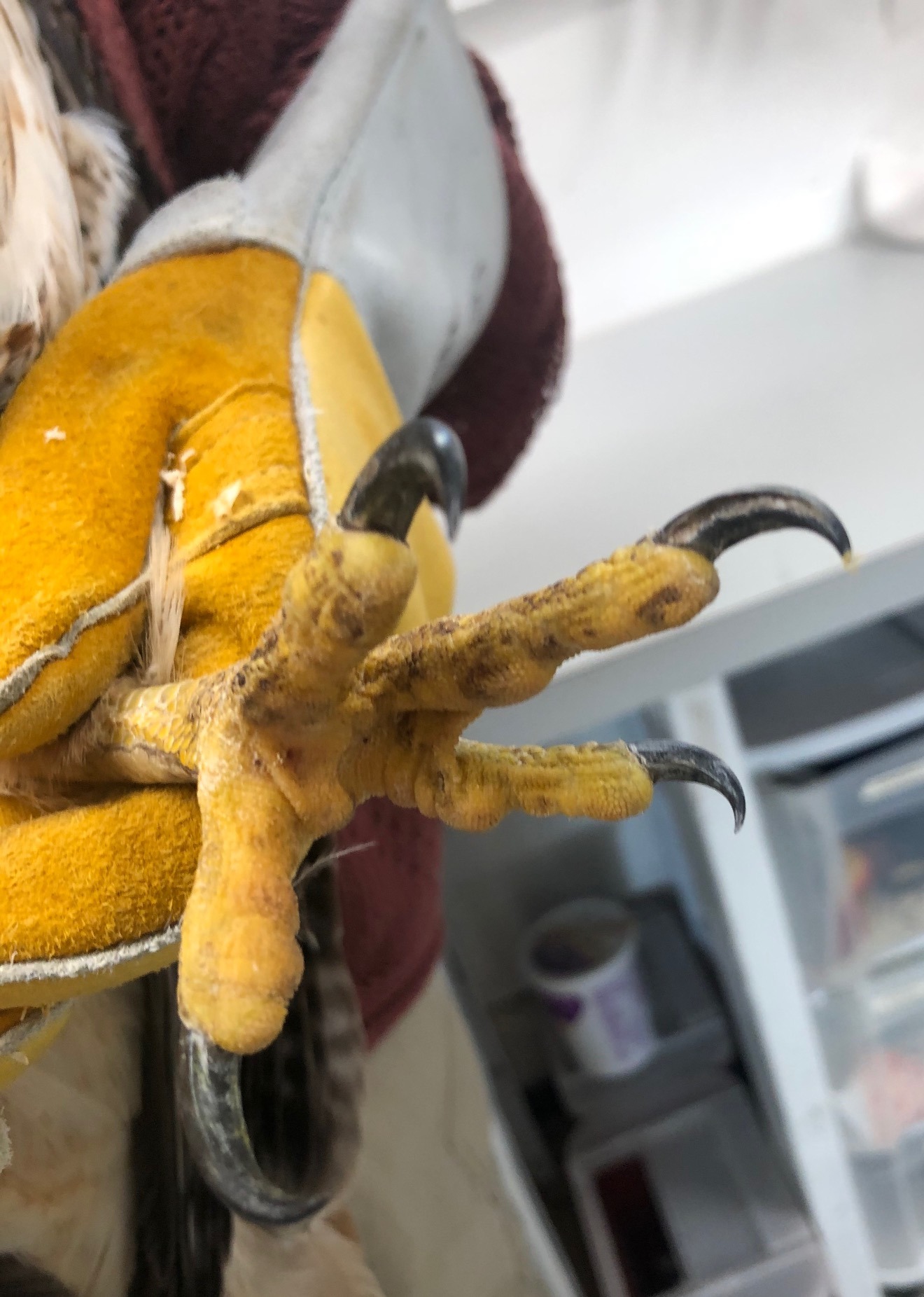
You can see these raptors have quite the extended reach and very sharp claws to grab their prey while in flight.
Sadly, our bird survived only a few days at the Rescue Center. Apparently it had suffered a neurologic injury and just could not pull through. We did our best. Nature at work. Sonoma farm life
Willow tree cuttings
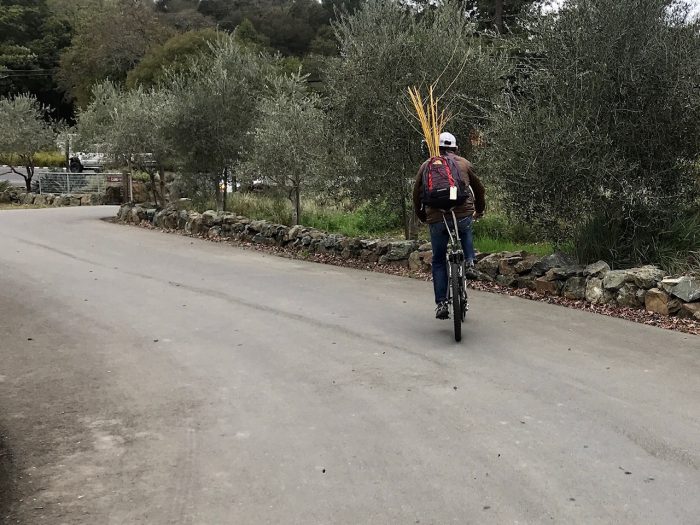
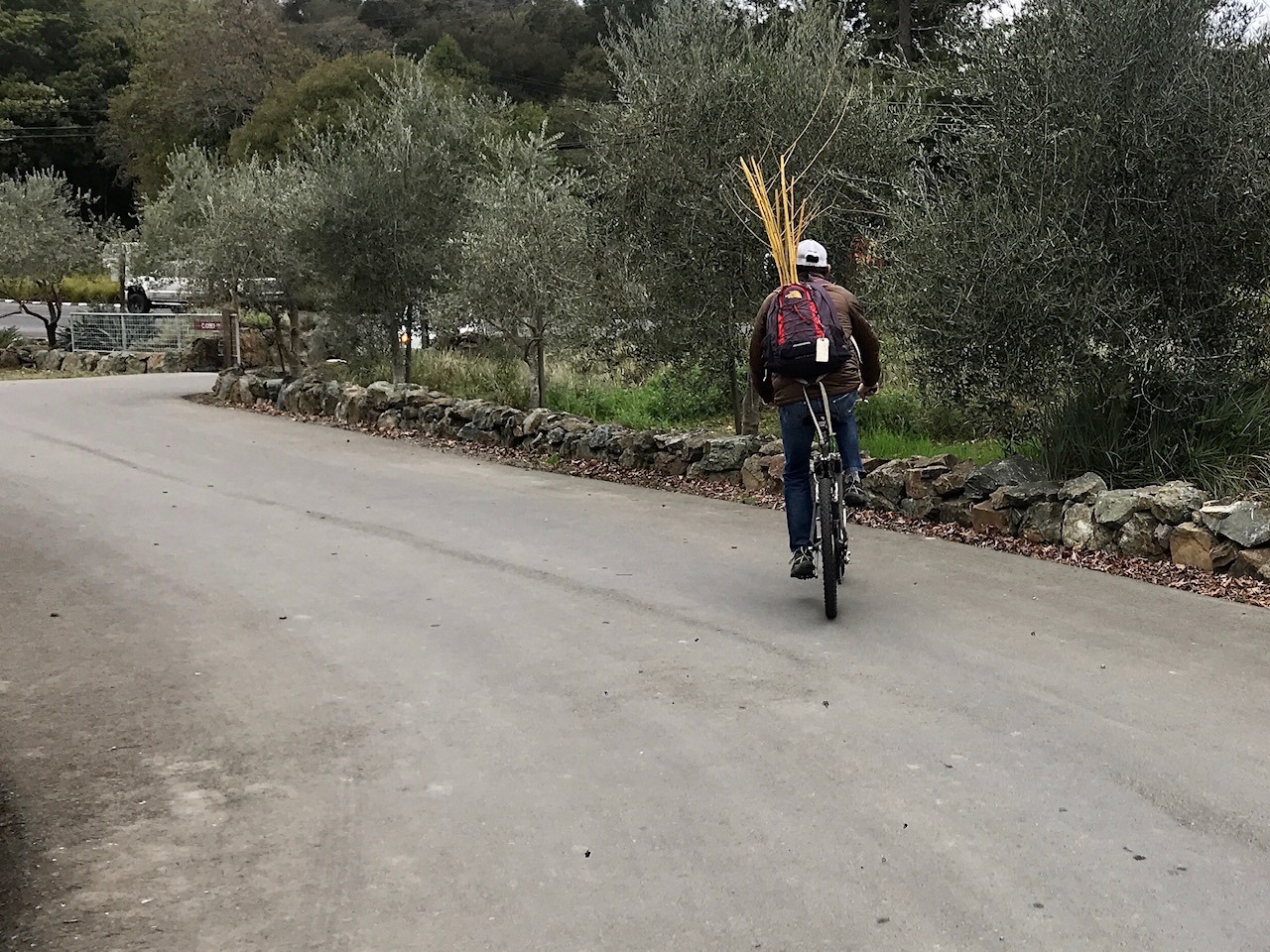
Found myself in Healdsburg on a bike ride and met up with a fellow winemaker who has a rare yellow-barked willow. Genus Salix. Could not pass up the chance to fill my backpack with cuttings which in the case of all willows are quite easily transplanted.
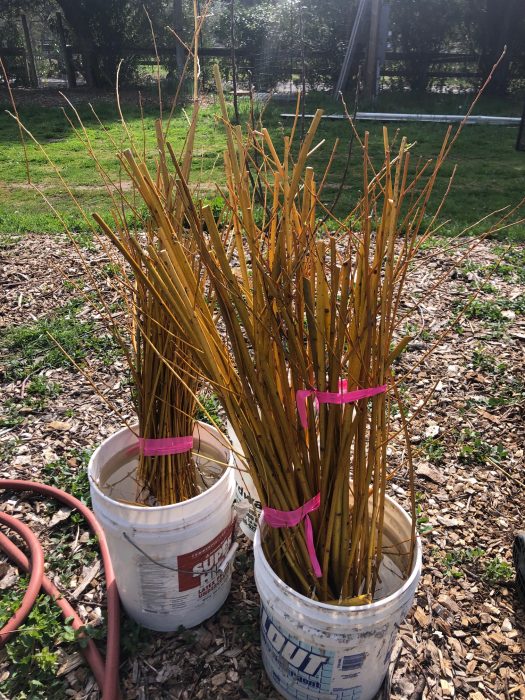
These willow cuttings are soaking before going into the ground. Willows will sprout roots from almost any woody cutting. They are fast growers too. The roots are very invasive so it’s a bad idea to plant them near pipes and sidewalks. But they are an excellent plant almost anywhere else for instant shade. And other plants and trees will naturally fill in under them as the willows age-out and die-off later.
Mowing the native grasses
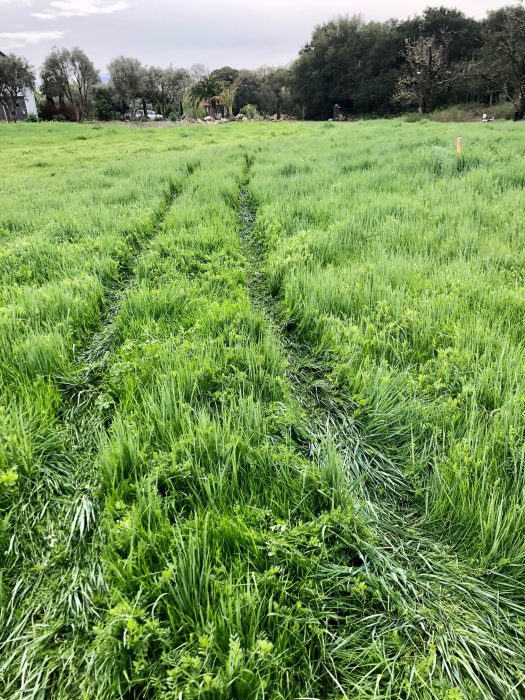
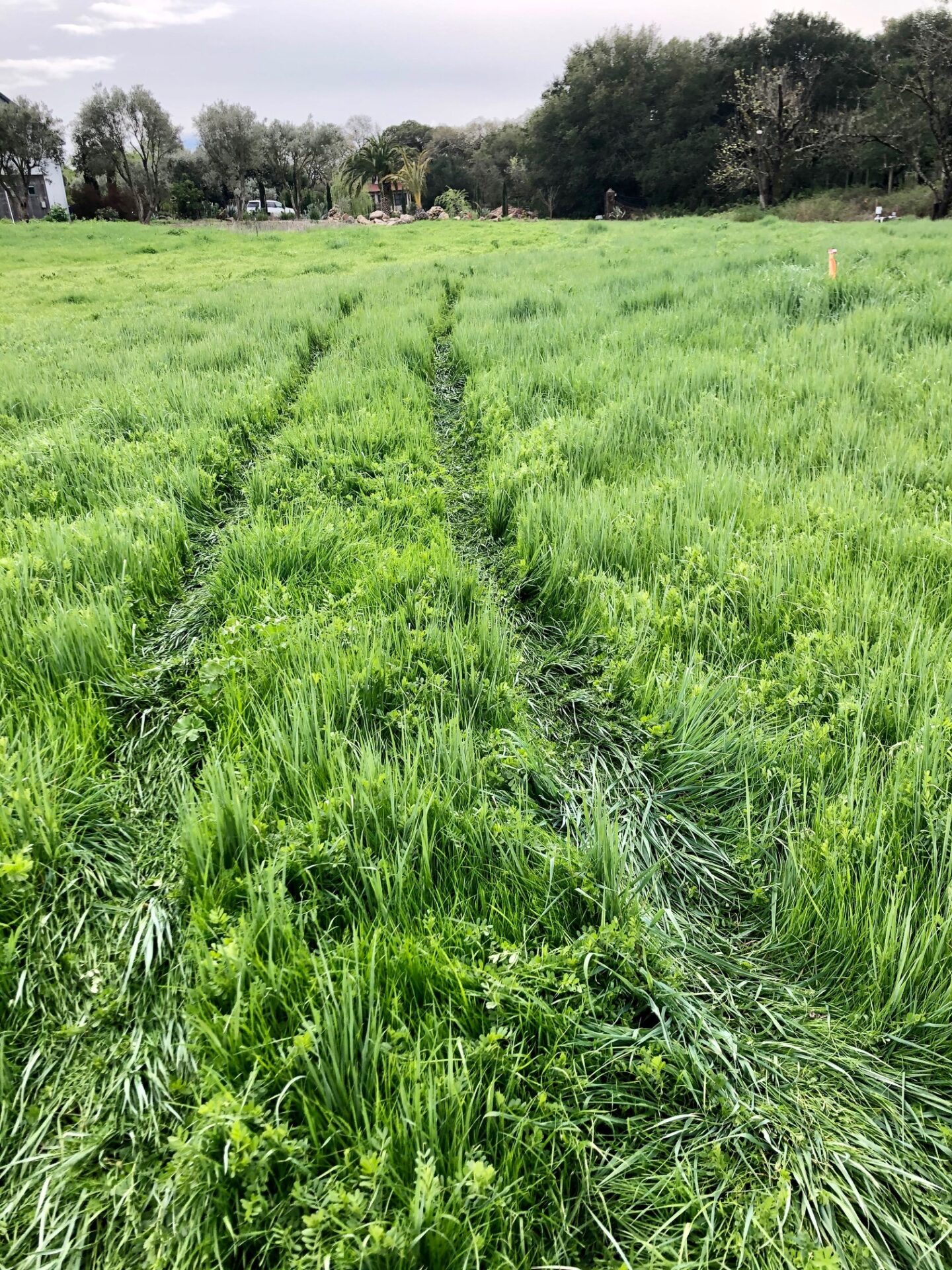
Before: This is a good time of year to give the grasses and forbs (pasture) a quick haircut.
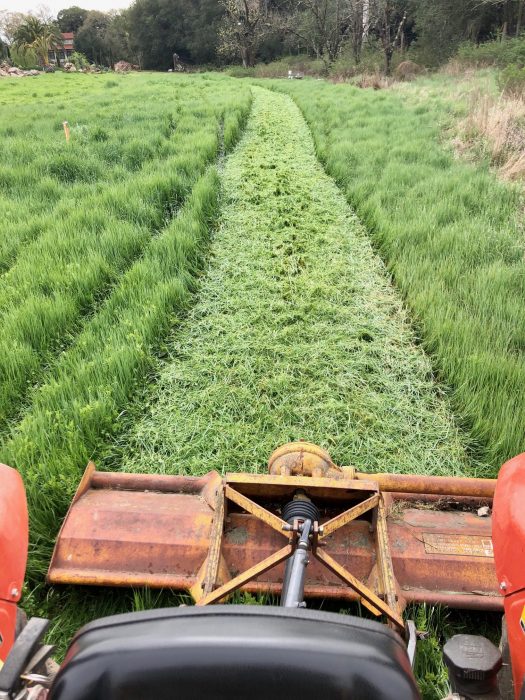
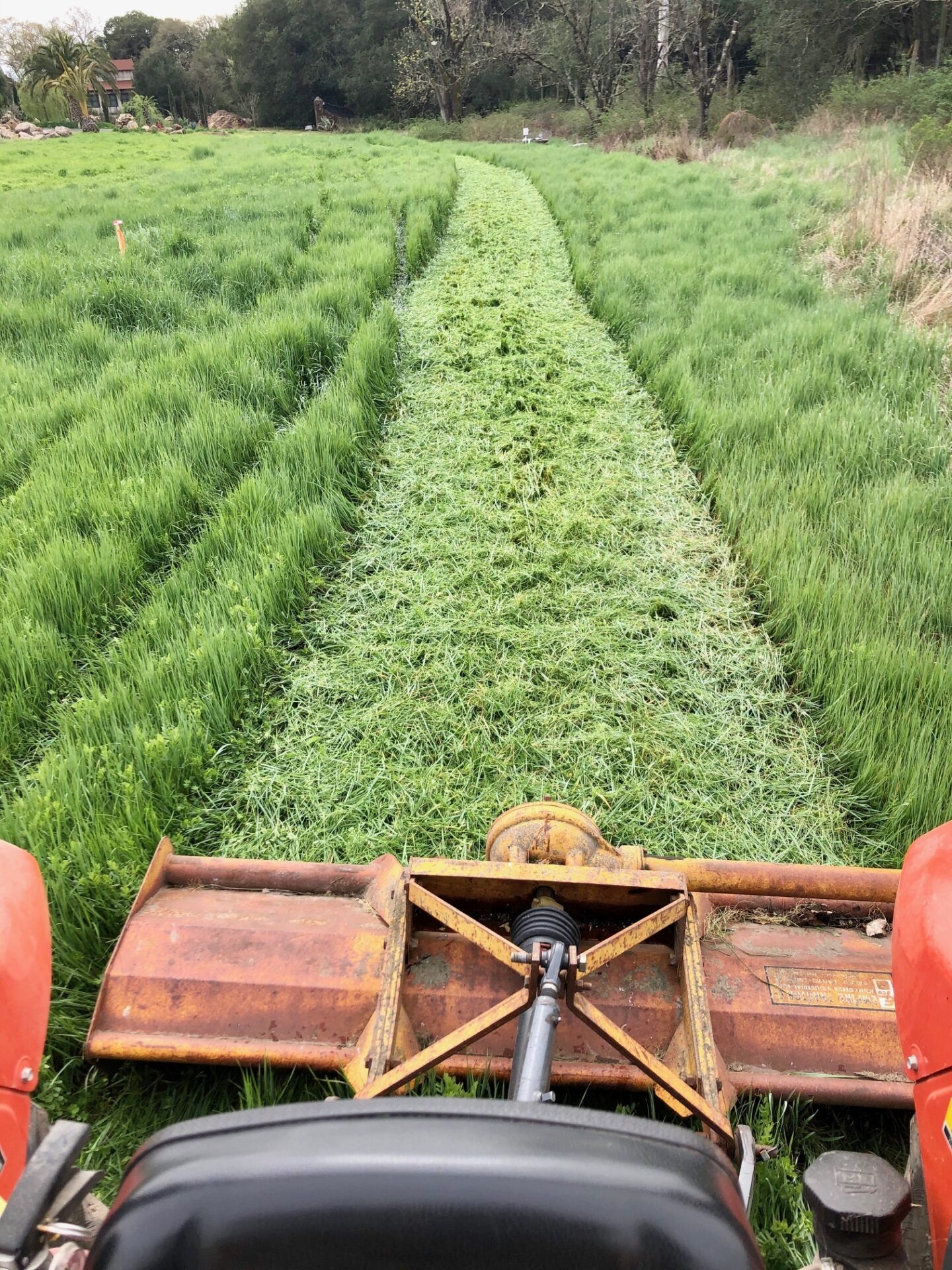
After: The first cut-pass with my old 1950’s Mott flail mower mounted onto the PTO of our Kubota tractor. The smell of the cut grass is intoxicating. I do this to create a dry and comfortable walking path out in the pastures, leaving the remainder to grow high in the spring.
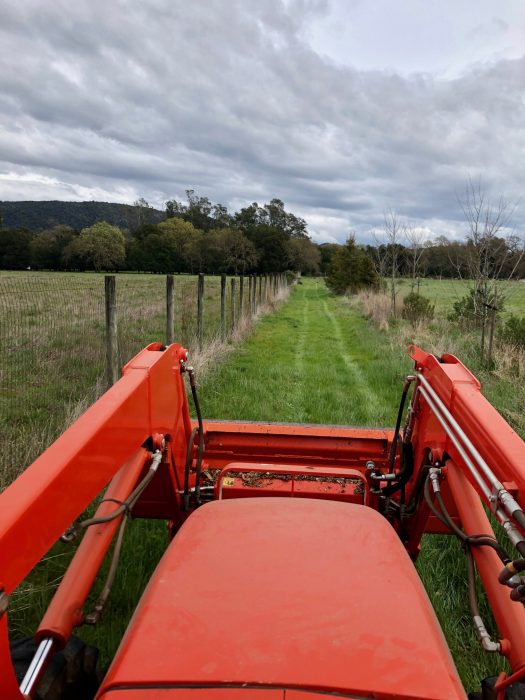
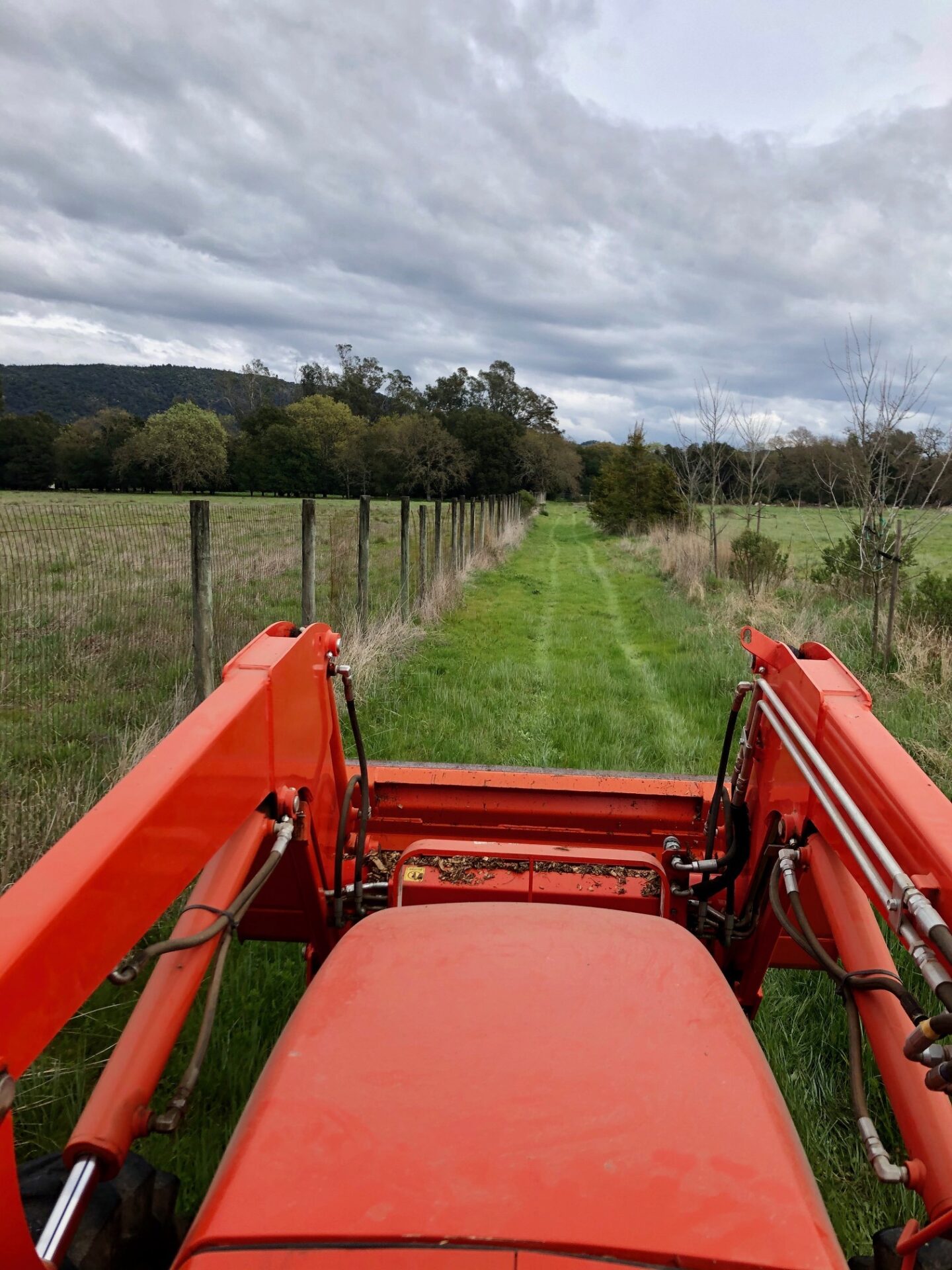
This is view of our north fence line getting ready to mow.
The old Mott flail mower occasionally enters a complaint!
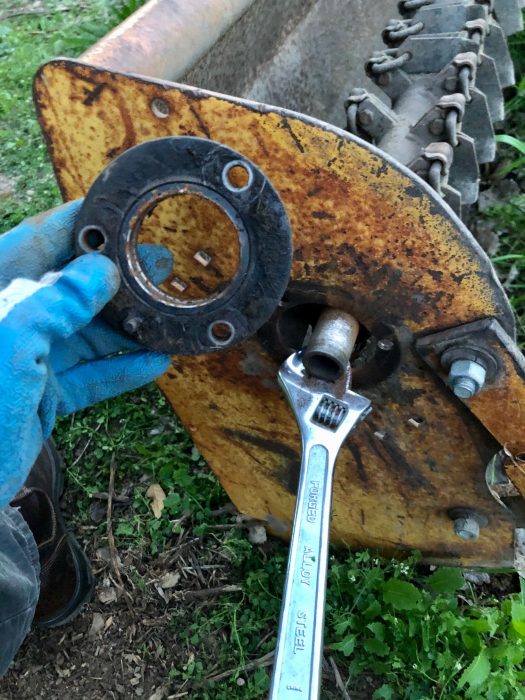
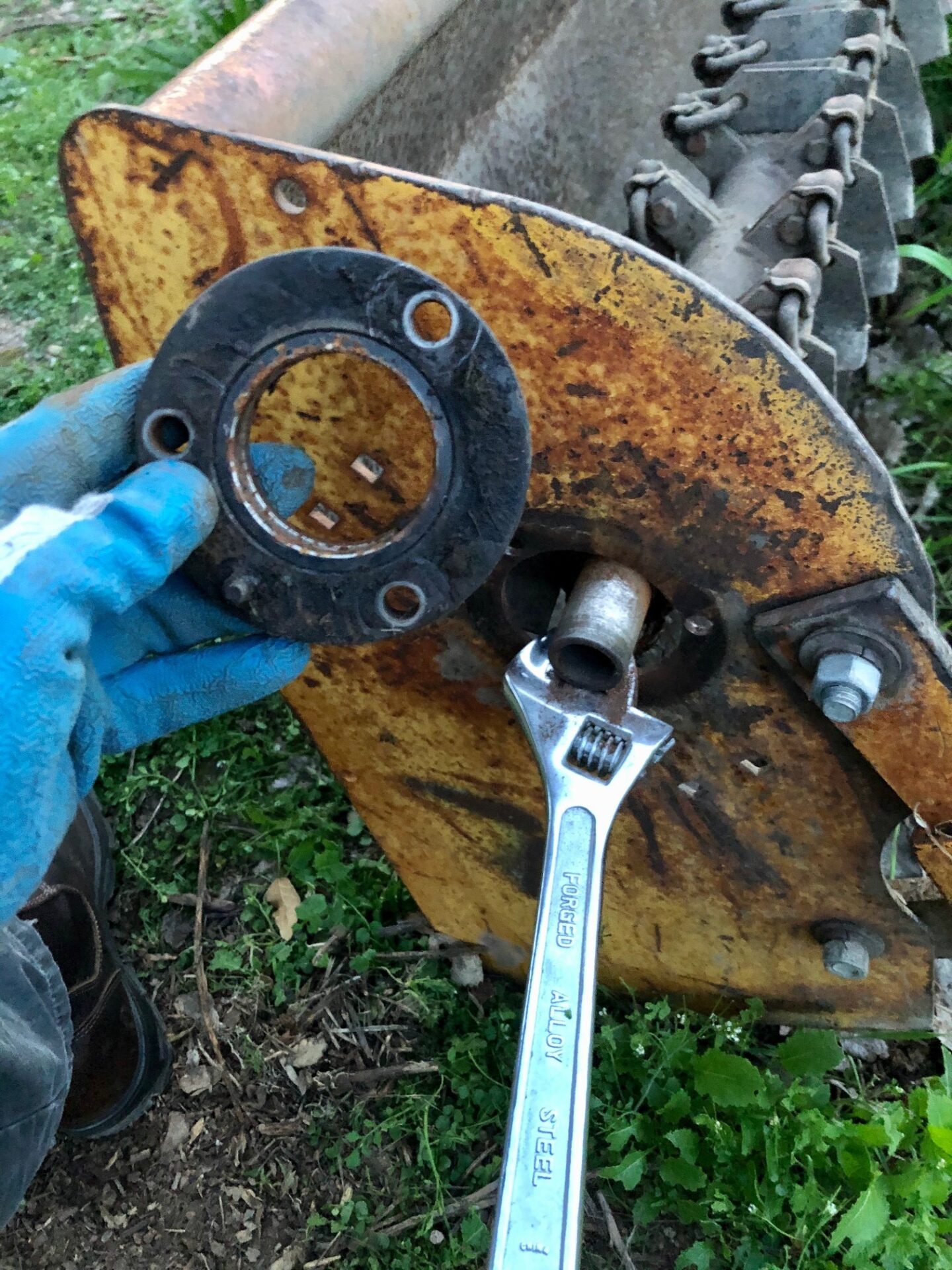
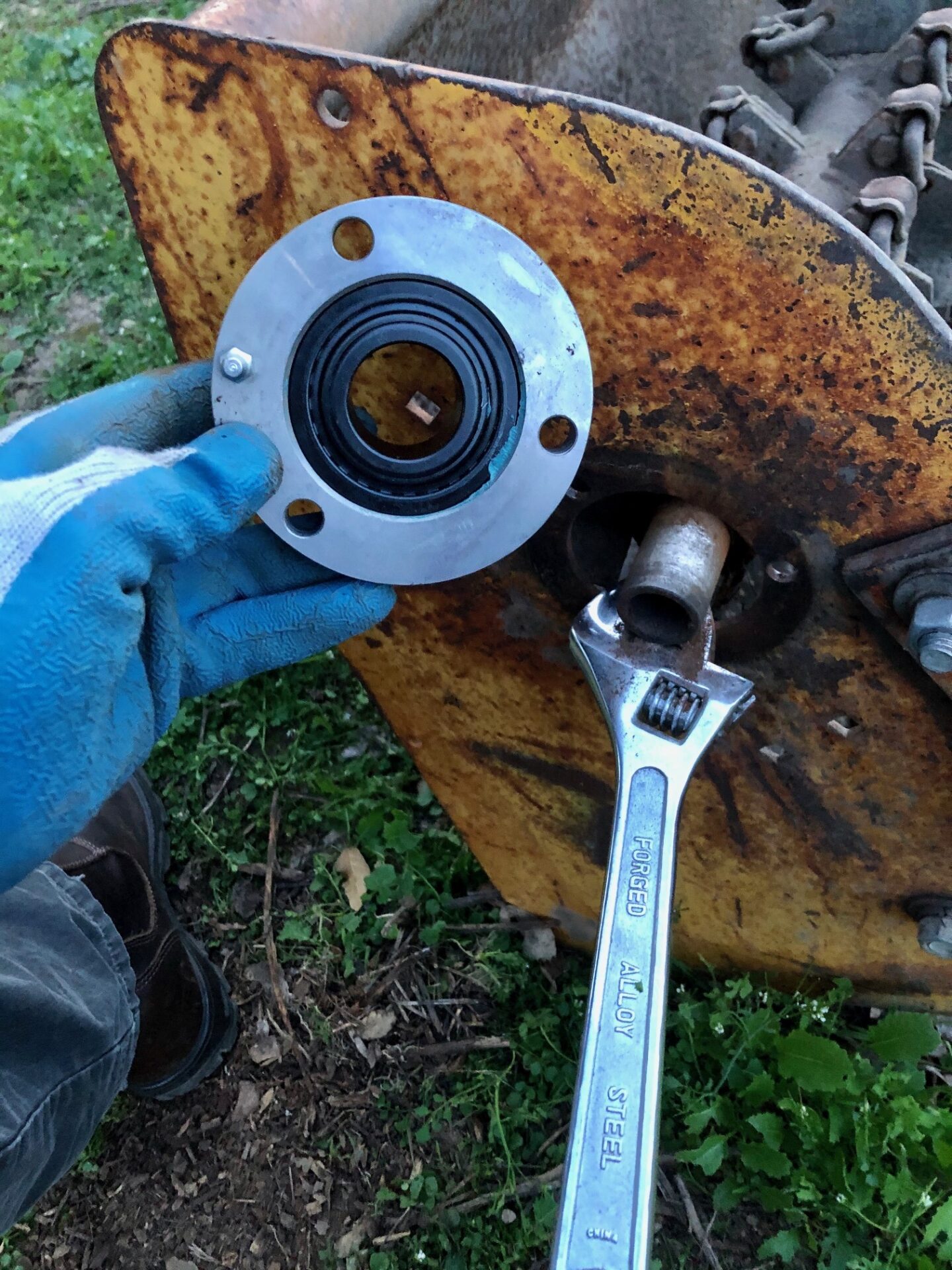
The flail mower takes a real beating. After some heavy use, on occasion a bearing will burn out. You can see here that the bearings are completely gone. Had to learn how to replace these. I’ve heard many stories of grass fires starting when the bearing fails and the red-hot ball-bearings fly out on to dry grass. It’s best to be safe and mow while the grass is still green.
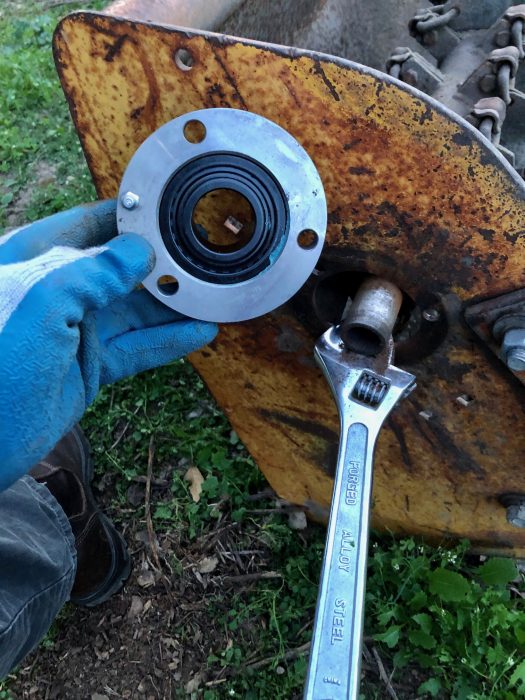
About to install this new bearing mount on the cutting shaft. $250 and 2 hours later.
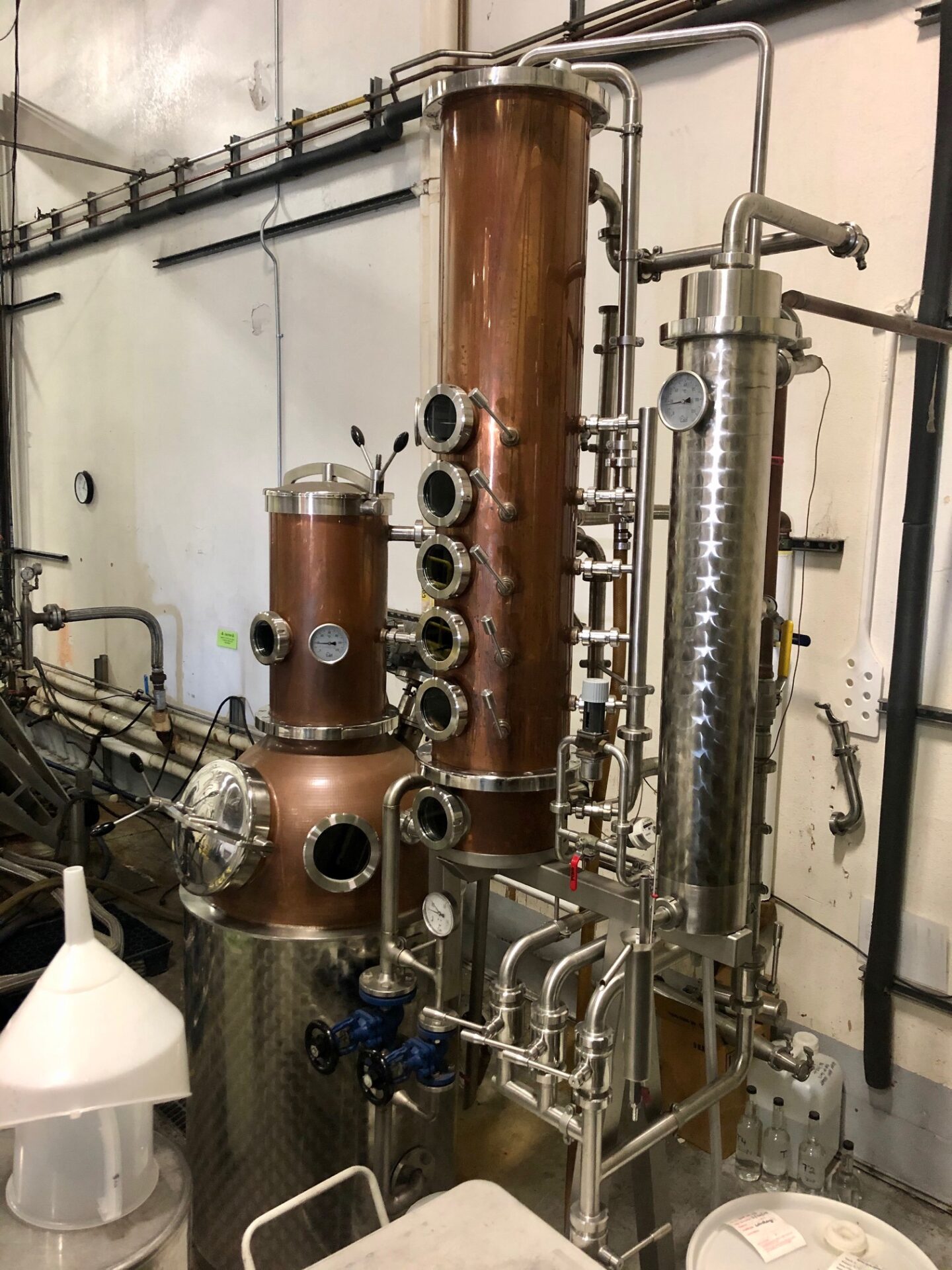
Distilling wine into ethanol to make grape-based Brandy and Grappa
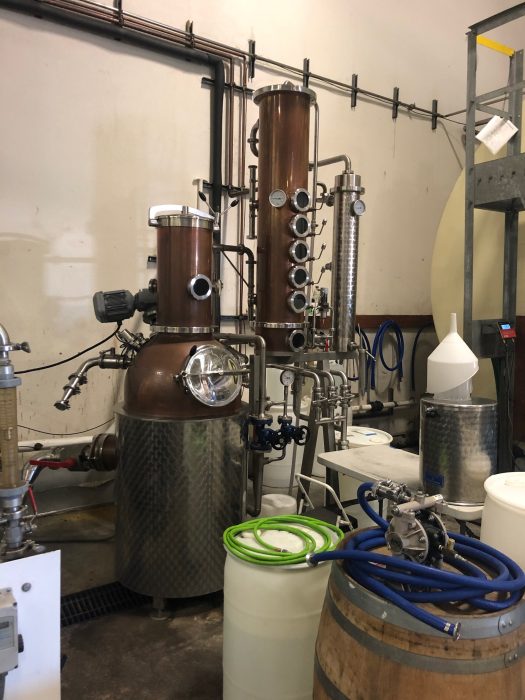
Start off with a half-ton of what’s left in the wine press after pressing, called pomace, and end up after distilling with several gallons of 186 proof pure distilled ethanol. Then that is diluted back with pure water to reach the targeted brandy/grappa alcohol level 35% to 60% by volume (ABV). Then it’s aged in oak or whisky barrels or flavored with fruit as desired. And then bottled and labeled. The story of grappa.
Chickens and Auto Solar Chicken Door
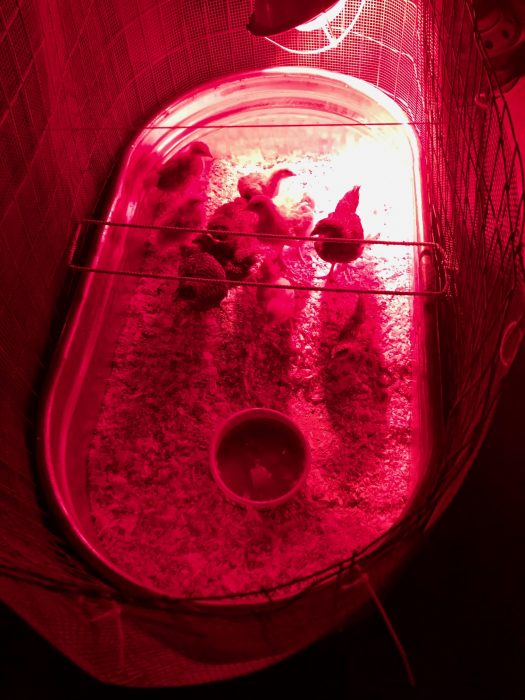
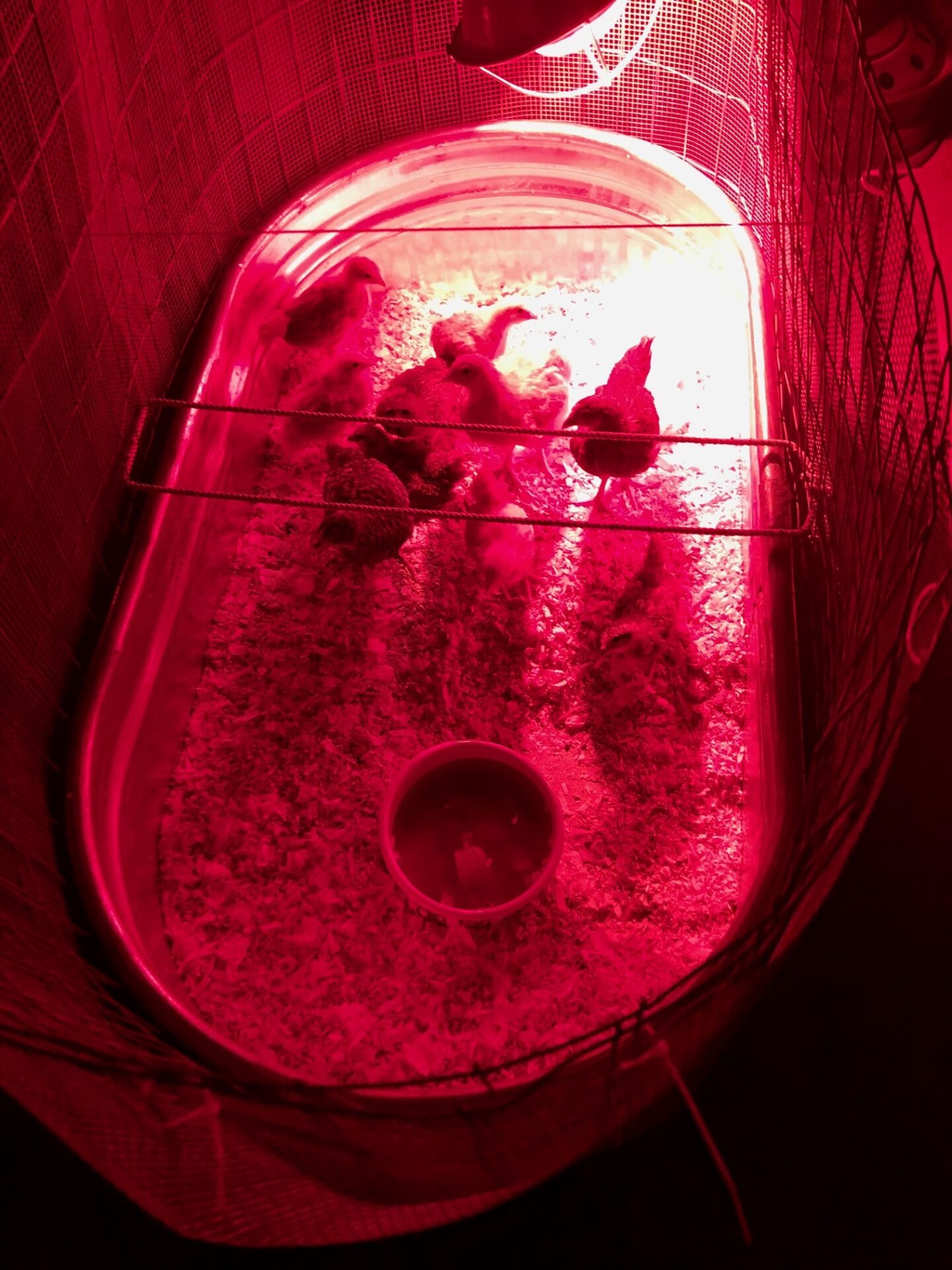
Last month I added eleven new chicks seen here in the incubator. Just add chicks, water, and food, and presto…in about 21 weeks all those hens will be laying 2 eggs every 3 days!
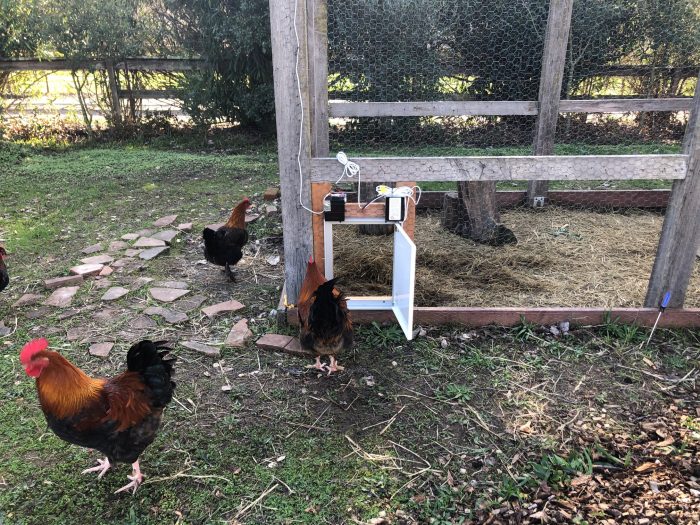
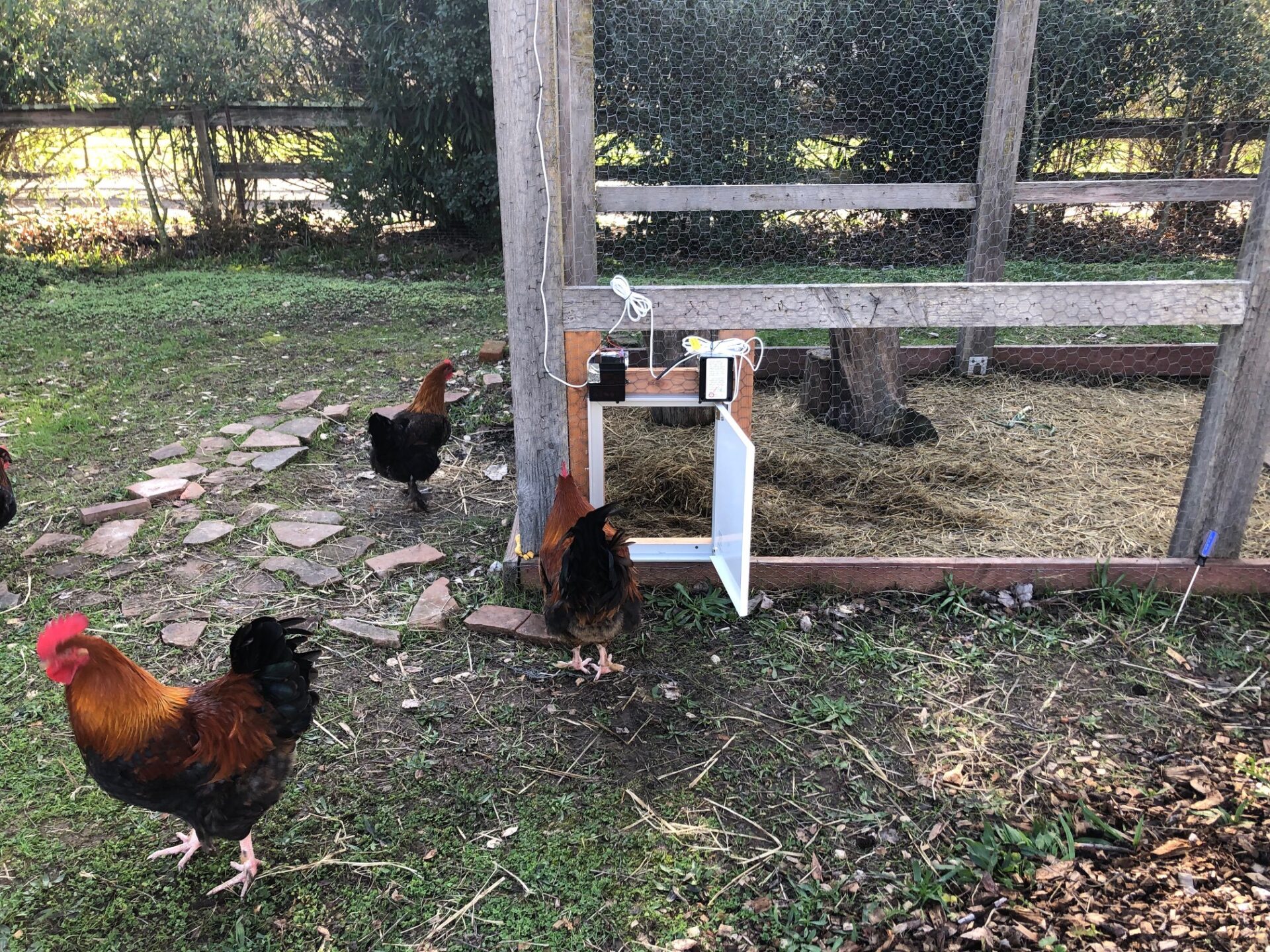
This is an automatic chicken door. How does it work? A solar panel (on the coop roof, not in view) charges a 12v battery (top left of the white door), the battery operates the motor (top right of door), and a light sensor (not in view) opens the door at first light and closes it a dark. There is also a ‘last chance’ feature where the door re-opens for one minute 5 minutes after dark. The chickens quickly adjust to the routine and religiously get themselves inside before the door closes for the second time at dusk. You can find this excellent equipment at Chicken Doors. Sonoma farm life
Mulching
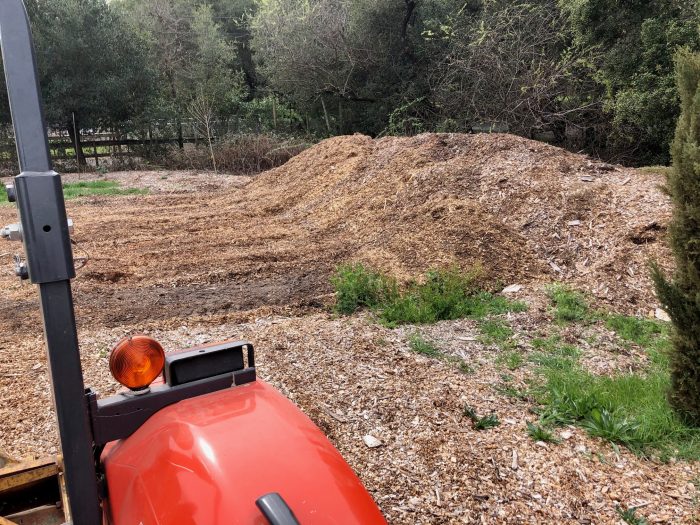
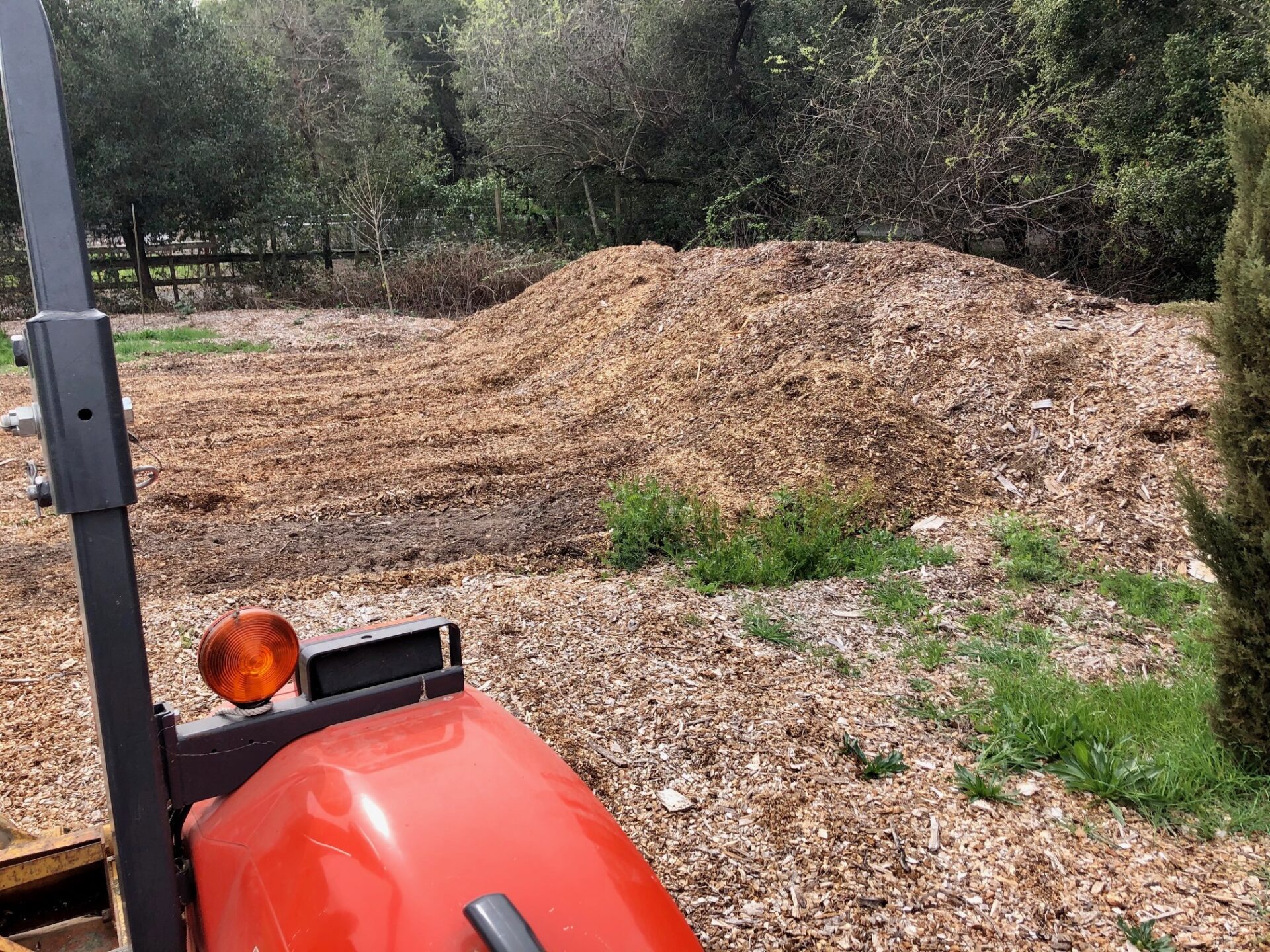
Local tree trimming companies are more than happy to have a free place to drop off chipped tree mulch. This pile represents about 20 truckloads. This material is very useful around the farm; especially with roses and plants that require moist soil and little weed competition.
Mustard blooms
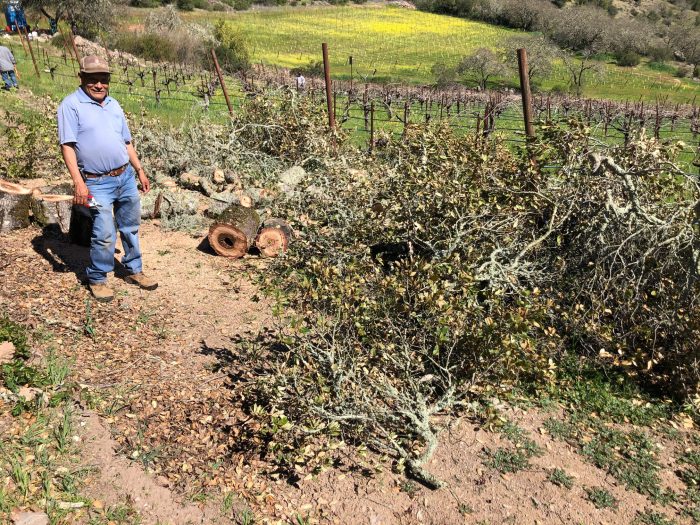
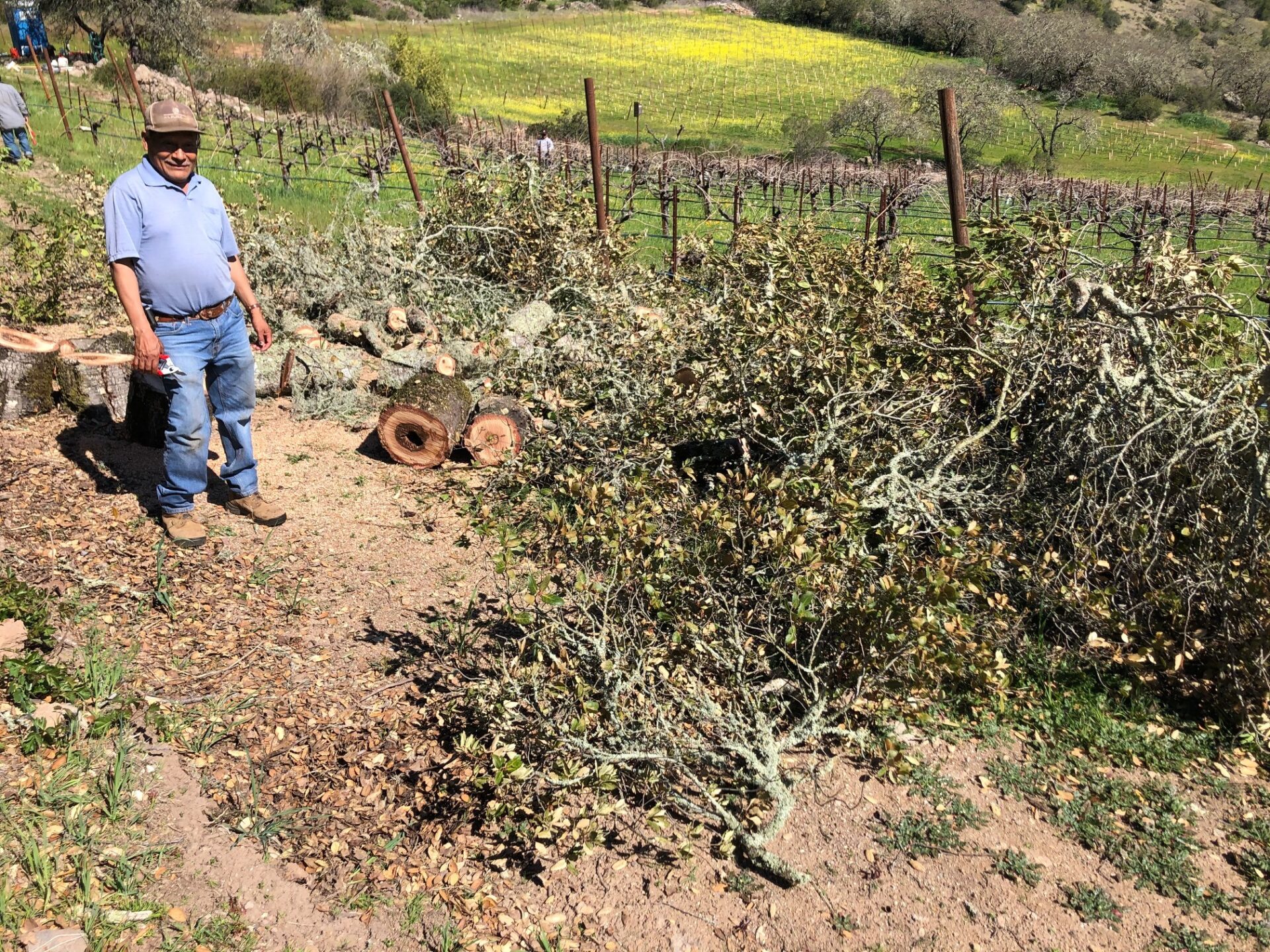
In one of our client vineyards, a tree fell in the recent strong winds, so we got out the chainsaws and went at it. In the background you can see a new Cabernet vineyard block we planted last Fall, and the mustard coming up nicely.
Hot air ballooning
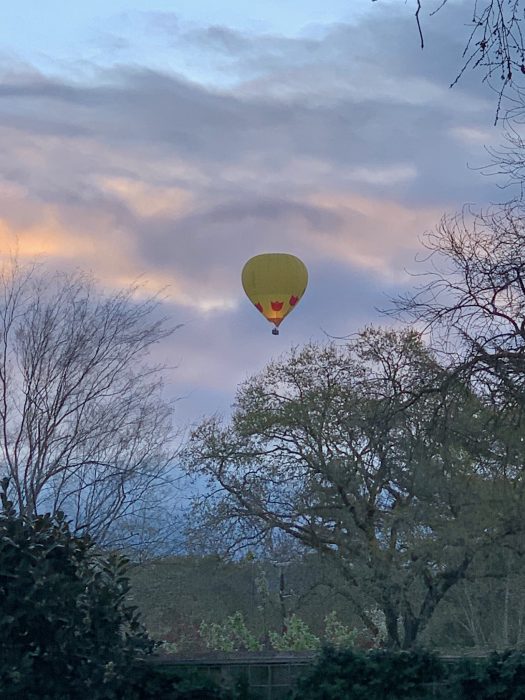
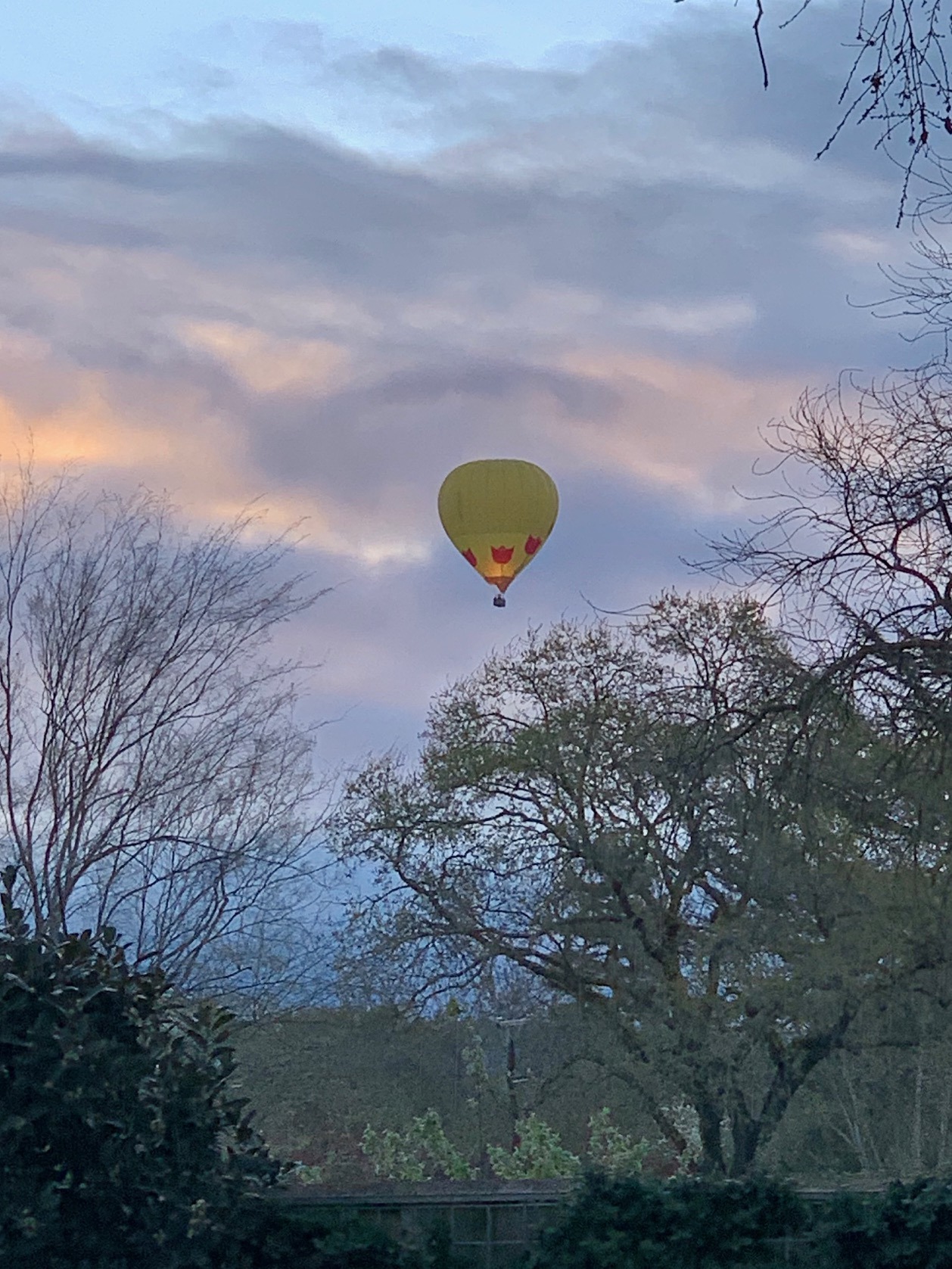
In Sonoma, you can look up pretty much any early morning and see the tourists enjoying their hot air ballon rides. The air is very still and it’s pretty cold out too. That’s why they keep the coffee hot! This one, the well-recognized ‘red tulips’, is from Napa Valley Balloons.
The end of the day on the farm
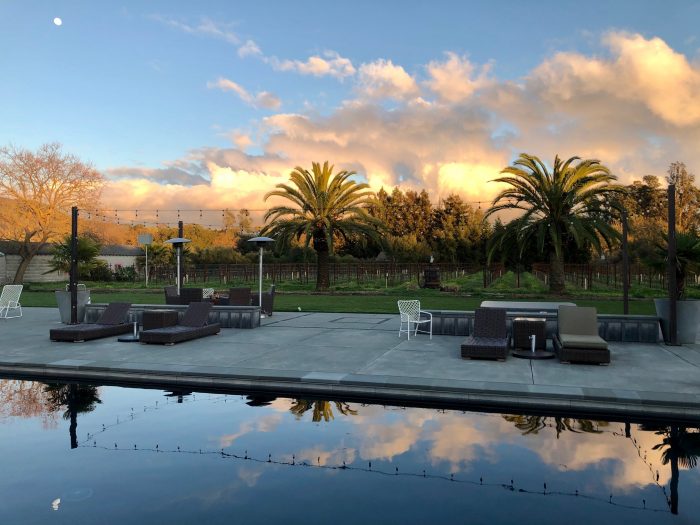
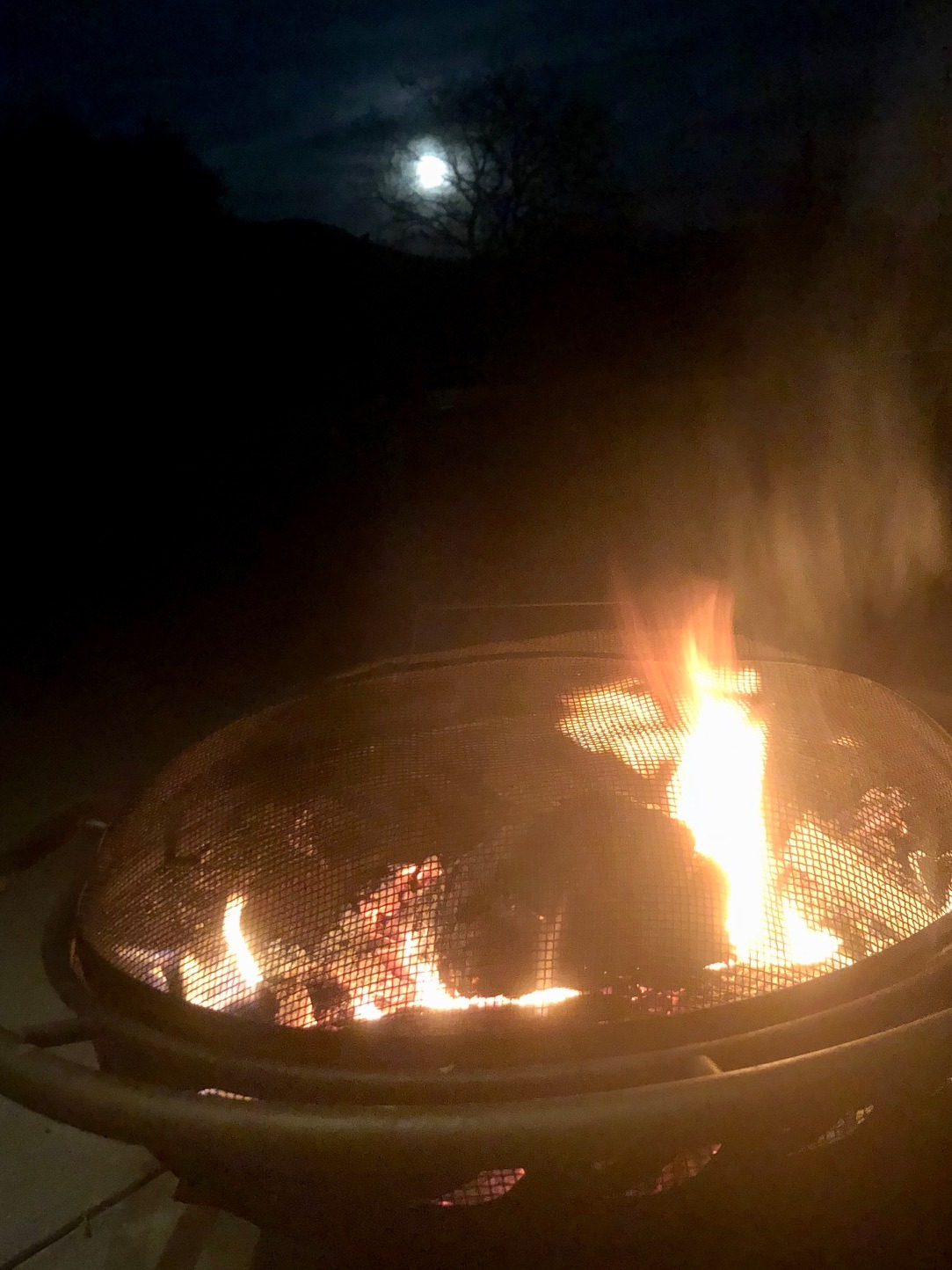
The sun begins to set on another day on the farm, as the low clouds glow and the full moon rises.
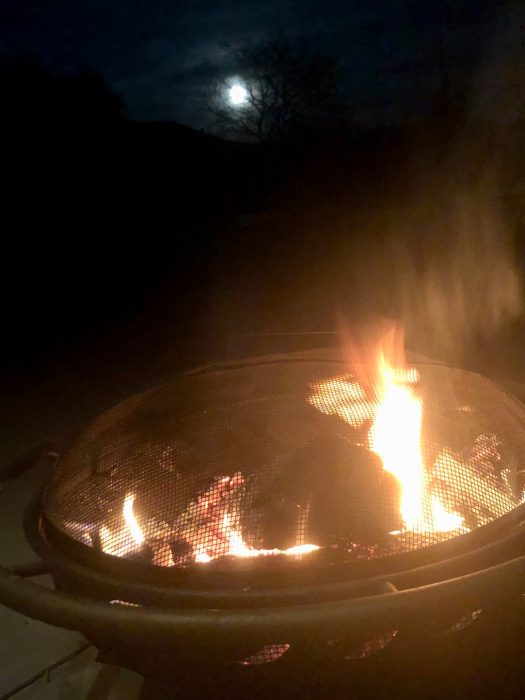
It’s a real treat to have friends over for an authentic wood fire, only possible on cold damp winter nights, and no matter what, we use the spark arrester. Why? Everyone in Sonoma is rightfully fearful of loose sparks starting a wild fire.
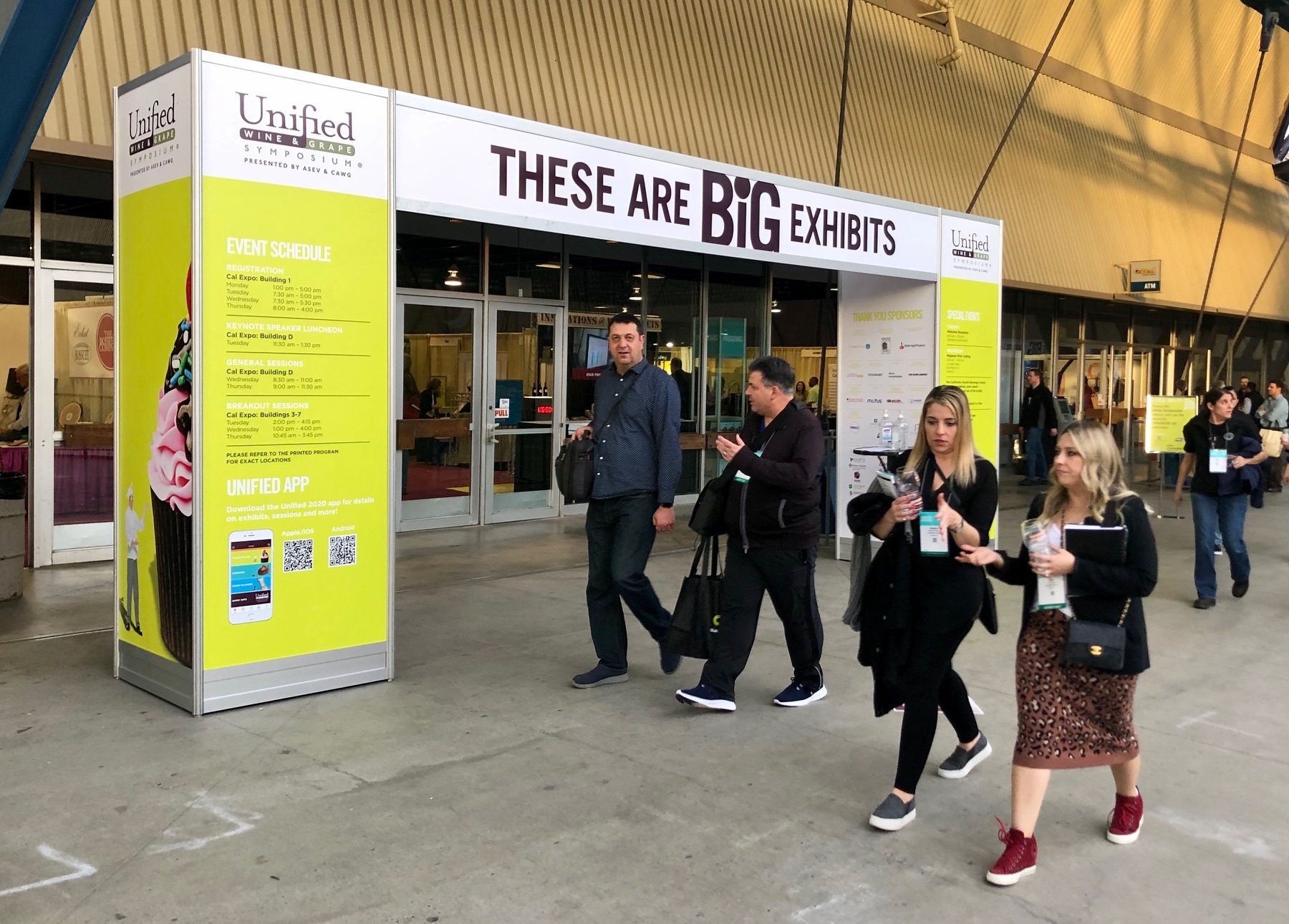
Just for fun: The biggest grape and wine convention in the United States, the Unified Grape and Wine Symposium
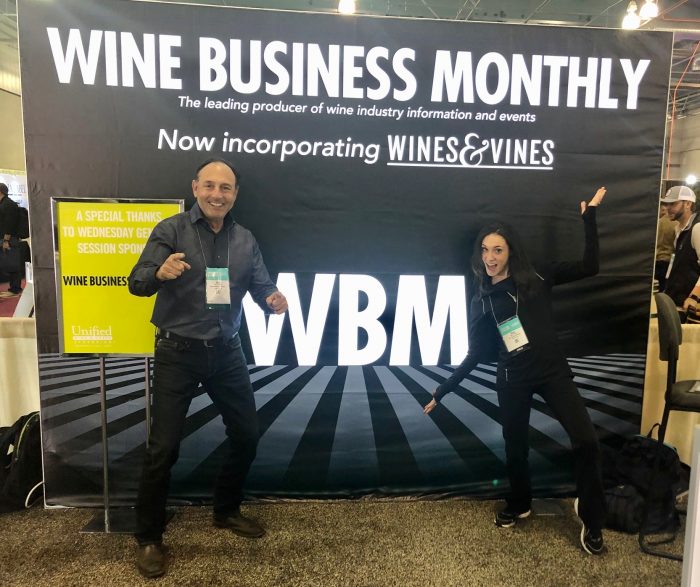
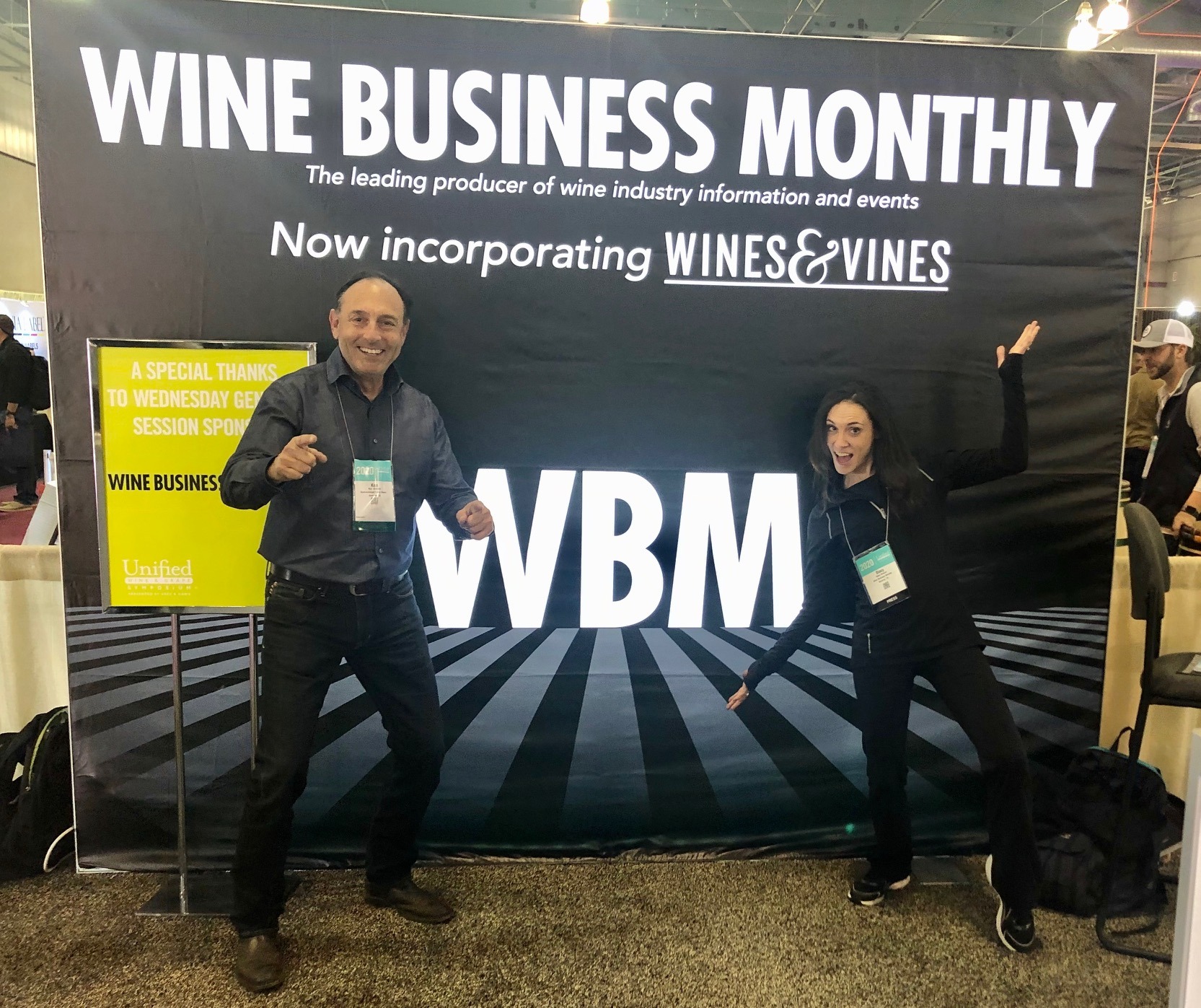
One of the most popular trade magazines in our industry, “Wine Business Monthly“ always has an informative booth. Assistant Editor Stacy Briscoe welcomes me to the show. This is also the ‘go-to’ website for all things grapes and wine – buy/sell grapes or bulk wine, learn about the latest trends, etc.
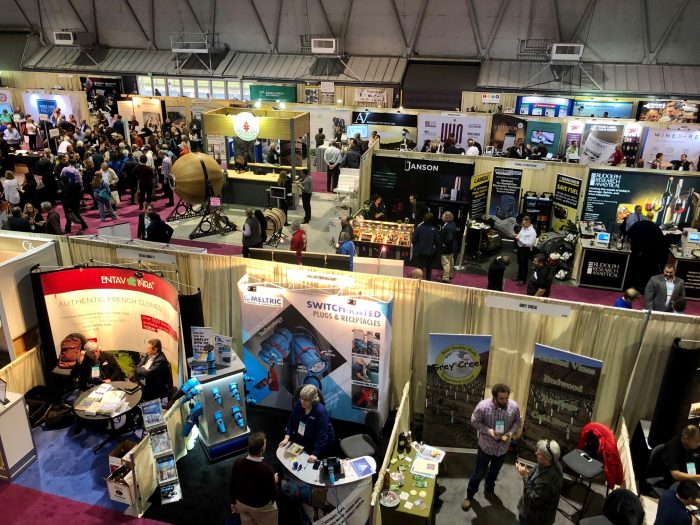
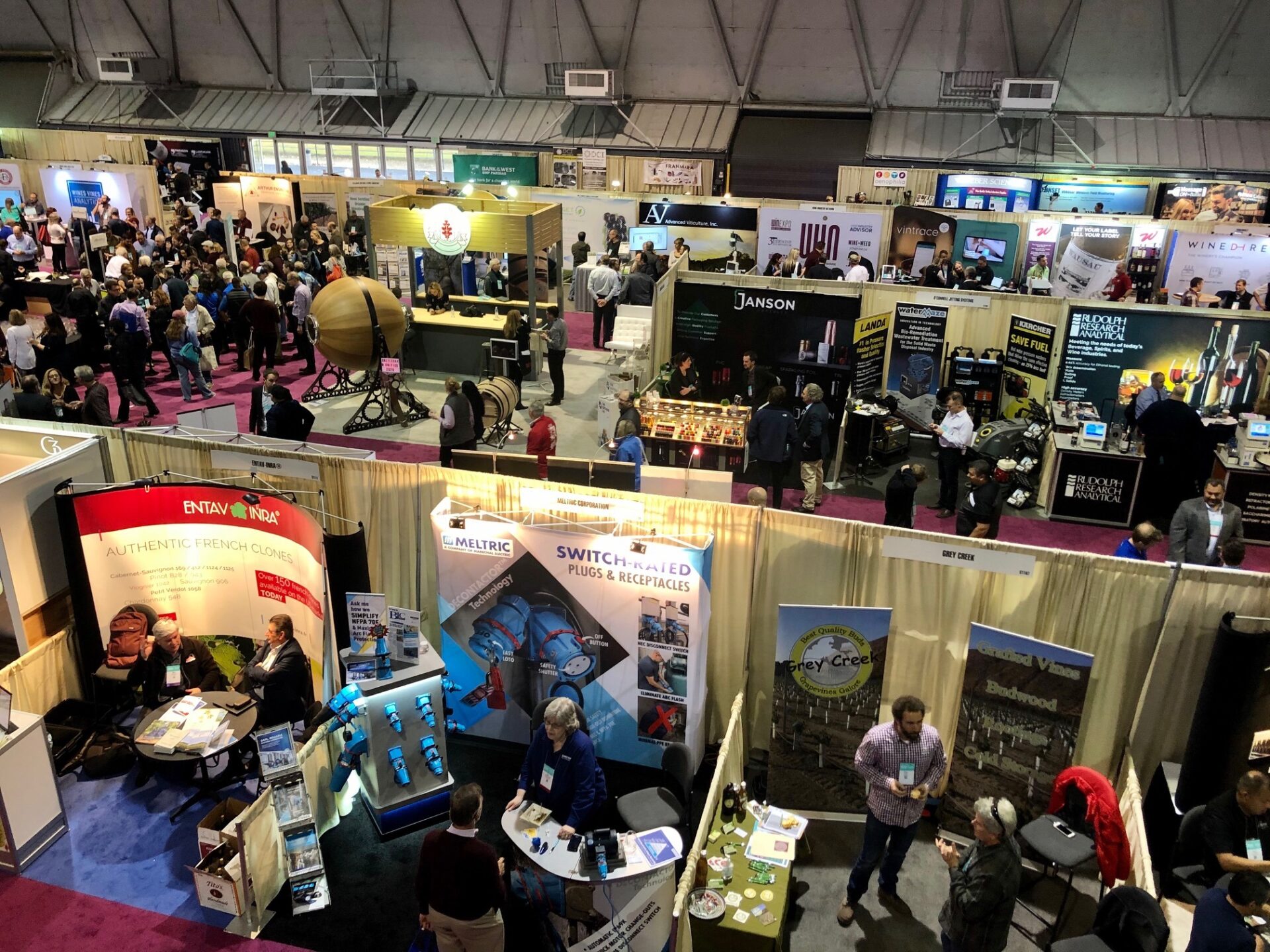
The convention covers every imaginable aspect – from vineyard farming tools to heavy equipment, to the latest in drone-applied sprays. And in wine, everything from bottles, corks, and capsules, to pumps and valves, and laboratory testing.
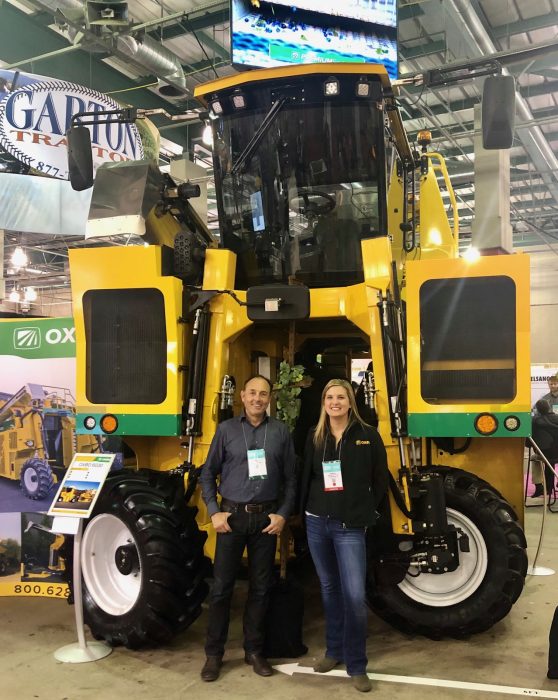
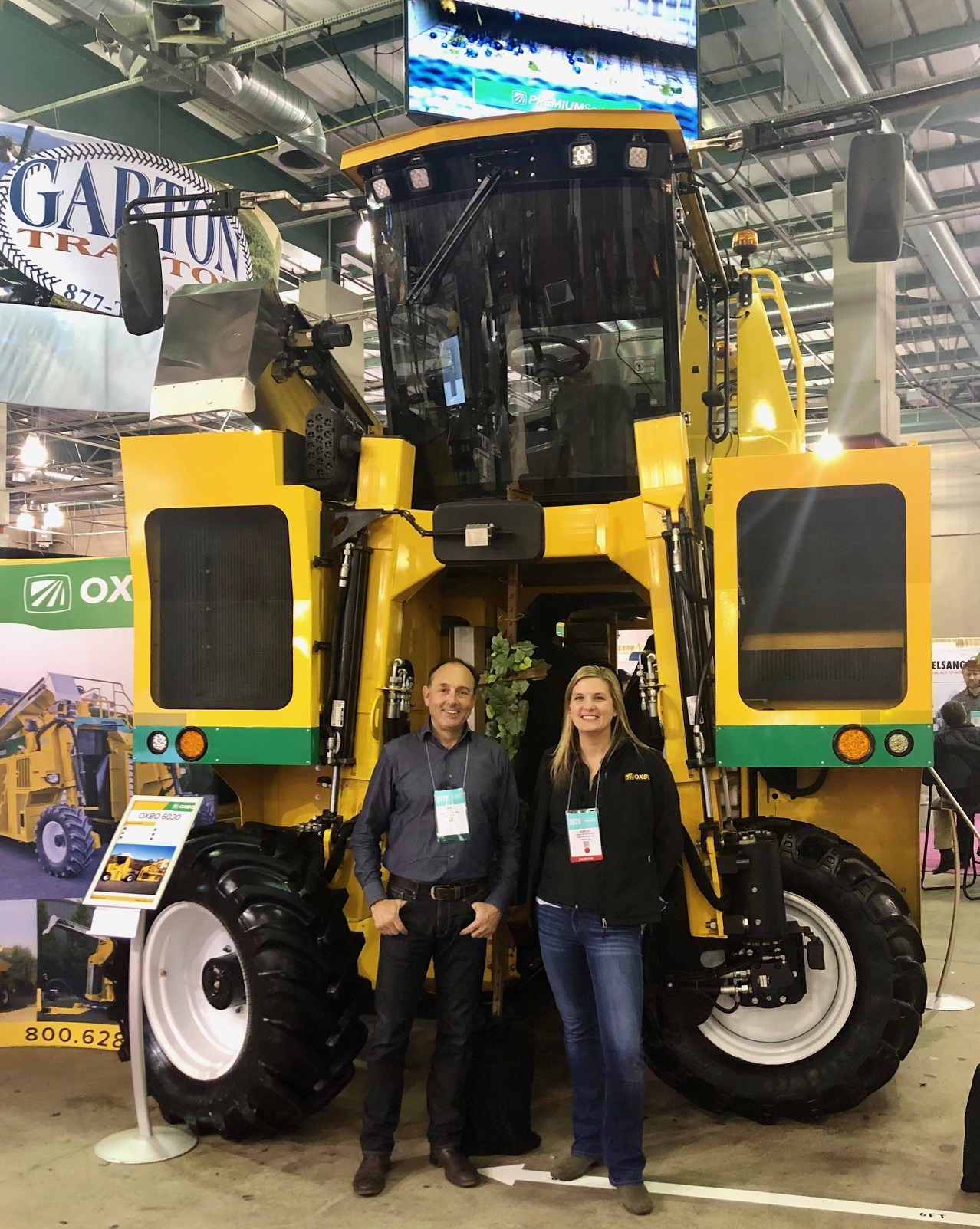
One of my favorite activities each year is to visit the ‘large equipment’ yard. I’ll never have a use for this million-dollar computer-controlled self-propelled mechanical harvester/sorter…but it’s really interesting to stand next to it and walk around (and inside). This behemoth can harvest upwards of 25 tons an hour, with one operator! Equal to many dozens of laborers and people-hours.
Feb 21, 2020 | Sonoma, Vineyard, Wine
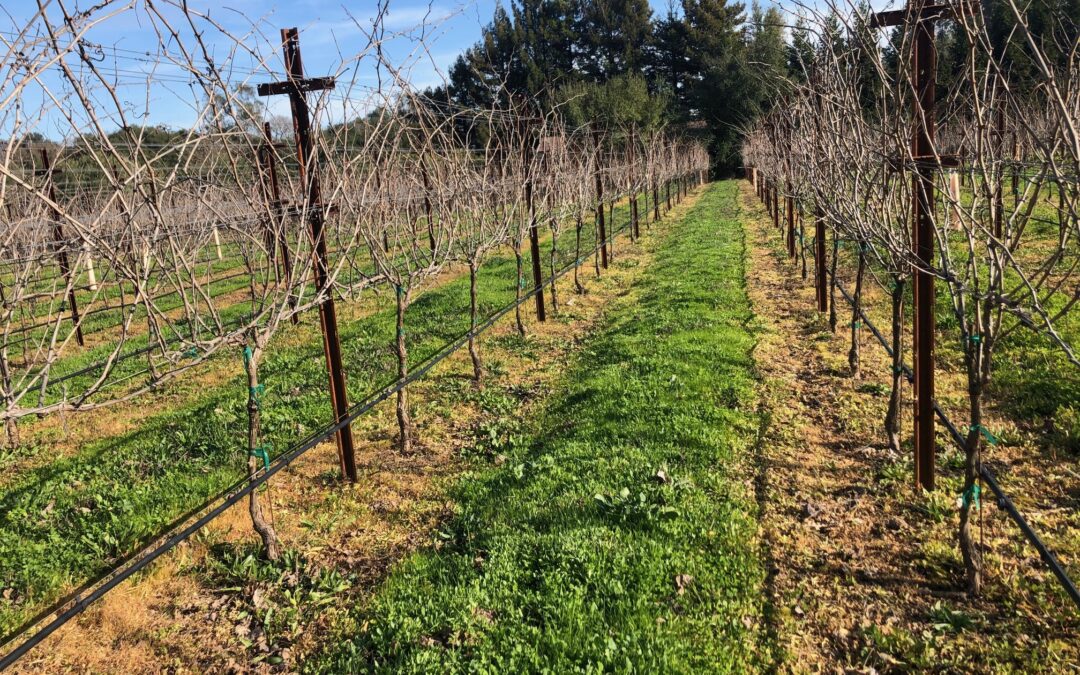
Organic grape and wine farming: Thanks to the support from all of our Hydeout Sonoma vineyard clients, we are a 100% organic farming operation. As this debate continues, I invite you to take an in-depth look at the differences between conventional and organic. Let’s start with some revealing imagery:
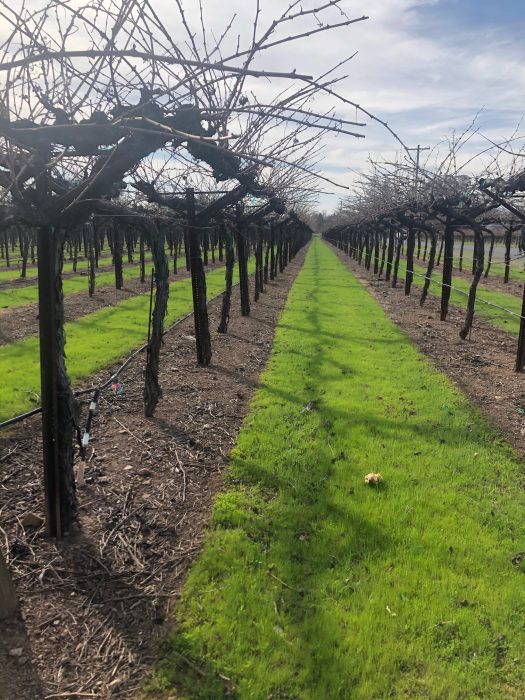
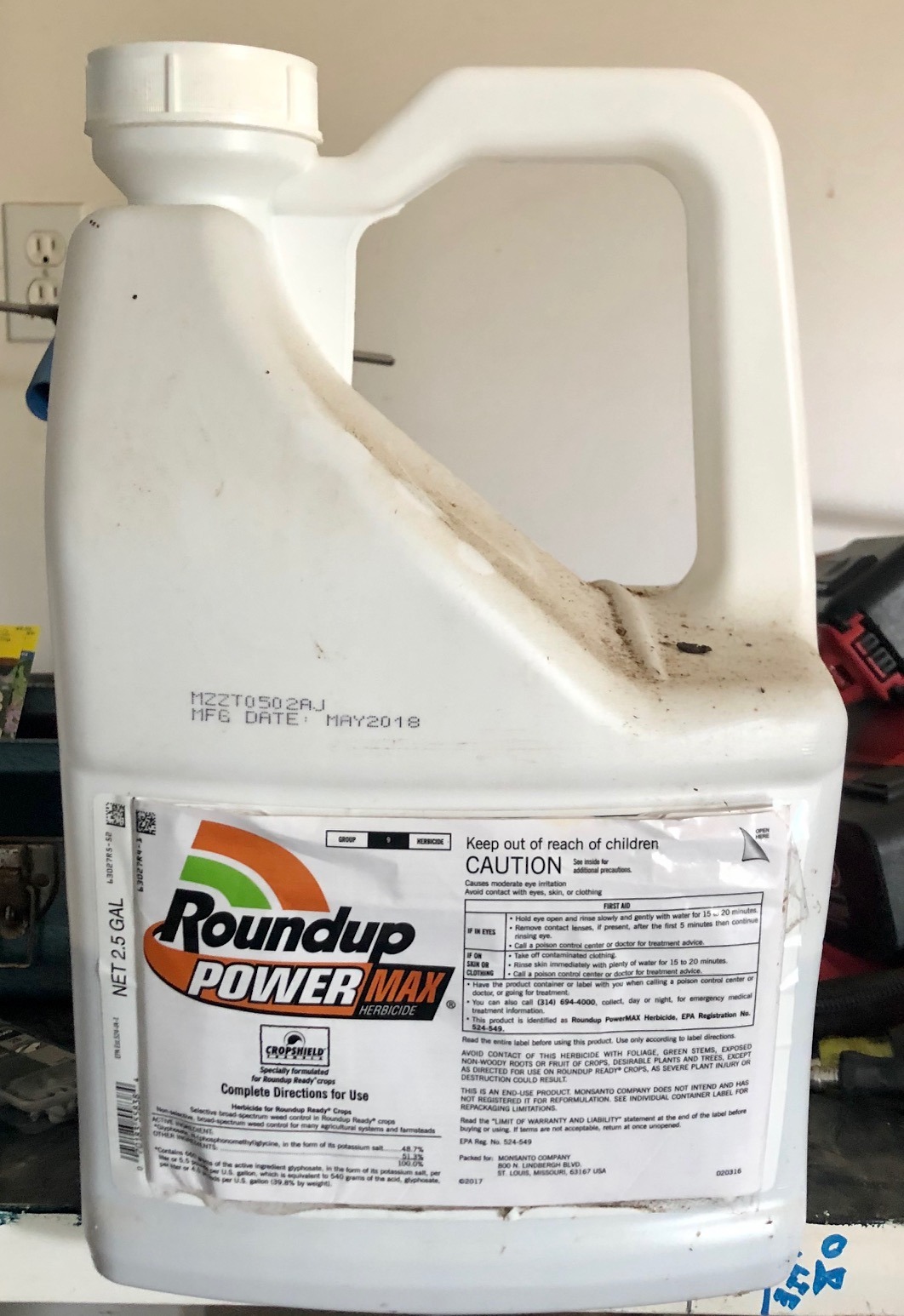
This is what a vineyard floor looks like when it’s been sprayed with Roundup. Note the complete absence of problematic weeds, nothing to compete with the vine’s roots, squeaky clean, nothing will grow on this bare dirt except the grapevines. This is a good thing if you want to assure that your grapevines aren’t competing for nutrients and water.
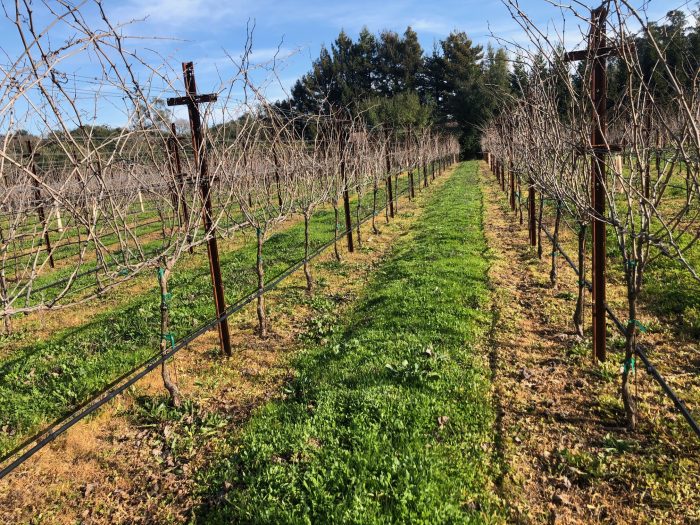
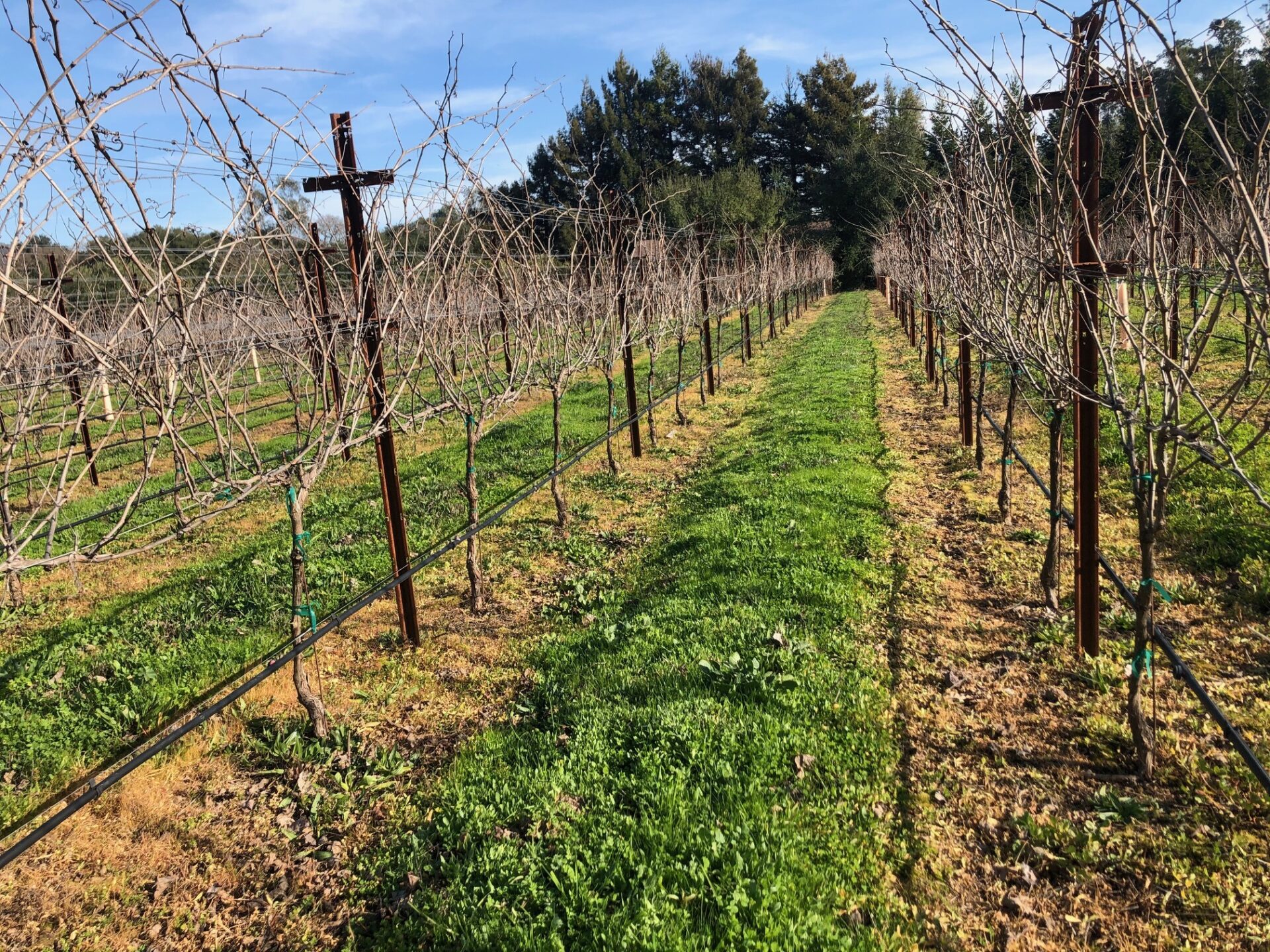
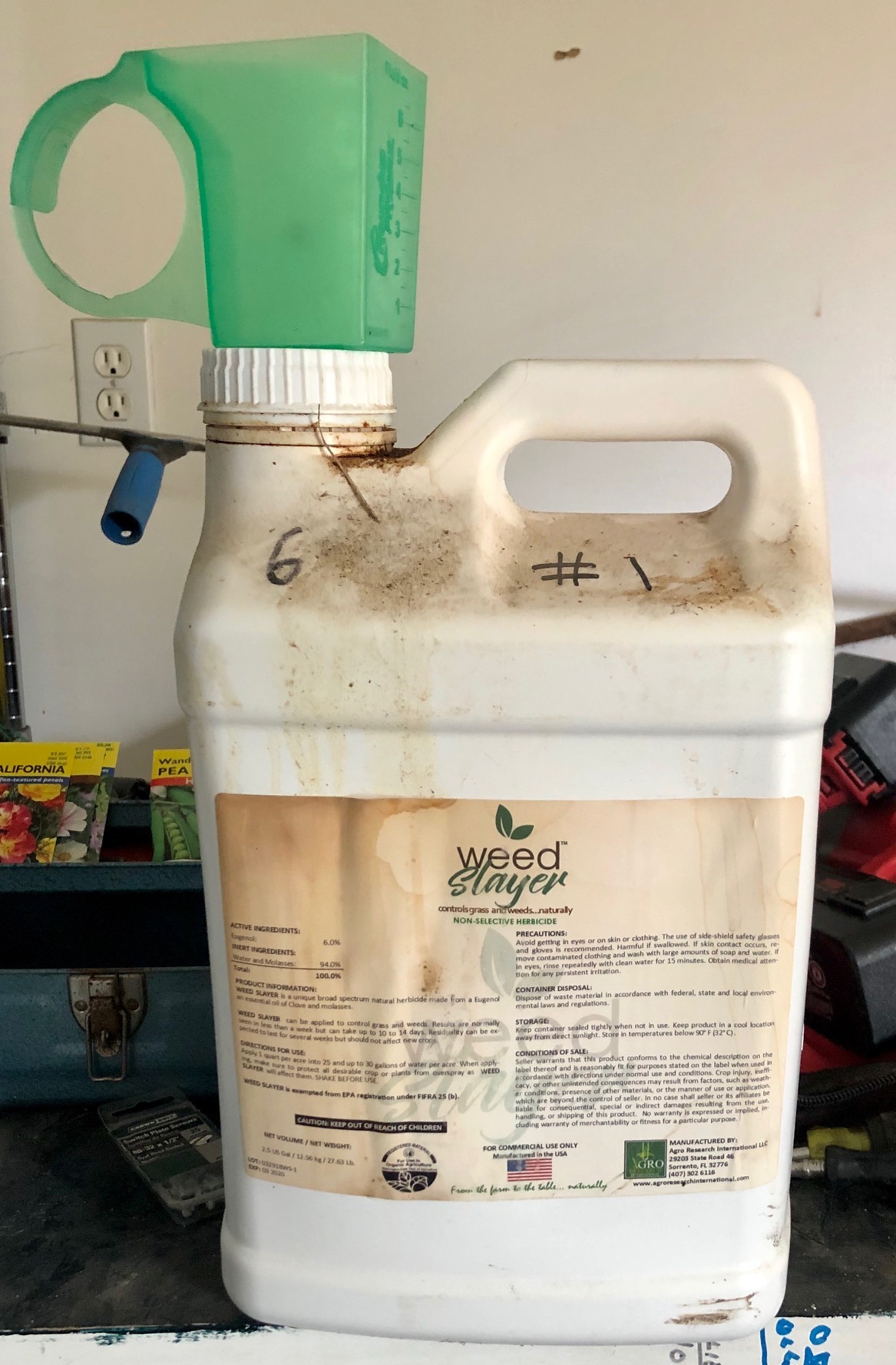
Take a look at the organic farming approach – in this case using the Weed Slayer. Note the absence of most problematic weeds growing under the vine rows. You will also notice the soil under the vine rows roughly almost the same result as Roundup.
Next, let’s debate the topic: with Roundup, one spray pass in the vineyard and every weed is gone for the season. In terms of cost effectiveness and the near-absolute eradication of weeds competing with the vines for water and nutrients, Roundup is the clear winner. However, Roundup seemingly kills most soil born microbes and beneficial insects. With an organic approach like Weed Slayer, the material for each application is about 2X-3X more expensive, and multiple passes are often needed, because the product doesn’t ‘knock down’ the weeds quite as well, and so in total it costs a little to a lot more for the same level of effectiveness as Roundup. But, it is organic.
If you were the farmer, what option would you choose? With Roundup, there is an alleged risk to health. The health risk is presumably much lower using the organic product. But, the organic option will add substantially to the labor and spray costs of your crop. How do you choose to compete?
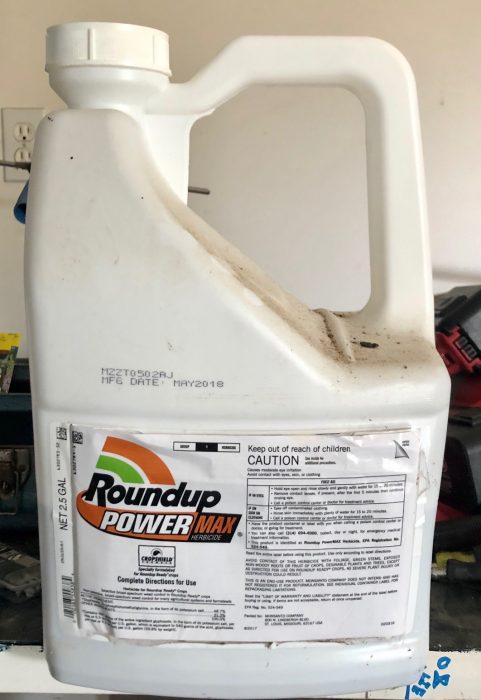
Roundup is a Glyphosate and comes with a standard “Caution” warning. It is thought to be particularly dangerous to honey bees.
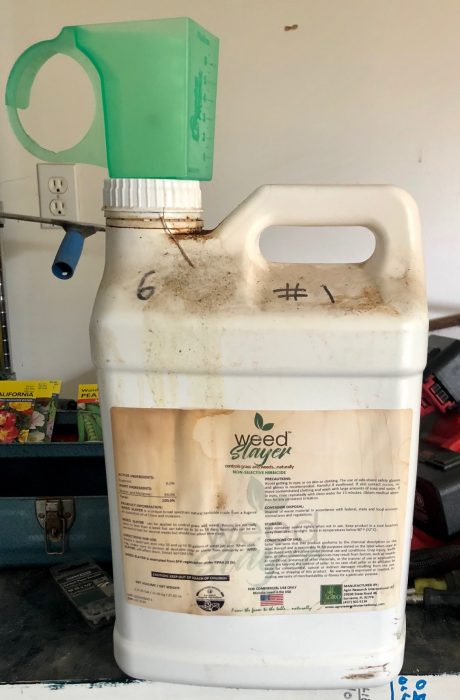
Weed Slayer consists of two separate products (Parts A & B) that you mix together to make one exceedingly effective weed killer. Part A is the Weed Slayer, a broad spectrum herbicide crafted from Eugenol (an essential oil from cloves) and molasses. Part B is Agro Gold, a biological adjuvant containing Streptomyces and Bacillus microbes. The Eugenol and molasses in Part A will make its way down to and kill the roots and/or root ball of the undesired plant. The soil enhancing bacteria in Part B clears the way for and drives the Eugenol down into the roots. This action allows Weed Slayer to kill the whole plant quickly, including the root system, making it more effective than “burndown herbicides” for ongoing weed control.
Winter soup, chickens, eggs, and raised beds:
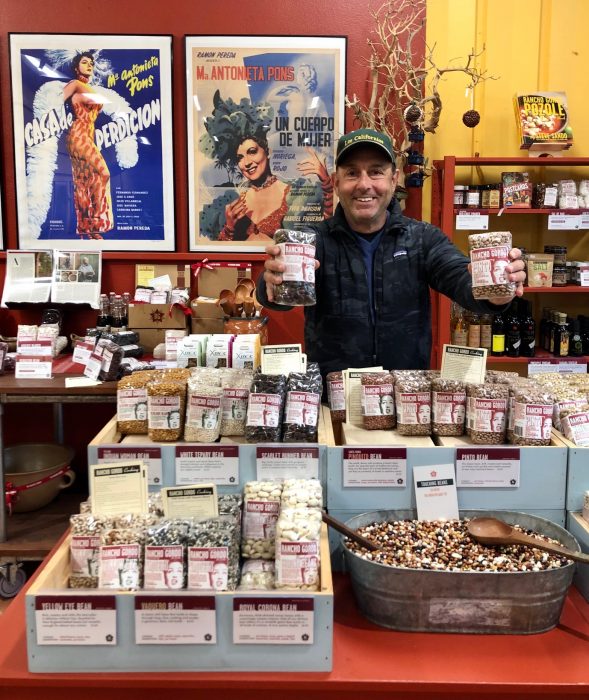
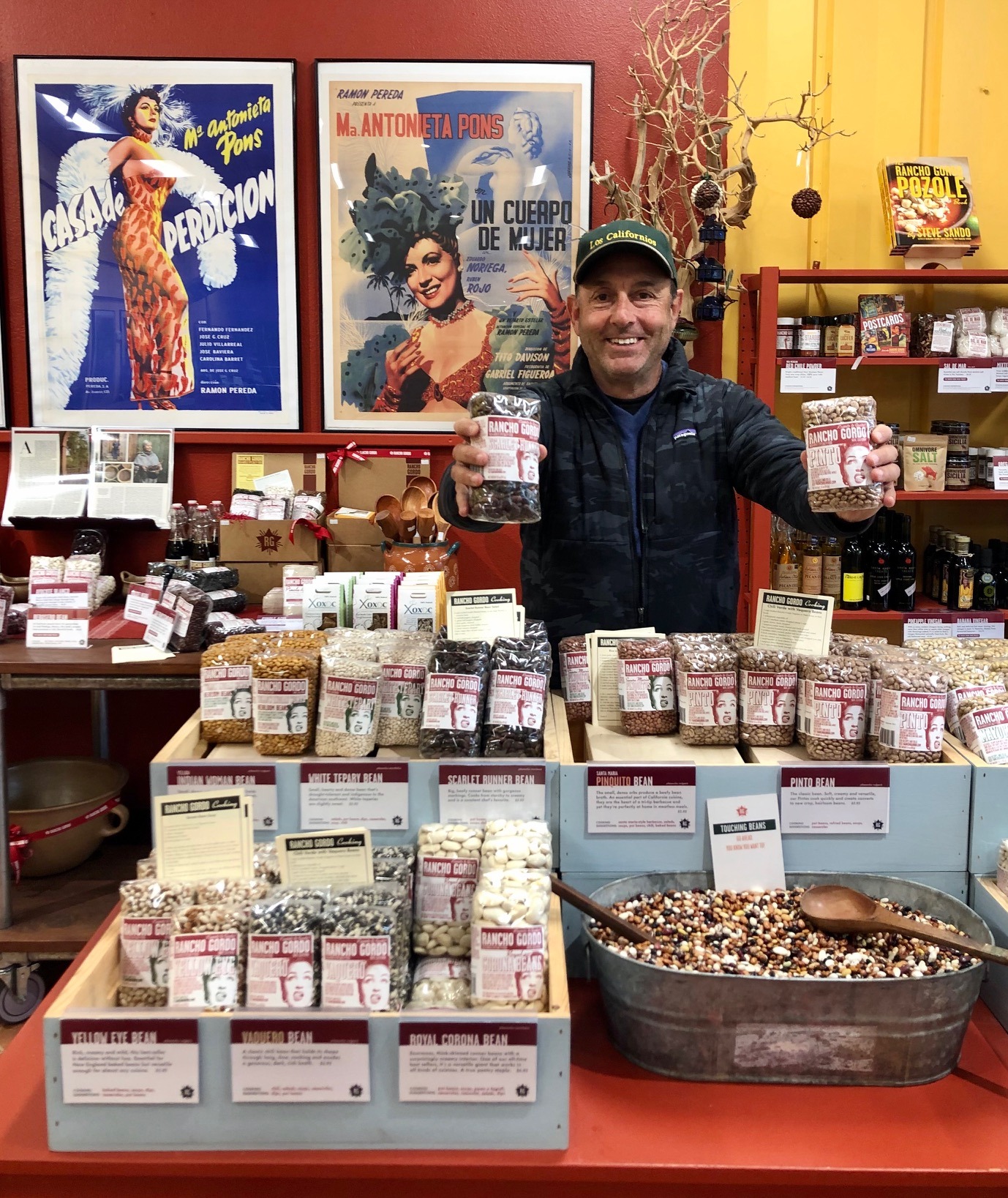
One of our favorite weekend stops for supplies to make a delicious pot of soup on cold winter nights; nothing beats Napa’s “Ranch Gordo” beans, a super high quality company with typical and unusual bean varieties. And lots of other products and great recipes. Really lovely people too! See this link: Rancho Gordo specialty foods and heirloom beans

A happy Valentine…sun-glassed Cynthia Wornick displays eggs from our expert chicken neighbors next door, Lori and Steve Bush of Gremlin Farms. And just this week our own Dysfunctional Family chickens began laying too.

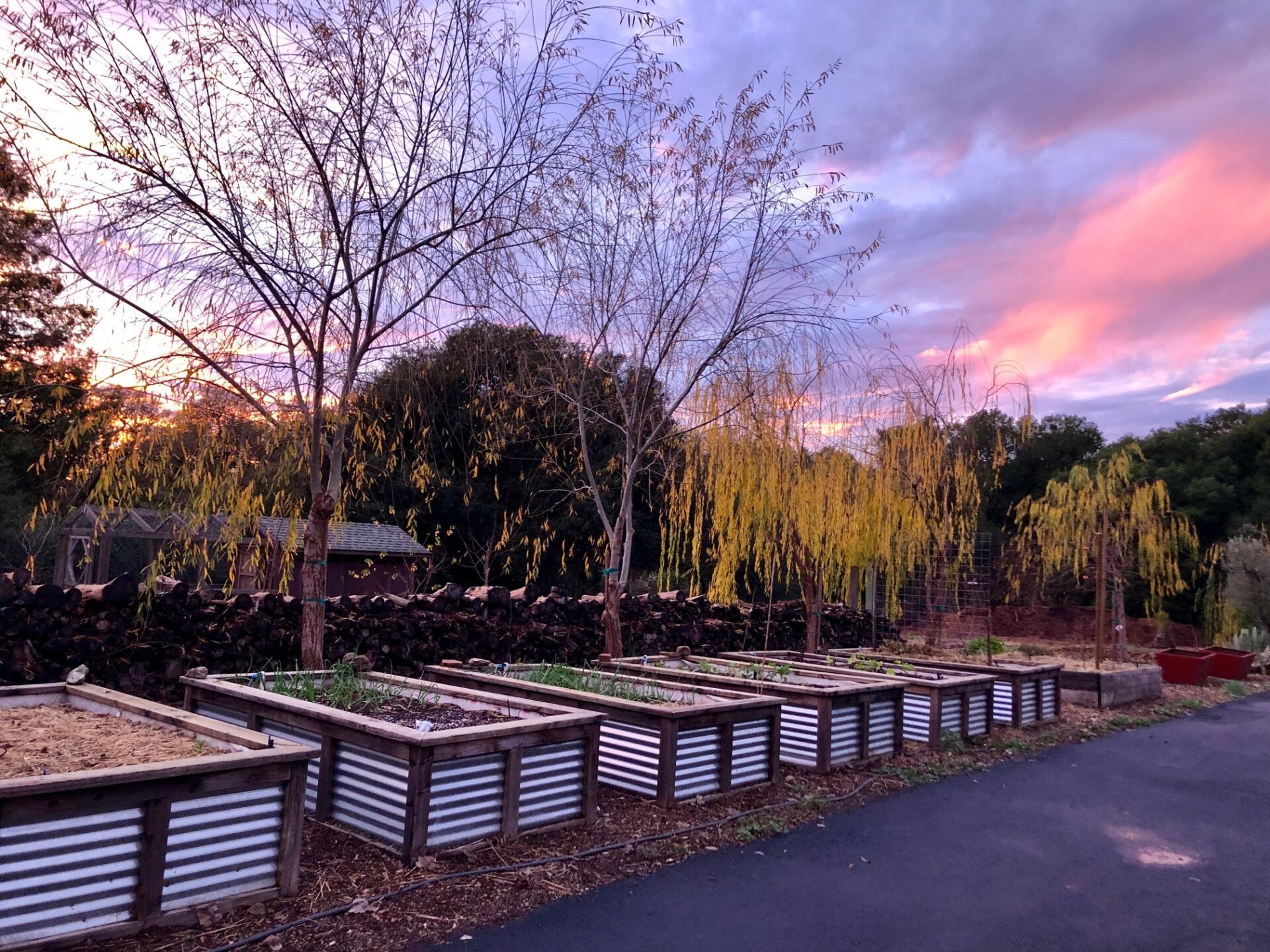
Hydeout Sonoma’s winter garden is pushing onions, kale, potatoes, carrots, and beans; all will be ready to harvest in early spring. The Dysfunctional Family chickens pretty much mowed down the broccoli (4th raised bed from the left), so their ‘free range’ was slightly curtailed while the garden is in action! We’ll plant the summer crops soon – tomatoes, basil, lettuce, and so on. (I started the willow trees in the background from cuttings and they’ve grown to 20 feet in 4 short years).
Violins of Hope
The Nazis used music and especially violins to humiliate and degrade Jews in ghettos and in concentration camps. They confiscated many thousands of instruments from Jews all over Europe. Camp victims were forced to ‘play for their supper’ as the Nazi’s gorged on their meals while camp victims were forced to play music while slowly starving.
After the liberation many of these violins, some recovered with human ashes inside, were sent to Israel where they were lovingly re-built. And now they are on a new life-affirming journey where these instruments are once again being heard by audiences. The Violins of Hope concerts are the ultimate survivor’s reply to the Nazi’s plan to annihilate a people and their culture, and to destroy human lives and freedom.
My parents, Anita and Ronald C Wornick, underwrote a Violins of Hope event in San Francisco last week. I am of course very proud of my parent’s continued resilience on this topic as they lost many family members during the war, in camps, in the Ponar forest (near Vilna, home to many of my ancestors), and they continue to this day to raise awareness and celebrate our family heritage…
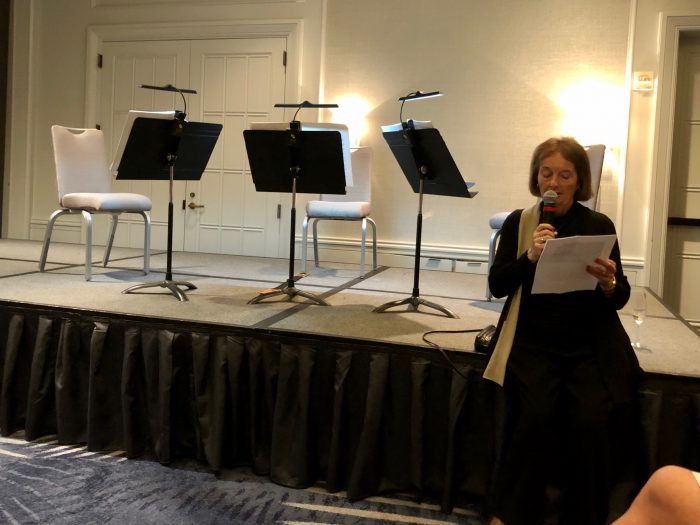
This is my adorable mom Anita who at 83 years old is as vibrant and fun as ever. My dad, Ron, at 87, was sitting in the audience with our children and brothers, leaving it to our Mom to make the introductions.
Please watch this brief video of 3 “Violins of Hope.” These 3 talented SF symphony musicians are playing 3 of the actual recovered and rebuilt instruments (2 violins and 1 viola): Brief “Violins of Hope” video from San Francisco
Want to know more about who rebuilt these instruments? Click here: Amnon Weinstein – repairer of violins
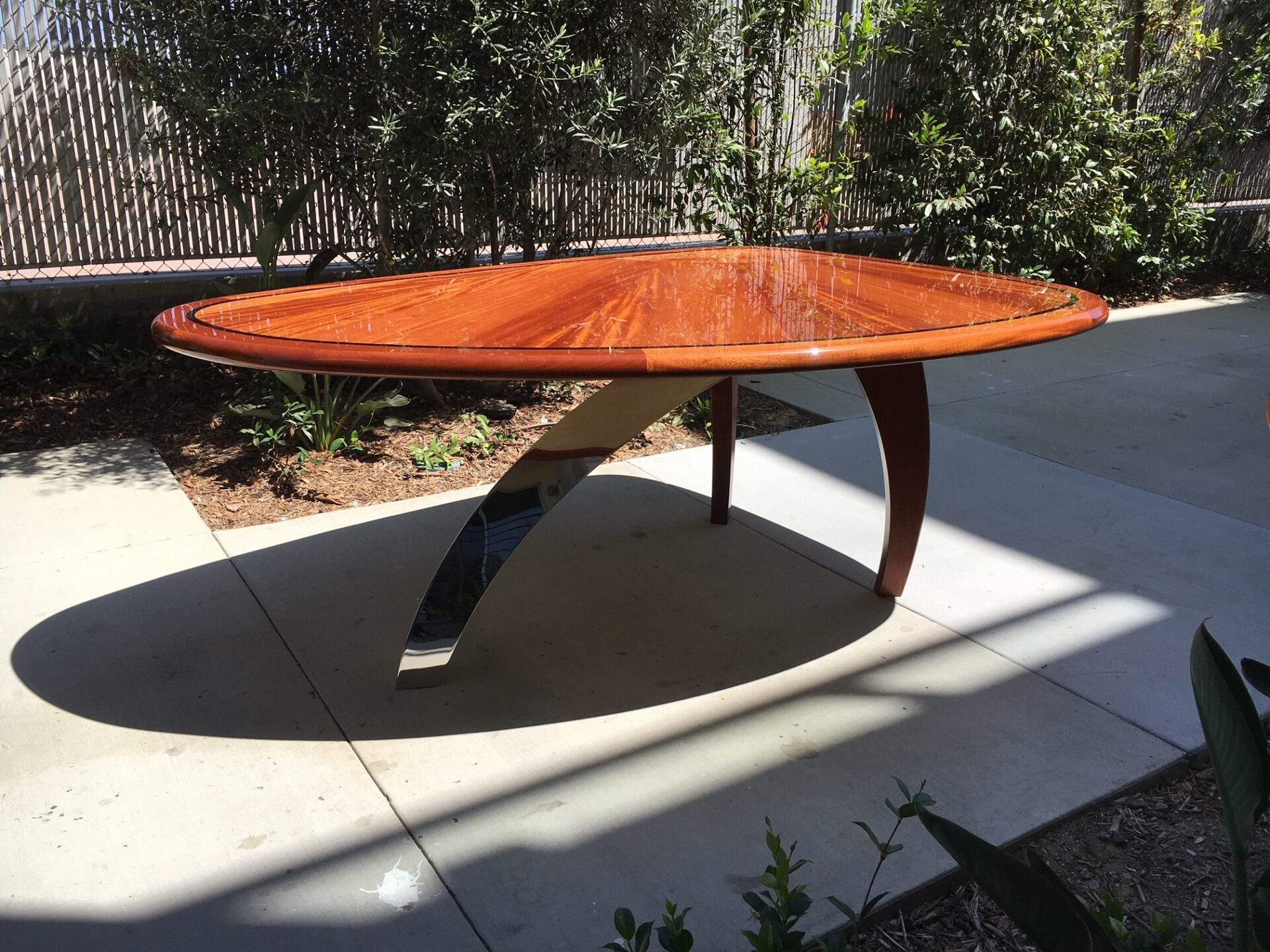
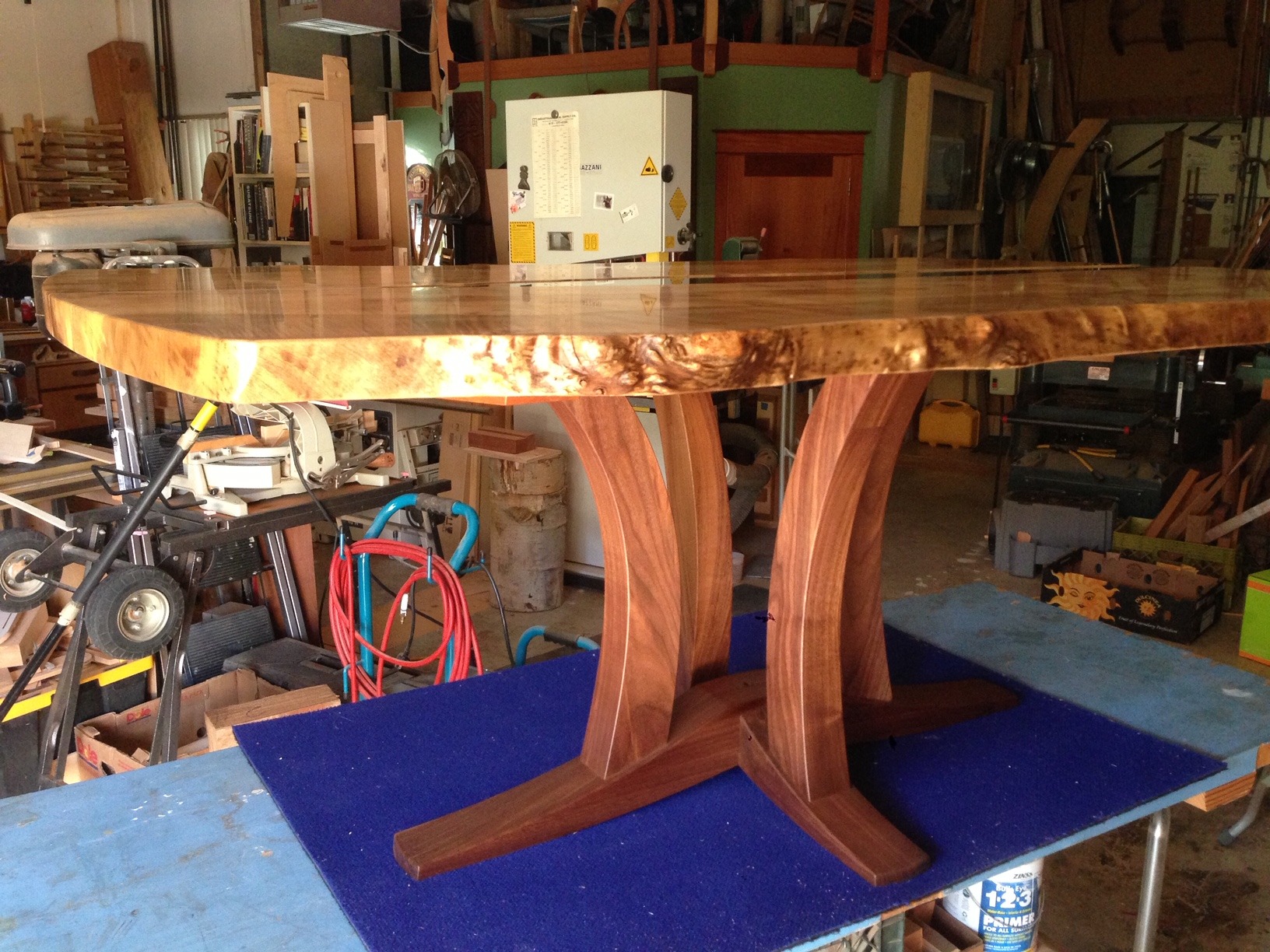
Artisan furniture master woodworker Stine Poole
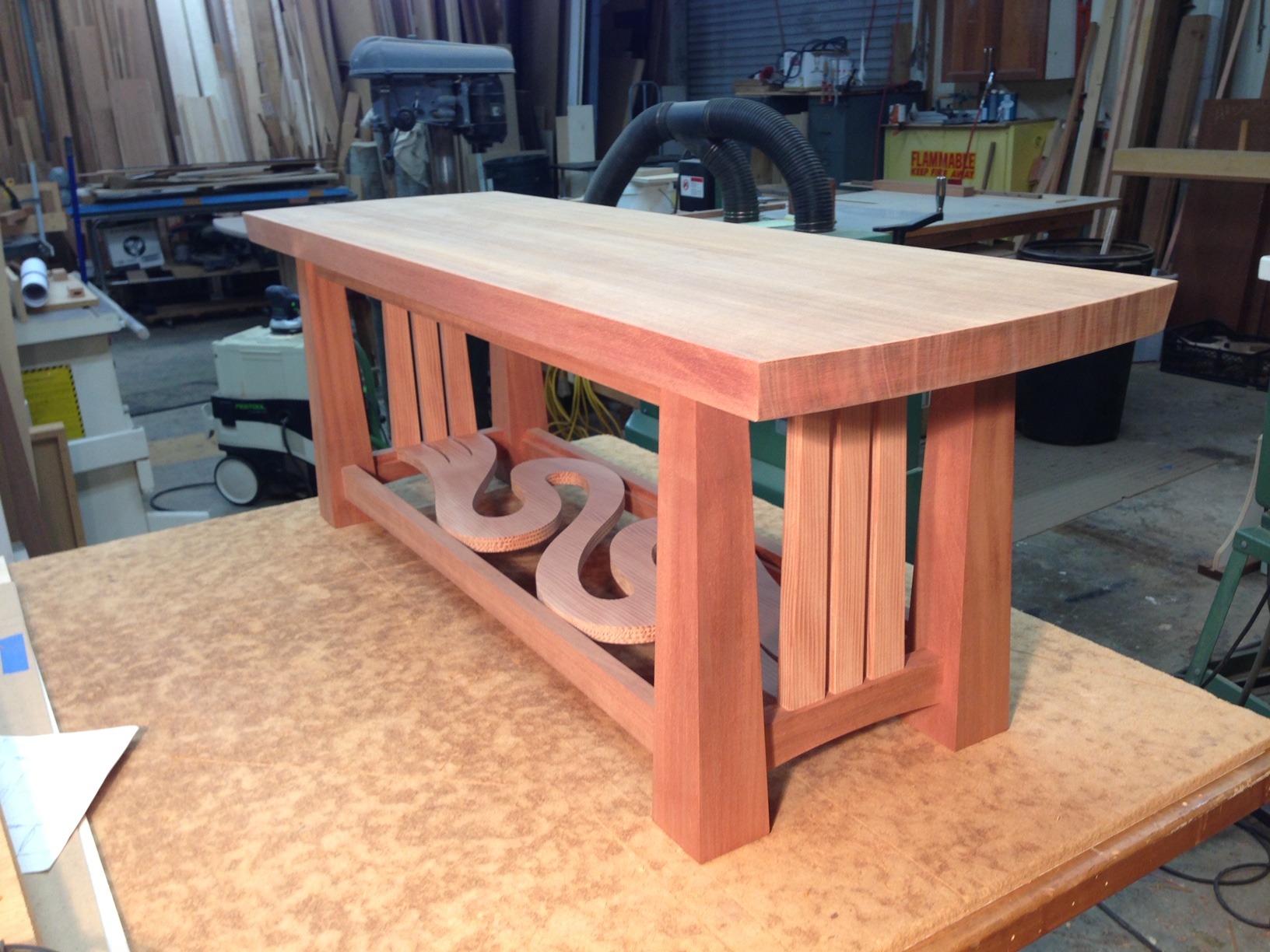
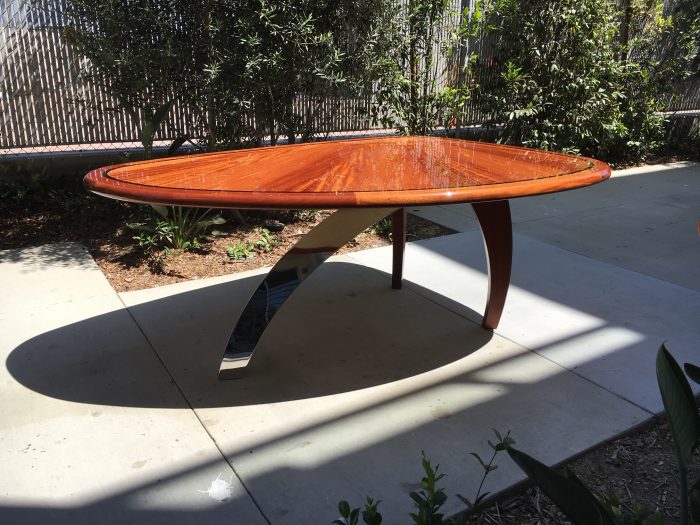
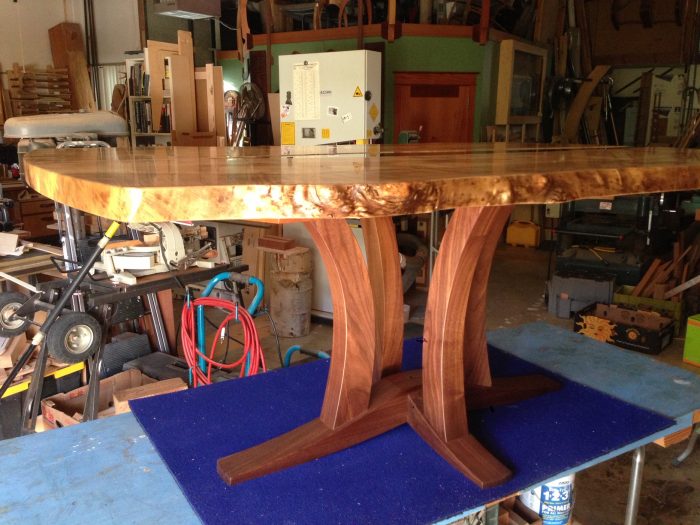
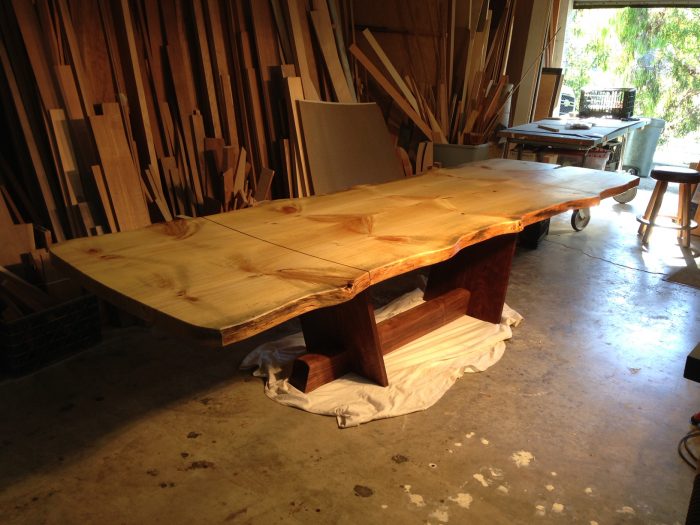
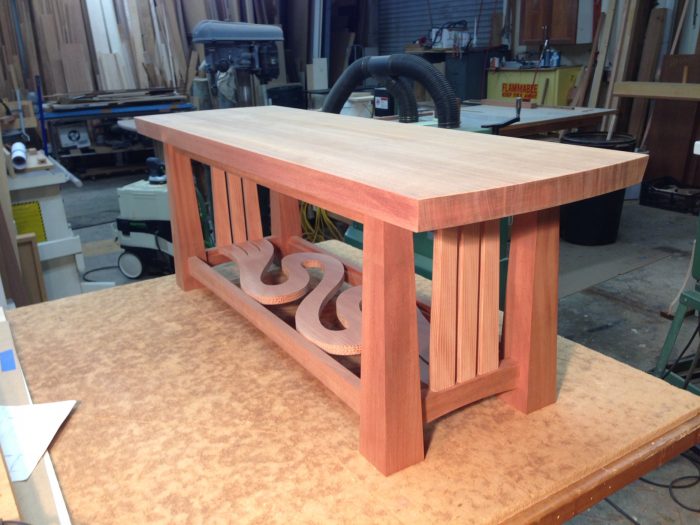
Stine Poole, is a close family friend who operates a noted wood and furniture studio in San Diego. Stine sources wood from all over the world including from his noteworthy High Valley Ranch in Montana Stine’s studio can be found here: Stine Poole – Furniture by Design. If you have reason to commission a special piece of furniture to fit an exact need, please contact Stine. He would be delighted to hear from you. Following here are few images of some current work in progress. Click on the website to see more images. Stine Poole – Furniture by Design
Full Moon Hike to Bald Mountain
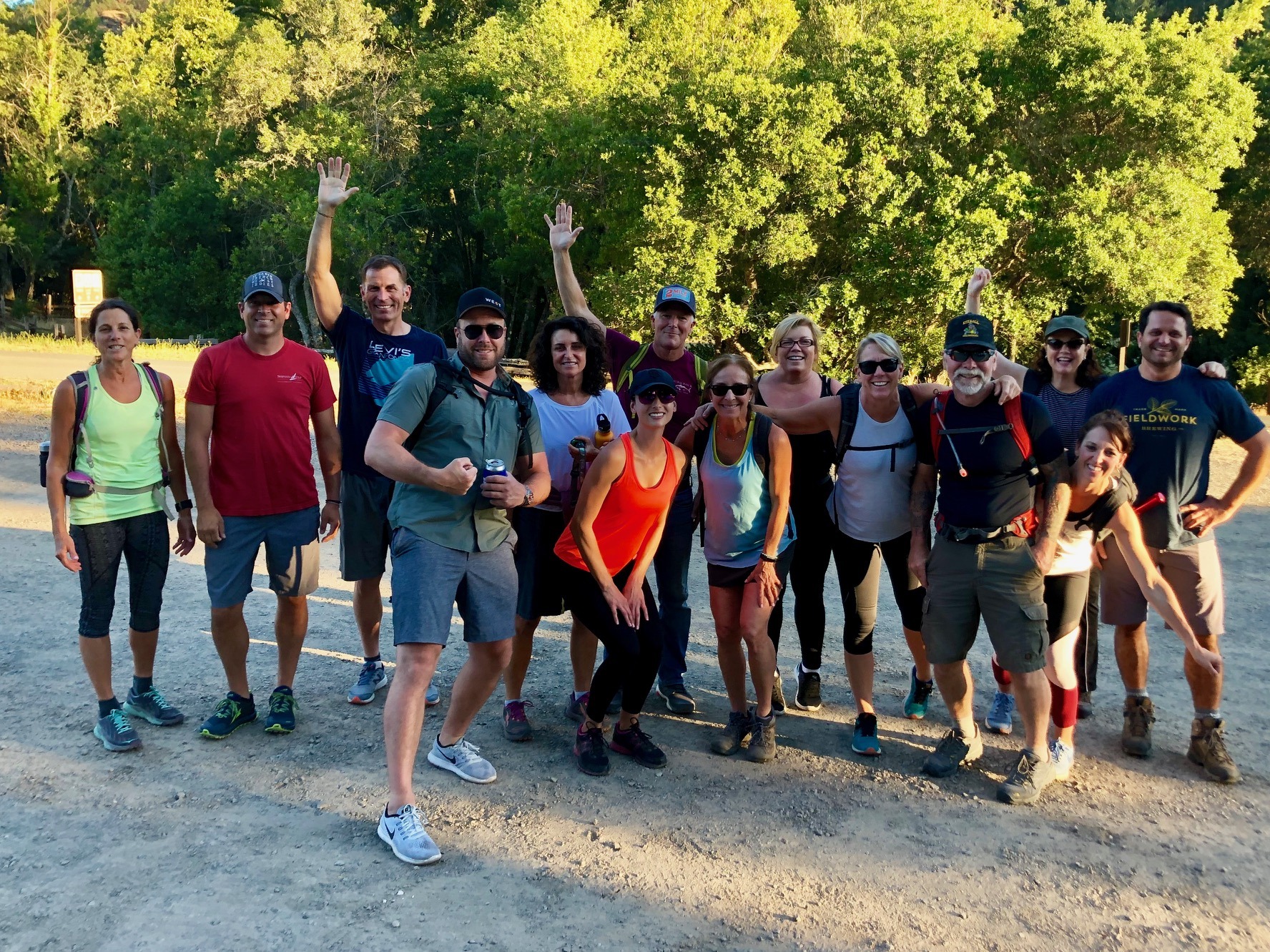
Our constantly evolving group of local hikers routinely depart just before sunset to climb Bald Mountain inside the Sugarloaf Ridge State Park in Sonoma, arriving at the top just as the full moon rises over St Helena and the Napa Valley. We climb approximately 1,500 feet in 2.5 miles, pause to watch the full moon rise, share some great snacks, pass around Tequilla shots, and head down hill under the light of that full moon.
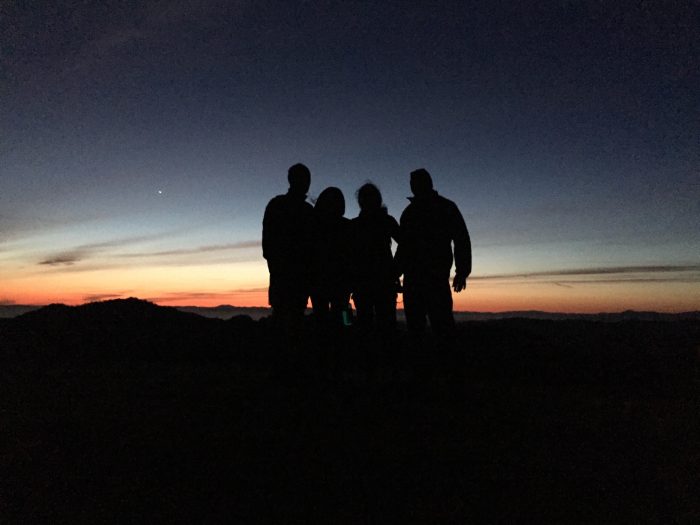
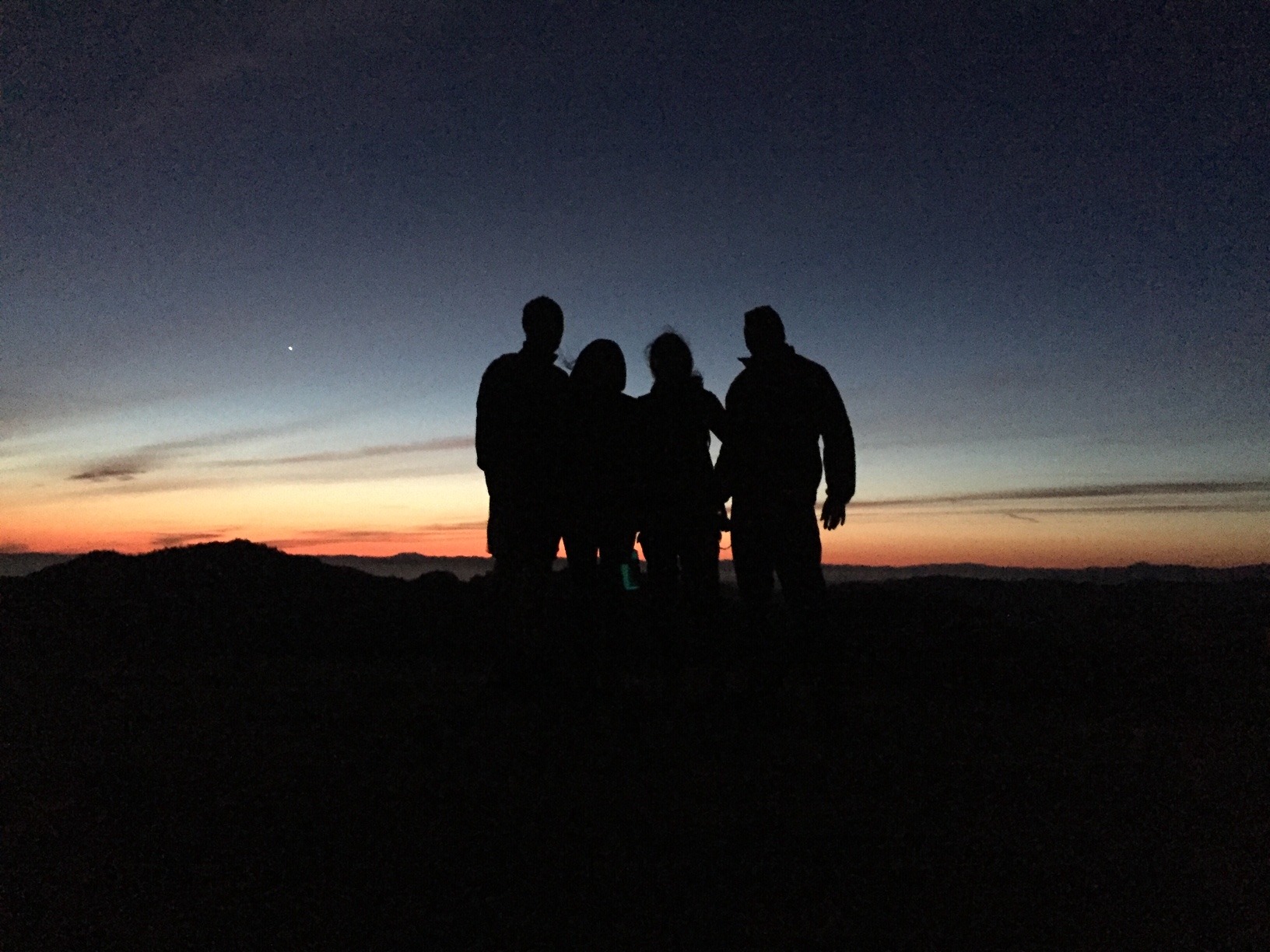
We’ve reached the 2,729 foot summit just as the sun sets and the full moon is about to rise. Looking south from the summit in Sonoma is the Napa Valley, Vallejo, and the Bay.
The Sonoma Valley Museum of Art “Summer Solstice” Party
After six years on the board of the Sonoma Valley Museum of Art, I will be terming out. But I’ll still be around for more museum fun…in this case the museum hosts an ongoing series of events called “Great Places, Great Spaces.” Along with our neighbors Steve and Lori Bush of Gremlin Farms, we will be hosting a progressive event, drinks and apps at Hydeout Sonoma and dinner at Gremlin Farms. Please join us. Click on this link for tickets to our event: Great Places Great Spaces at Hydeout Sonoma and Gremlin Farms
Jan 10, 2020 | Wine
Here at the Hydeout, we have many projects going on around the property.The latest addition being a chicken coop! Many friends in Sonoma have backyard chicken coops and we thought it would be great to join in on the fun. Raising chickens on property is part of a growing movement to reconnect to nature and grow your own food. Everyone willingly shares knowledge and experience, and eggs. Our growing brand of Dysfunctional Family products will soon include free-range eggs, a project we’re calling Dysfunctional Family Chickens.
Enjoy this pictorial essay on everything (almost) you need to know about raising backyard chickens:
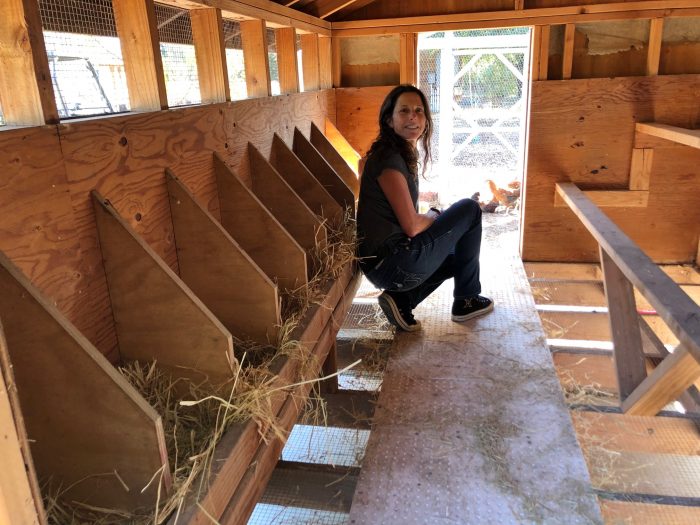
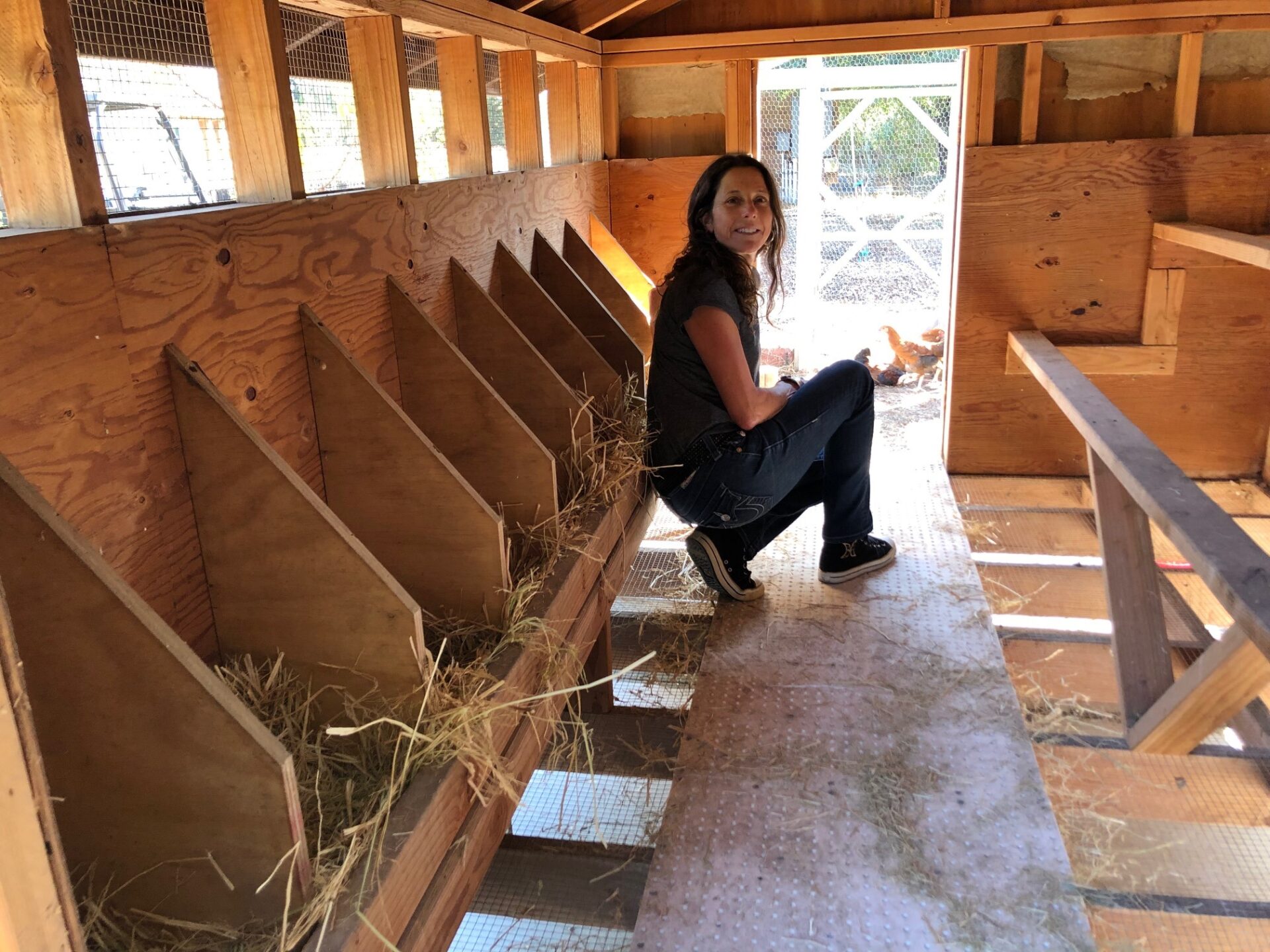
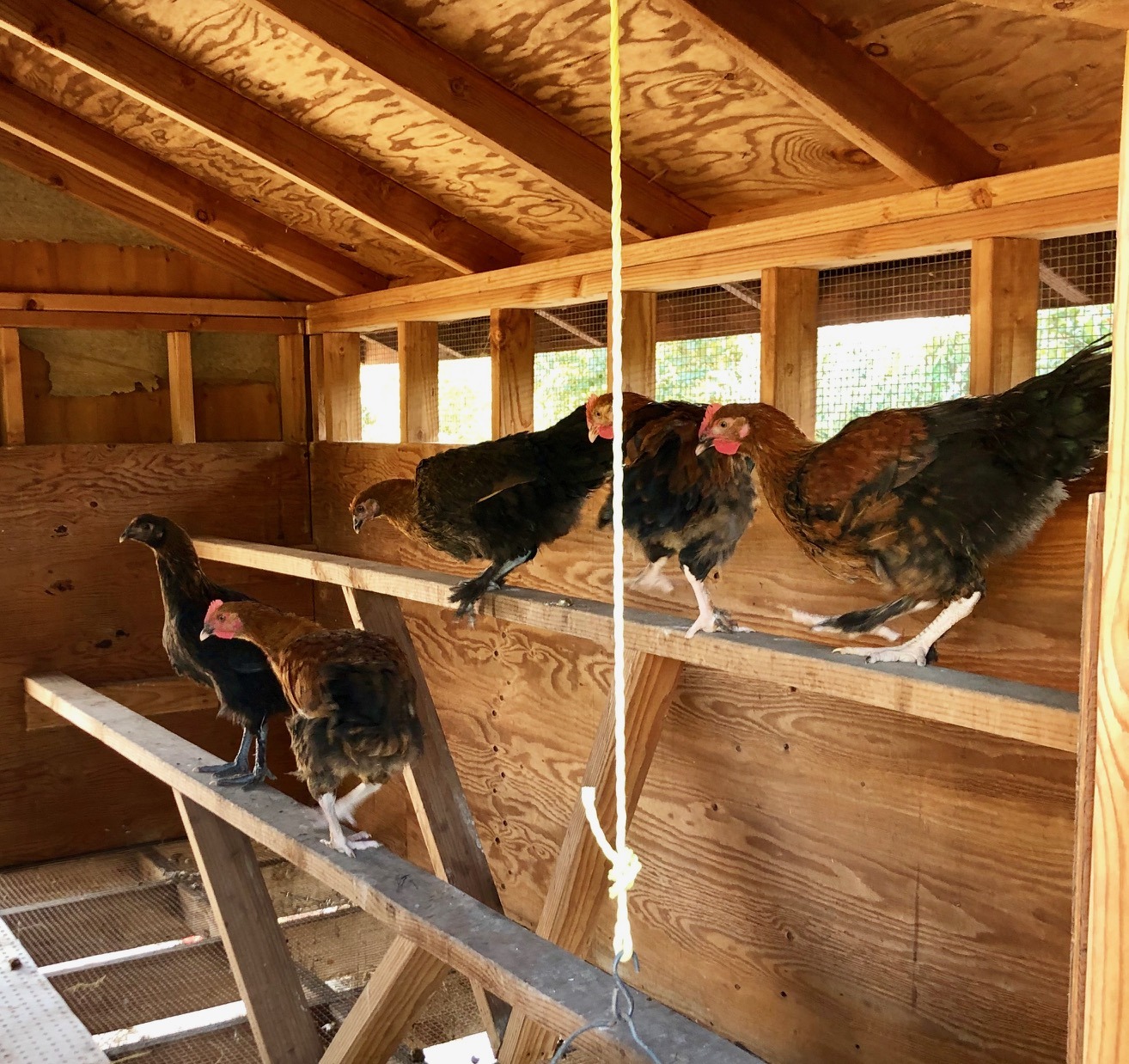
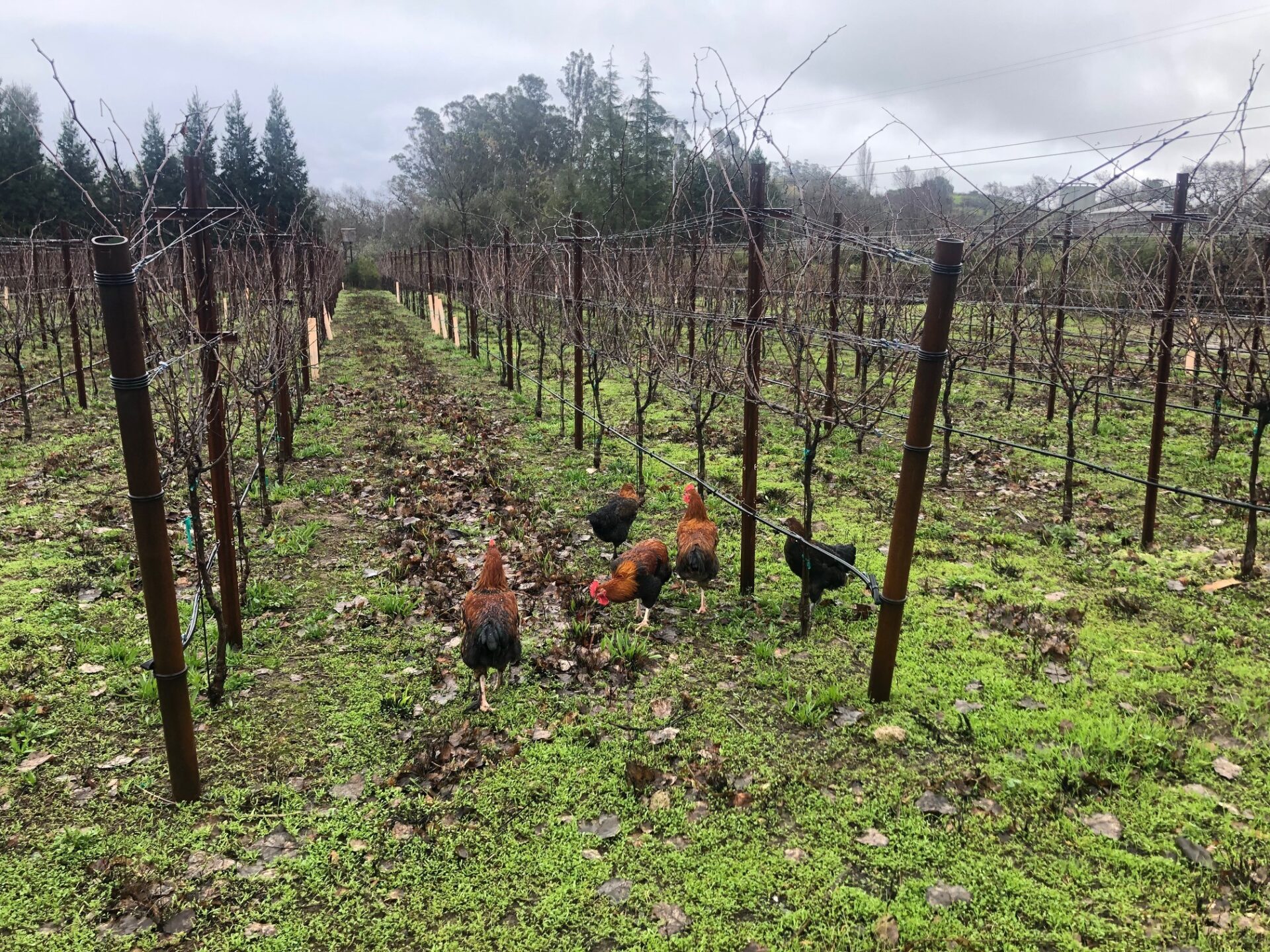
To start, you need a coop. It can be very modest. Or you can start with a roomier model like we built here. Cynthia is checking in on things. To the left are the ‘nesting boxes’ where the chickens lay their eggs, to the right are the ‘roosts’ where the chickens sleep well above the ground at night (as is their preferred habit), and in the background is the ‘run’ where the chickens hang out in the morning until we open the door to free range around the ranch all day until sunset.
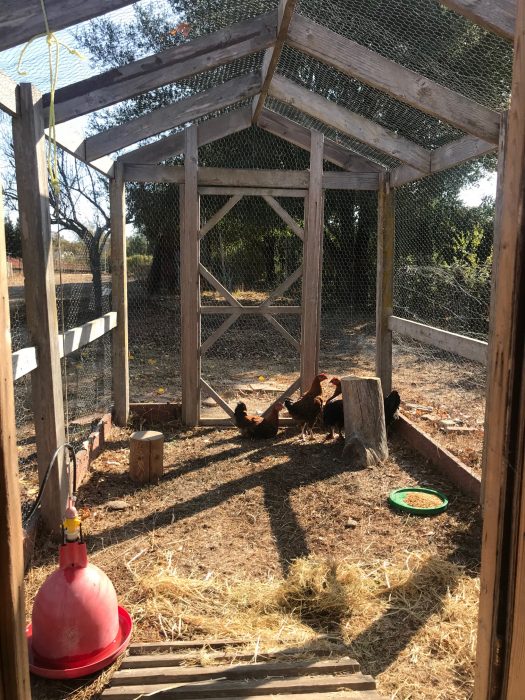
We started with 5 small very shy birds. They grew very quickly, from this…
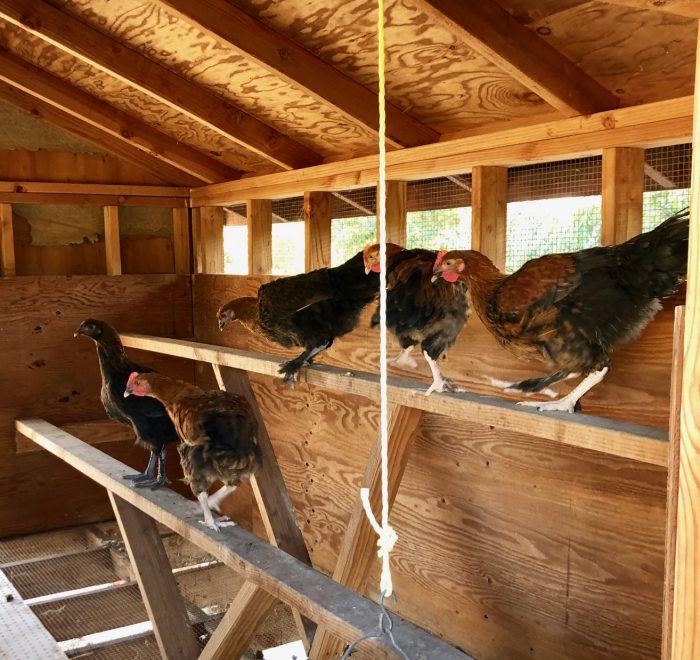
to this…
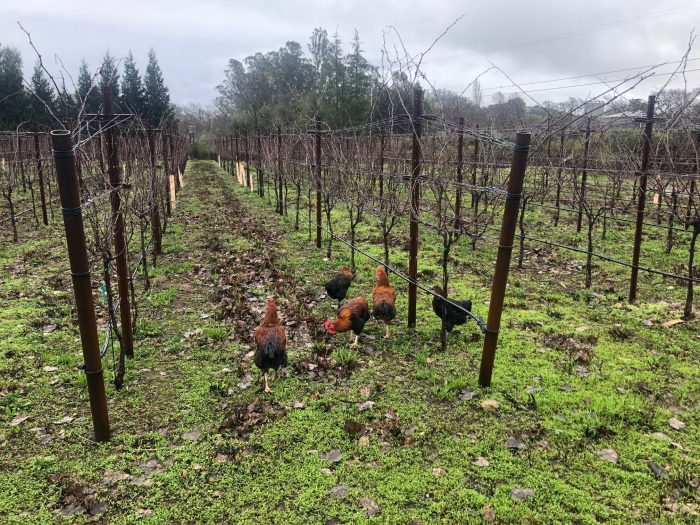
Hilariously, 3 of the 5 chickens turned out to be roosters. Note red ‘combs and wattles’ and perky tail feathers. Even the professional hatcheries have some difficulty determining the sex when they are young chicks. More hens will be added when the weather warms up a bit.
Most backyard coop experts recommend one rooster for every 8-10 laying hens. This general rule keeps the flock in calm order, and the rooster keeps an eye out for predators too. More than one rooster and those boys will constantly fight for dominance and argue over control of every hen, wearing themselves and the hens out.
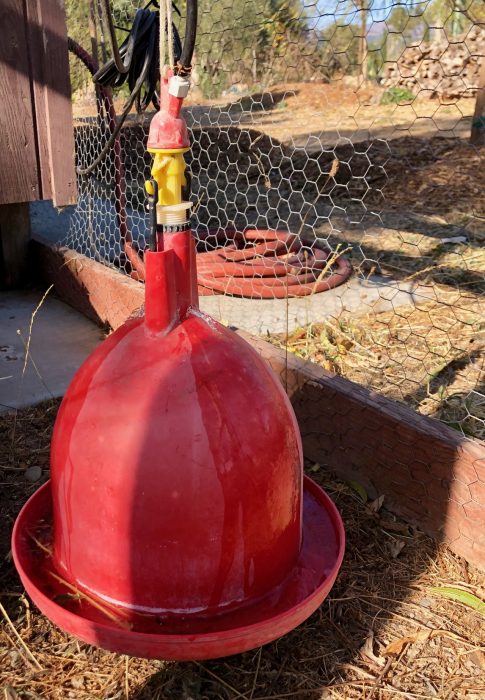
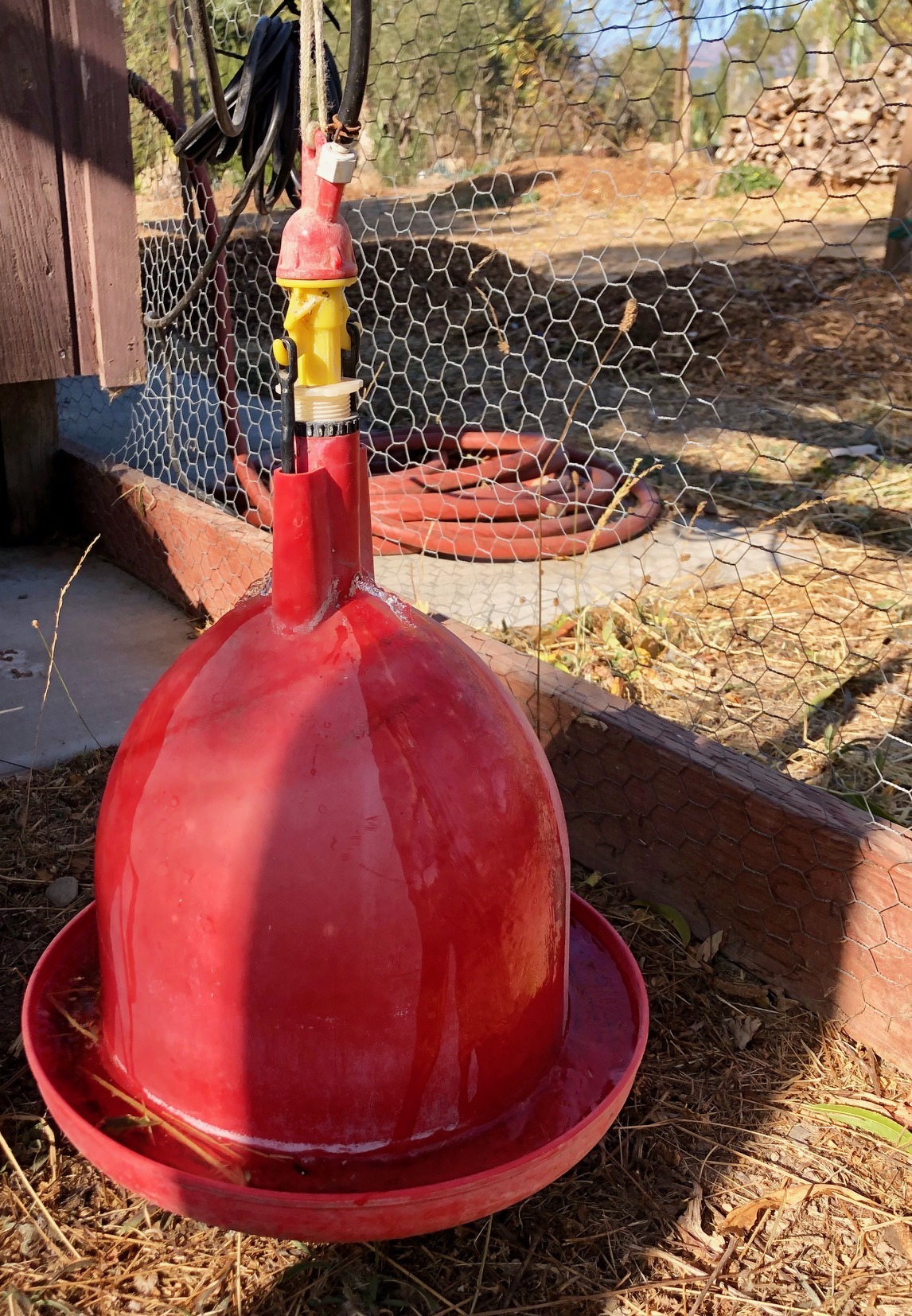
To start, chickens of course need water and food. This device is a simple automatic water device – connected to a garden hose. It hangs slightly off the ground and auto-releases water into the channel as needed.
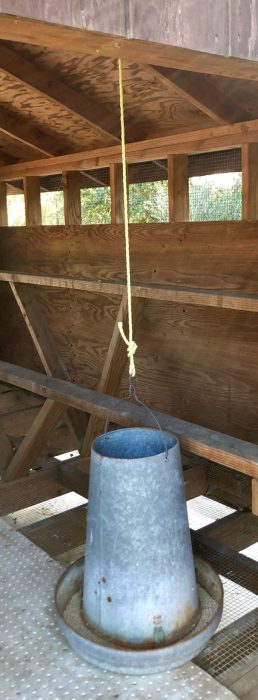
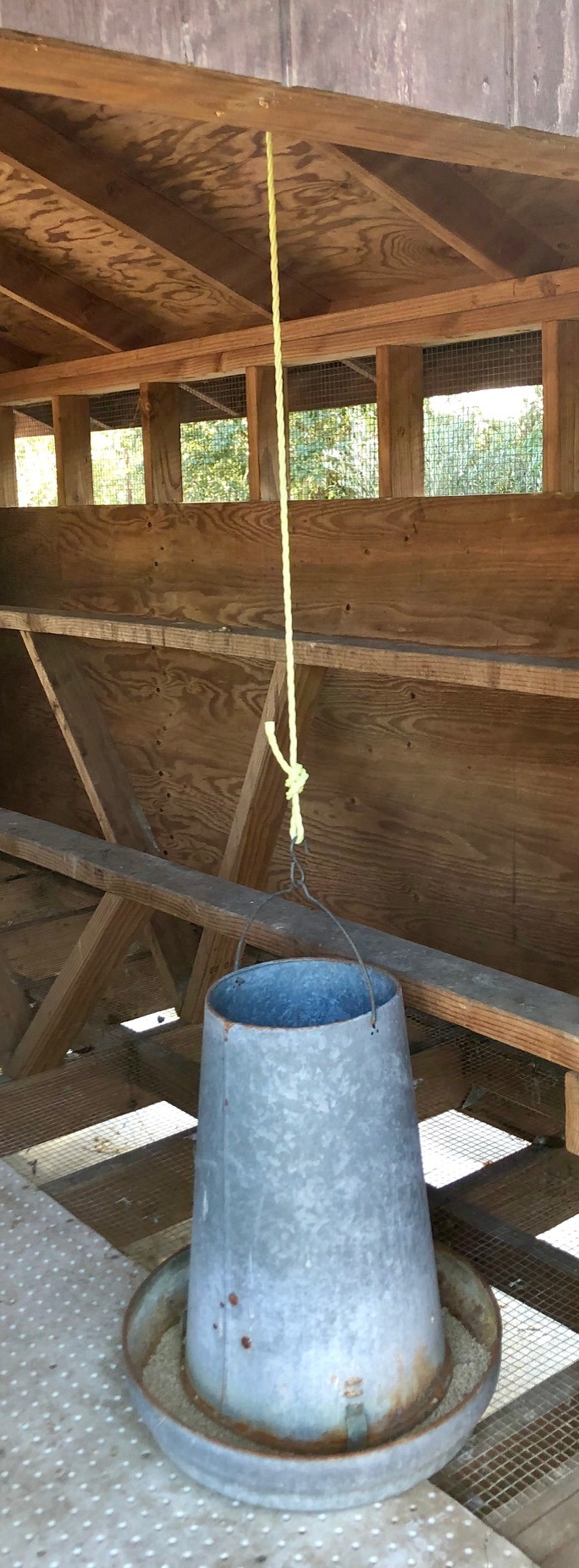
And this is a very simple multi-day automatic feeder – the feed is fed into the top manually, and is slowly is fed out at the lower rim as chickens consume the feed.
What do chickens eat? Generally, chickens will happily live on the grass and weeds and bugs around your house. But for high quality eggs and good chicken health, there are some helpful supplemental options too:
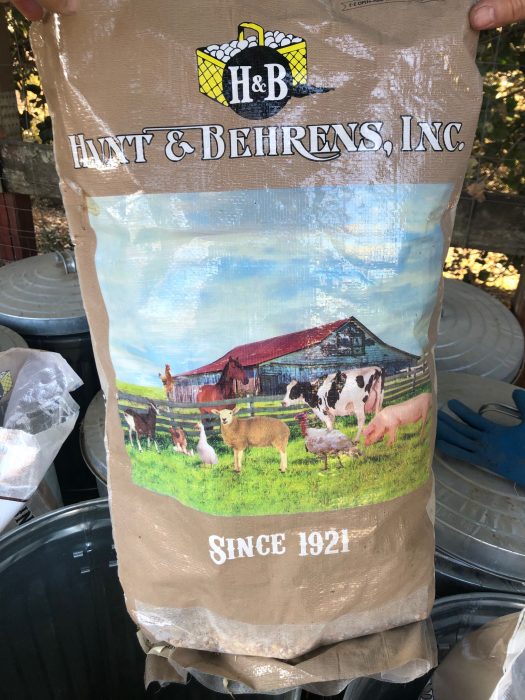
This standard Hunt and Behrens “laying mixture” is a blend of 16% crude protein, 2% fat, and 20% fiber and ash. This is their primary daily feed in the first 5 months. This feed costs roughly $17 for 50 pounds and will last roughly a month to 6 weeks for 5 growing chickens.
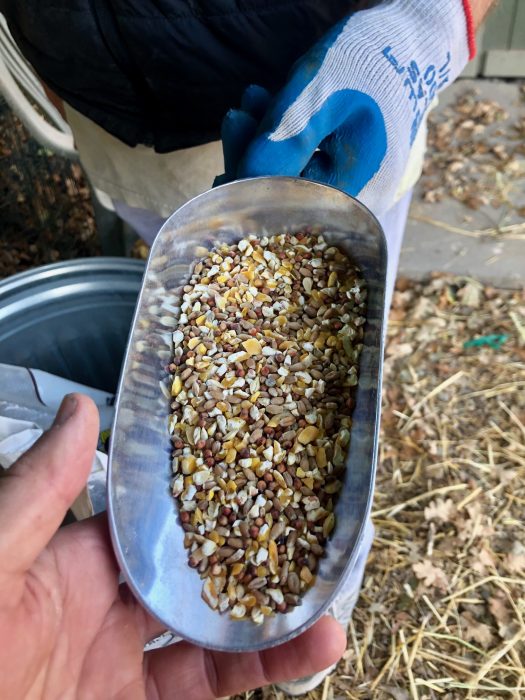
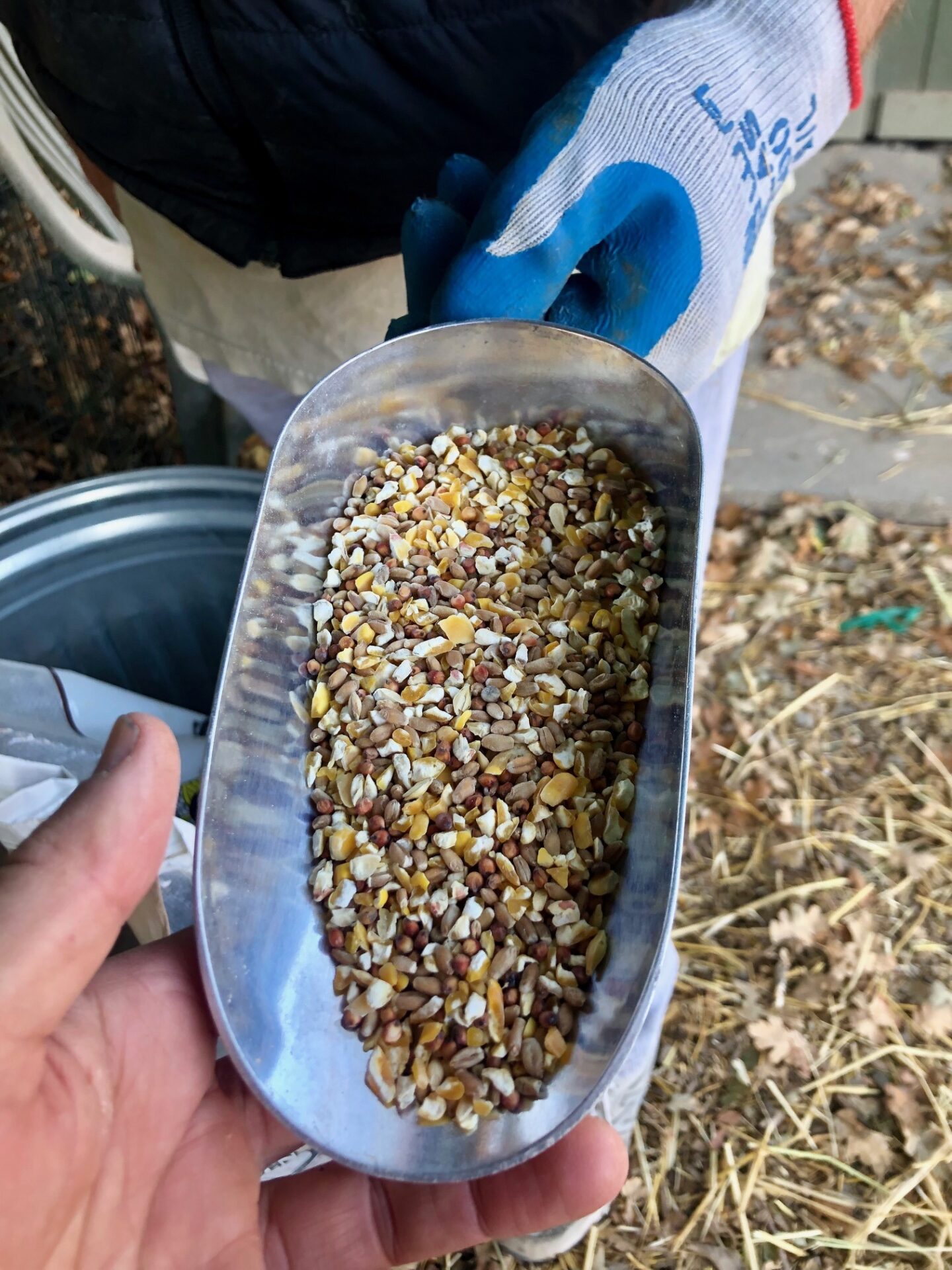
Our Dysfunctional Family Chickens, just like us, love a yummy treat. This is a corn-and-seed based “scratch.” It is lower in protein than feed, but the chickens go crazy for it, and once a week or so it is good entertainment for you and a party for them.
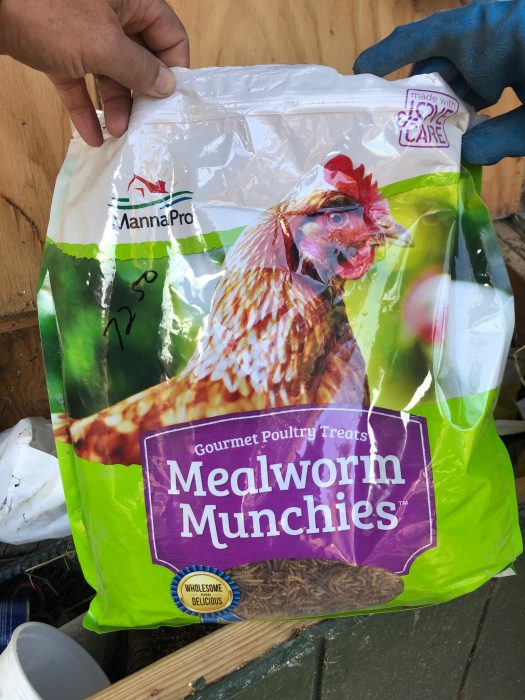
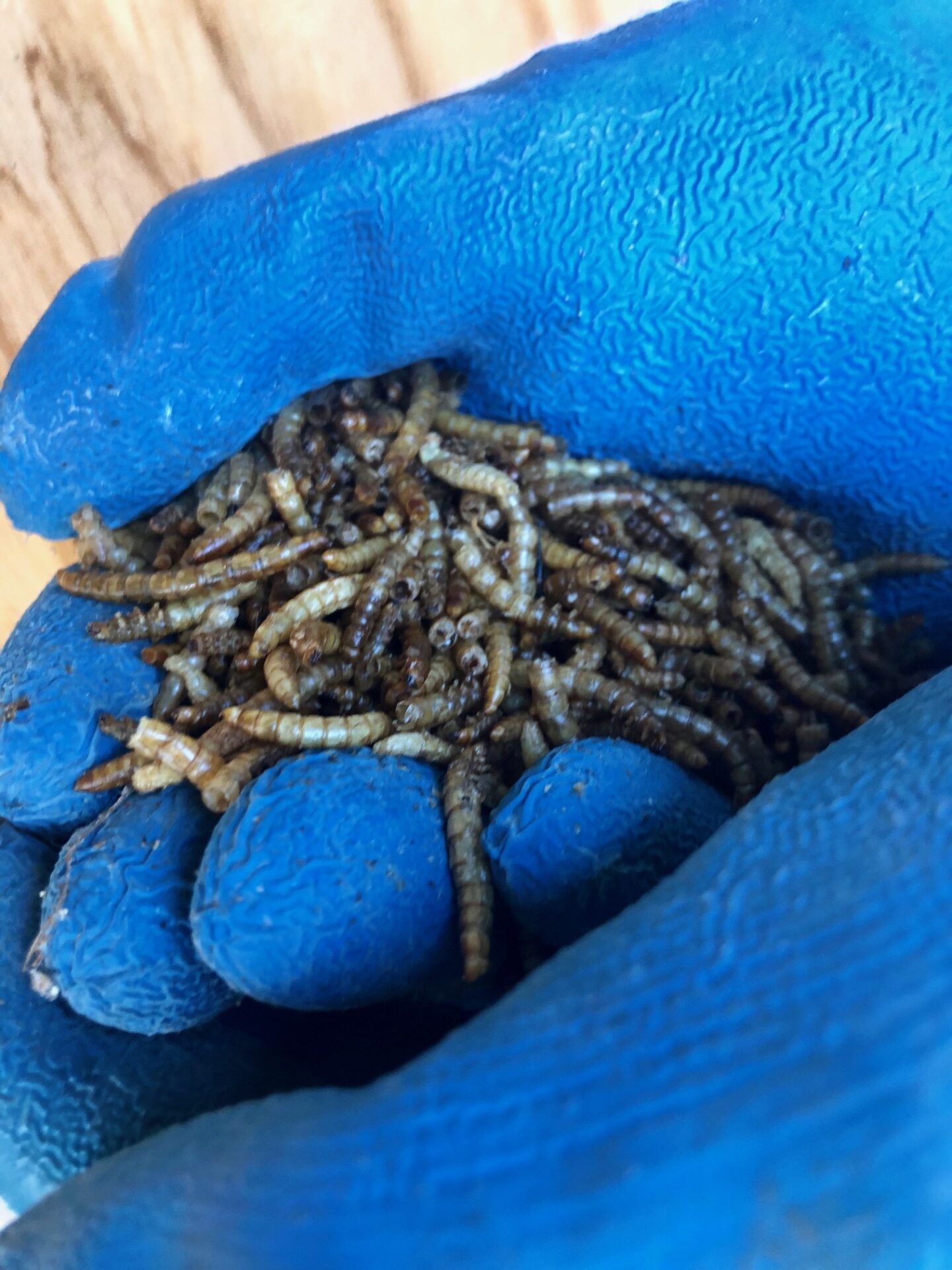
An ever bigger treat is mealworms, rather expensive and more of a luxury supplement than a necessity.
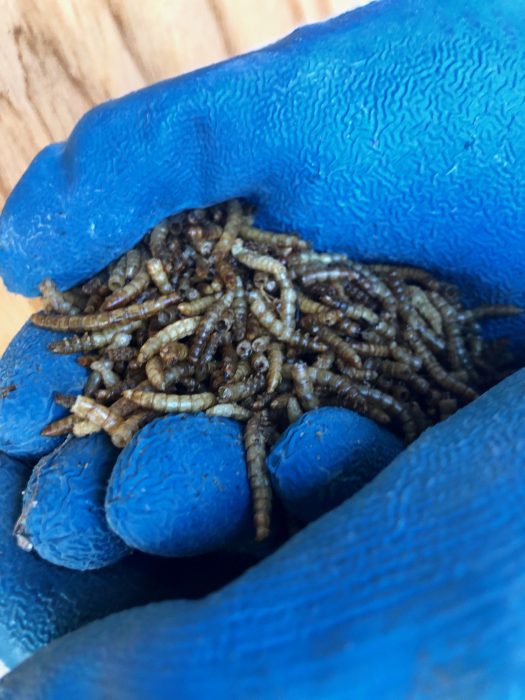
This is what the worms look like. The chickens simply freak out of them, and they are gone in an instant.
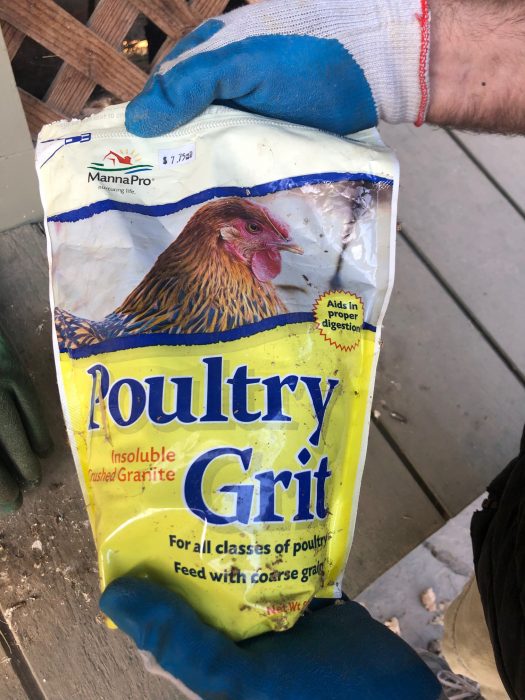
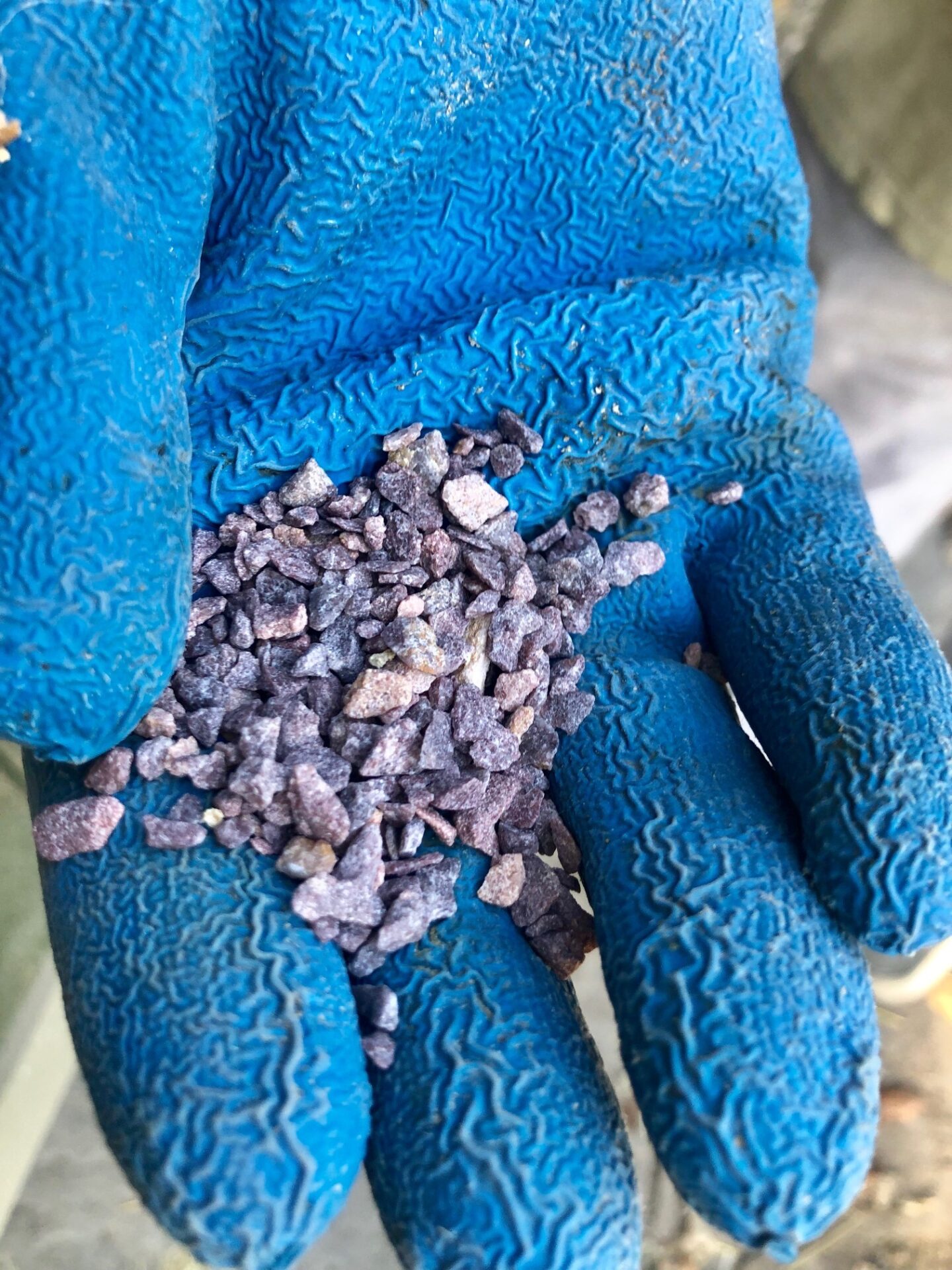
Chickens have a ‘gizzard’ which is a strong muscle that helps grind up hard seeds and so forth (such as corn scratch). This insoluble granite-based gravel is added to their snacks to keep their gizzards full of small stone.
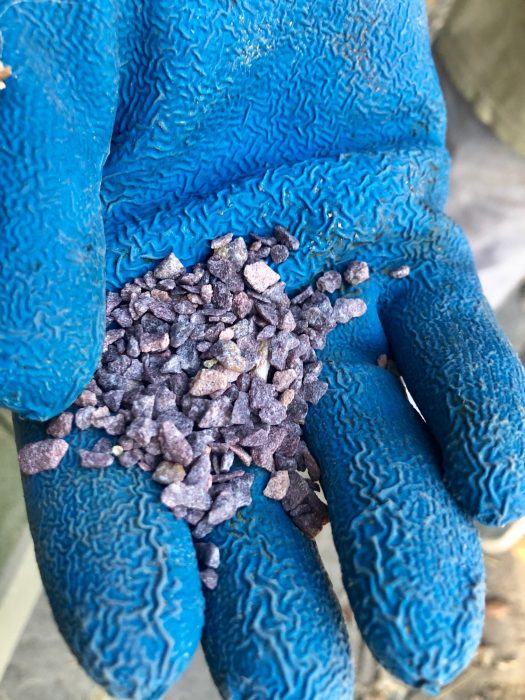
Closeup of granite-based grit.
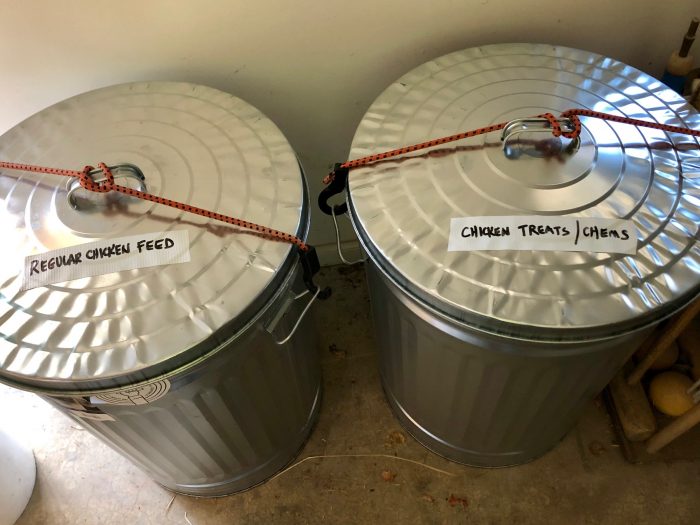
Chicken feed and supplements can attract rodents very quickly. That’s why it’s important to keep these products in closed metal cans and well secured. I label the tops so that if others are helping out around the ranch, they know were to find the various feeds.
Last, here are a few short fun videos to click on, showing the daily chicken activity:
Morning drink of water
Dinner time
Chicken scratch
Time lapse chickens
Time lapse neighborhood walk with Cynthia Wornick
Before I share news around town, a special chicken related call out to our friendly neighbors at the Boxcar Chicken and Biscuits on Fremont Drive in Sonoma (formerly the Fremont Diner, and recently renamed yet again as Lou’s Luncheonette). It’s still delicious food, and a fun place to hang out!
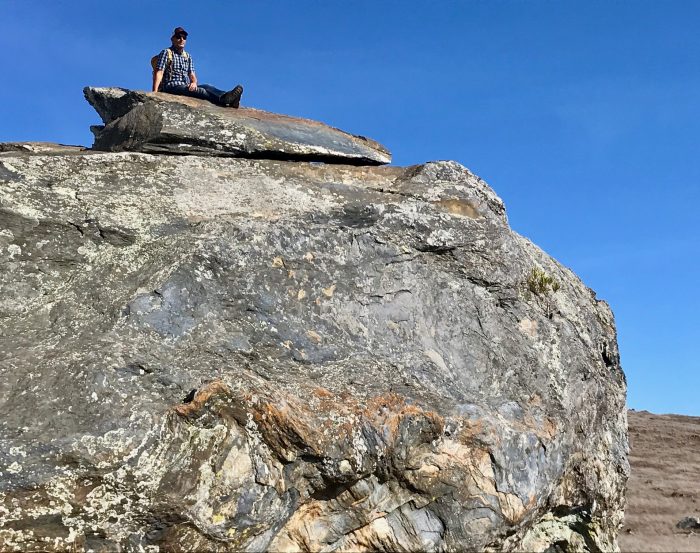
Winter day hike atop Turtle Rock in Marin County – one of the best close-in bouldering areas in the Bay Area.
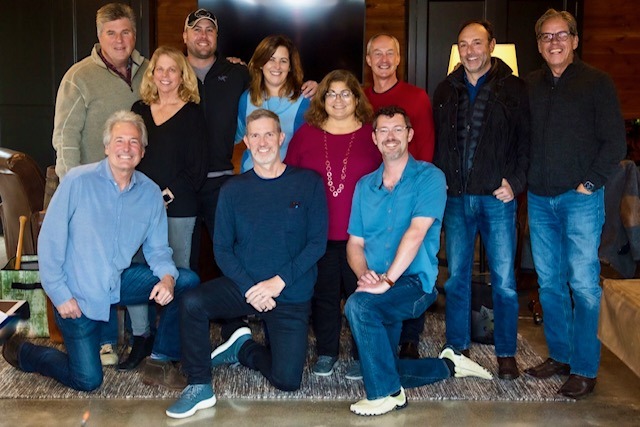
Sonoma DYL workshop #1: After just completing the 2 1/2 day “Designing Your Life” program – a book, workshop, and course from Prof’s. Burnett and Evans at Stanford Univ. The Stanford “Life Design Lab” applies design thinking to tackling the “wicked” problems of life and especially vocational wayfinding. It was a great productive workshop. Many of us who already have well-developed careers found new energy and expansive ideas arise from the program. And those searching for a transition to a new career also worked towards exciting new personal roadmaps. Front row: Peter Ferris (co-coach), John Hornbaker, Jay Rooke Back row: Ford Goodman, Holly Bennett, Kurtis Rissmiller, Sharon Knight, Beth Stelluto, Thomas Ward (co-coach), Ken Wornick, Bob Berg
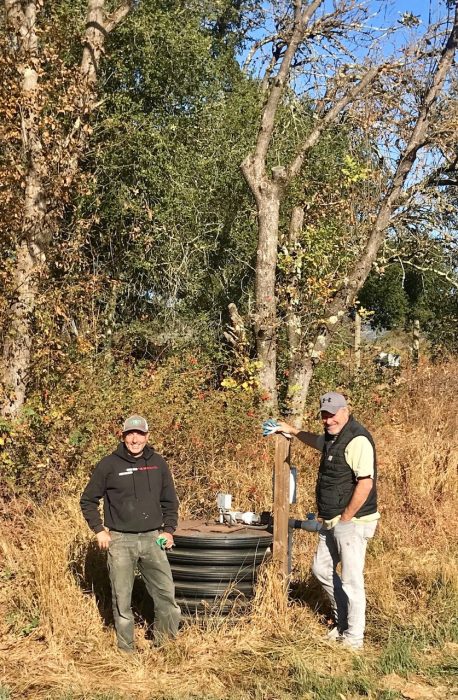
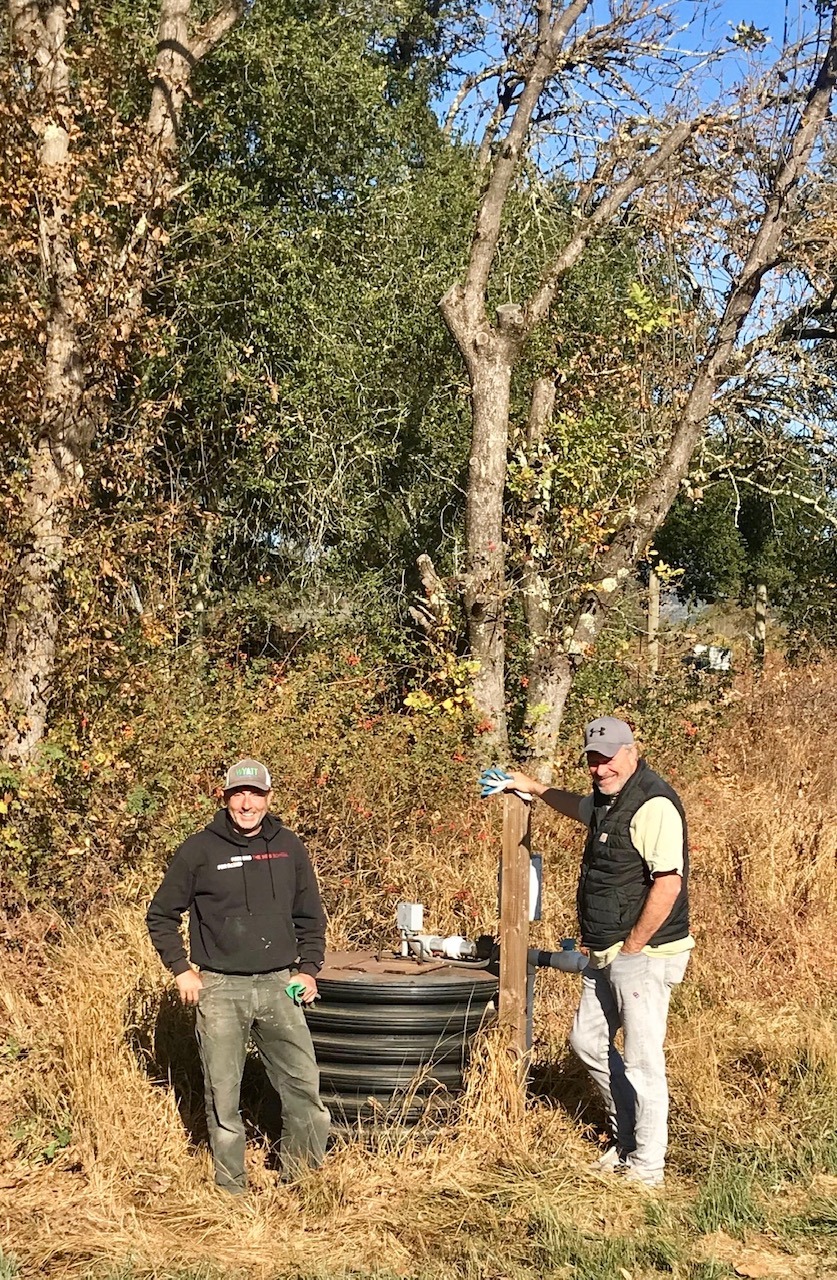
My neighbor Steve Bush, a chicken expert in his own right, is over for a visit; here examining our hand-dug 16′ deep alternate agricultural water well – this well atomically turns on and sends water to our 5000 gallon irrigation tanks – until it dries out around June, then the deep water well takes over.